

The first step isn’t choosing a nursing home; it’s understanding the care your parent needs. If you’re deciding what to do when a parent needs a nursing home in NY, arrange a health care assessment, explore long-term care and caregiver support through NY Connects at 1-800-342-9871, and compare suitable homes by visiting them. A careful sequence can make a difficult decision feel more manageable.
It’s understandable to feel pressure to find the right place quickly, especially when your parent’s safety or daily needs are changing. But a nursing home may not be the only option. What to do when a parent needs a nursing home in NY depends on their health, ability to live safely, preferences, and available support.
This guide explains where New York families can find long-term care and caregiver resources, which signs may mean more help is needed, and how to assess a nursing home’s environment, staff, and services. It also offers a practical way to organize next steps so you can make informed decisions with your parent and family, keeping their needs at the center.
Key Takeaways
- Start by clarifying your parent’s care needs and exploring New York long-term services and caregiver support before deciding which setting is right.
- Use caregiver resources and referrals to identify practical support, training, and relief as your family plans next steps.
- Compare nursing homes by considering your parent’s needs, the care and services available, and what you observe during a visit.
- Learn how inspection reports, ratings, and complaint information can add useful context as you assess potential nursing homes.
1. New York long-term services and supports information
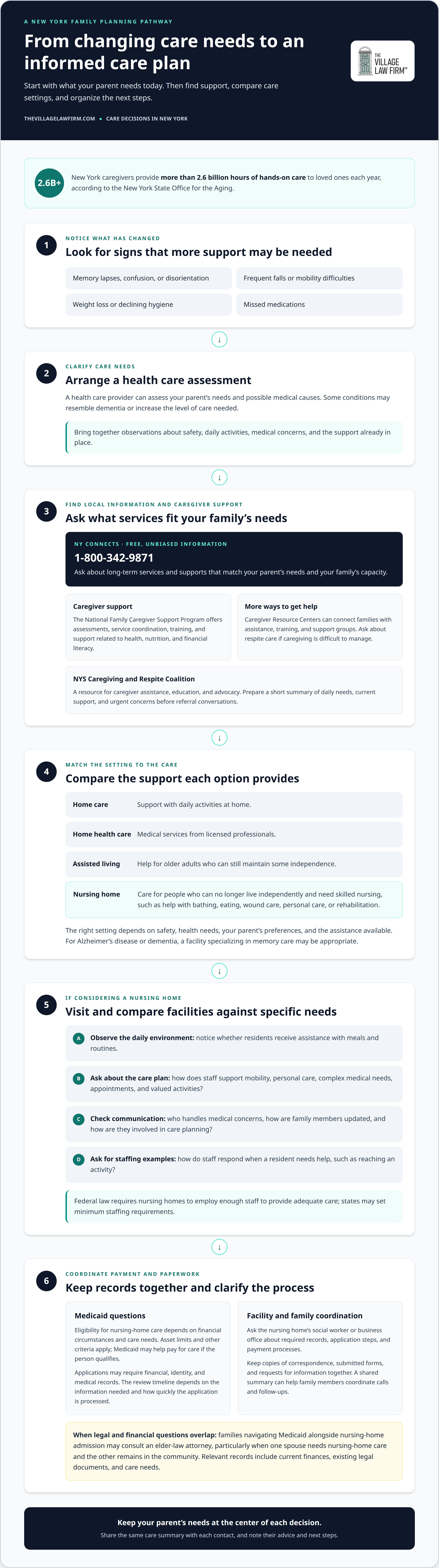
Start by identifying what has changed. Memory lapses, confusion, or disorientation may signal that a senior needs more support. Frequent falls, mobility difficulties, weight loss, missed medications, or declining hygiene are also important signs. A health care provider can assess possible medical causes, including conditions that may resemble dementia or increase care needs.
According to New York State Office for the Aging, New York caregivers provide more than 2.6 billion hours of hands-on care to loved ones each year. For free, unbiased information about long-term services and supports, call NY Connects at 1-800-342-9871. Ask about options that match your parent’s needs and your family’s capacity.
Alternatives to a nursing home in New York include home care, home health care, and assisted living. Home care supports daily activities, while home health care provides medical services from licensed professionals. Assisted living can support older adults who need help but can still maintain some independence. The right setting depends on safety, health needs, and the assistance available.
New York Medicaid eligibility for nursing-home care depends on financial circumstances and care needs. Asset limits and other criteria apply, so each person’s finances and situation matter. Nursing-home costs vary by facility and level of care. Medicaid may help pay for care if the person qualifies.
To apply for Medicaid nursing-home coverage, gather financial, identity, and medical records, then submit an application for review. The review timeline depends on the information required and how quickly the application is processed. For caregiver support, the National Family Caregiver Support Program offers assessments, service coordination, training, and support related to health, nutrition, and financial literacy. Caregiver Resource Centers can also connect families with assistance, training, and support groups. Ask about respite care if caregiving responsibilities become difficult to manage. A practical support plan can combine specialized services with the chosen care setting.
2. Caregiver information and referrals
Families can use the NYS Caregiving and Respite Coalition for caregiver assistance, education, and advocacy. Contact the coalition when responsibilities span personal care, appointments, and decisions about nursing homes. Prepare a short summary of your parent’s daily needs, current support, and urgent concerns. Clear details help referral conversations focus on practical next steps.
For placement and payment questions, ask the nursing home’s social worker or business office which application steps and records the facility requires. They can explain its payment process and help organize Medicaid questions. Keep copies of correspondence, submitted forms, and requests for additional information together. A simple folder helps adult children coordinate tasks and track deadlines and follow-ups.
Families navigating a Medicaid decision alongside nursing-home admission may also consult an elder-law attorney. This can be particularly relevant when one spouse needs nursing-home care and the other remains in the community. Bring current financial records, existing legal documents, and information about care needs. These details help focus the conversation on the questions and options that matter to your family.
Referrals should address the caregiver’s needs as well as the older adult’s. An adult child balancing employment, children, and a parent’s personal care, for example, may need help coordinating responsibilities. Ask whether a referral can connect your family with caregiver education, advocacy, or respite resources. The NYS Caregiving and Respite Coalition is one place to begin that conversation.
Before making calls, write down your parent’s preferred living setting, medical concerns, and current sources of assistance. Note who can help with transportation, meals, or communication with a retirement community or nursing home. Share the same summary with each contact, then record their name, advice, and next steps. This simple routine helps turn scattered calls into coordinated support.
3. Choosing a nursing home
Begin with your parent’s care needs, preferences, and ability to manage daily tasks. A nursing home provides care for people who can no longer live independently and need skilled nursing. Staff may assist with bathing, eating, wound care, personal care, and rehabilitation. For a parent with Alzheimer’s disease or dementia, a facility specializing in memory care may be appropriate.
Families deciding what to do when a parent needs a nursing home in NY can compare facilities against practical care needs. Consider whether staff can support mobility, complex medical needs, appointments, and activities your parent values. Ask how the home communicates with family and involves them in care planning. If your parent could remain safer with support at home, consider whether home care can meet those needs.
Visit each potential home. Observe the environment, speak with staff, and ask how services address your parent’s specific needs. During a tour, notice whether residents receive assistance with meals and daily routines. Ask who handles medical concerns and how families receive updates. Comparing facilities can help families evaluate their options.
Federal law requires nursing homes to employ enough staff to provide adequate care, and states may set minimum staffing requirements. Ask how staffing supports your parent’s care plan, including mobility and personal care. If you’re deciding what to do when a parent needs a nursing home in NY, ask for specific examples of how staff respond when a resident needs help, such as reaching an activity.
Before signing an admission agreement, ask the facility to explain its services, payment terms, any deposit, and refund conditions in writing. Request information about resident rights and the complaint process, and clarify who can sign for your parent. These steps help your family understand the agreement before making a commitment.
4. How can I check New York nursing home inspection reports, ratings, and complaints?
Comparing facilities can help families assess which may fit their needs. Search for each home you’re considering, then review its available inspection reports, ratings, and complaint information. Use the same categories to take notes on every facility. This makes differences easier to assess than relying on a single score or impression.
Read reports for the issue described, the facility’s response, and any follow-up information. Note whether a concern relates to your parent’s needs, such as mobility assistance, meals, or personal care. A report is most useful when you connect its details to the specific support your parent may require. Write down questions to raise during a tour.
Use ratings as one point of comparison, not a substitute for reviewing details. Note what a rating reflects, then compare it with inspection findings and your own observations. If a complaint concerns an issue important to your parent, ask the facility to explain its response and current practices. Look for clear examples rather than broad assurances.
During visits, compare published information with what you observe. Notice how staff interact with residents, whether common areas appear orderly, and how residents receive help with daily routines. Ask who can discuss inspection findings and complaints, and how families receive updates. Record each visit date and the answers you receive.
Before choosing, compare each facility’s reports, ratings, complaint notes, and tour observations side by side. Look for patterns relevant to your parent’s care, and distinguish them from isolated details. Share the comparison with involved family members, then discuss unanswered questions with facility staff. This helps you make a considered choice based on documented information and firsthand observations.
The Village Law Firm
The Village Law Firm helps New York families bring legal and financial planning into focus when a parent’s care needs change. Its Medicaid Planning can help address questions about preparing for long-term care, while Estate Planning can organize the broader plan for a parent and family. These services may help when care decisions intersect with assets, existing documents, or responsibilities for children.
Consider legal guidance when weighing how to pay for care, reviewing your parent’s planning documents, or coordinating family decisions. A focused discussion can clarify which planning questions deserve attention alongside the practical work of choosing a care setting. The goal is an organized path forward that reflects your family’s circumstances, not a one-size-fits-all answer.
If you’d like to discuss your family’s planning needs, contact The Village Law Firm.
Make the next decision with a clear plan
Choosing care for a parent is also an opportunity to align family decisions, legal documents, and financial planning. If you’re considering what to do when a parent needs a nursing home in New York, bring your family’s questions together and identify which decisions need attention first. A thoughtful plan can clarify everyone’s role while keeping your parent’s wishes in view.
The Village Law Firm provides Estate Planning, Estate Administration, and Medicaid Planning to help families address related legal and financial matters. These services can be relevant when a change in care raises questions about existing plans, future arrangements, or estate administration. The right next step depends on your family’s circumstances.
For guidance on your family’s planning needs, contact The Village Law Firm today. You can move forward one considered decision at a time.
Frequently Asked Questions
How do you determine whether a parent in New York needs nursing home care?
Determine whether your parent’s needs can be managed safely in their current living arrangement. Briefly record changes, when they occur, and how they affect daily life, then discuss the pattern with a health care provider. The provider can assess possible medical causes and care needs. Include your parent’s preferences and the support family members can realistically provide in the decision.
What are the steps to find and compare nursing homes in New York State?
Create a shortlist of facilities that can meet your parent’s care needs, then compare their services and available inspection information. During each visit, ask the same questions about your parent’s routines, such as assistance with meals or mobility. Record observations and responses together, then review the comparison with your parent and involved family members before deciding.
What legal and financial documents are needed when arranging nursing home care for a parent?
Prepare a file with your parent’s medical history, financial information, care preferences, and existing legal documents. Include any will, trust, durable power of attorney, and health care directive your parent has made. These records help family members understand existing arrangements and organize discussions about care and payment. Keep copies together, note which documents are current, and record who can access them.
How do New York nursing home admission agreements, deposits, and resident rights work?
Before signing, ask the facility to explain its services, payment terms, any deposit, and refund conditions in writing. Request information about resident rights and the complaint process, and clarify who can sign for your parent.