

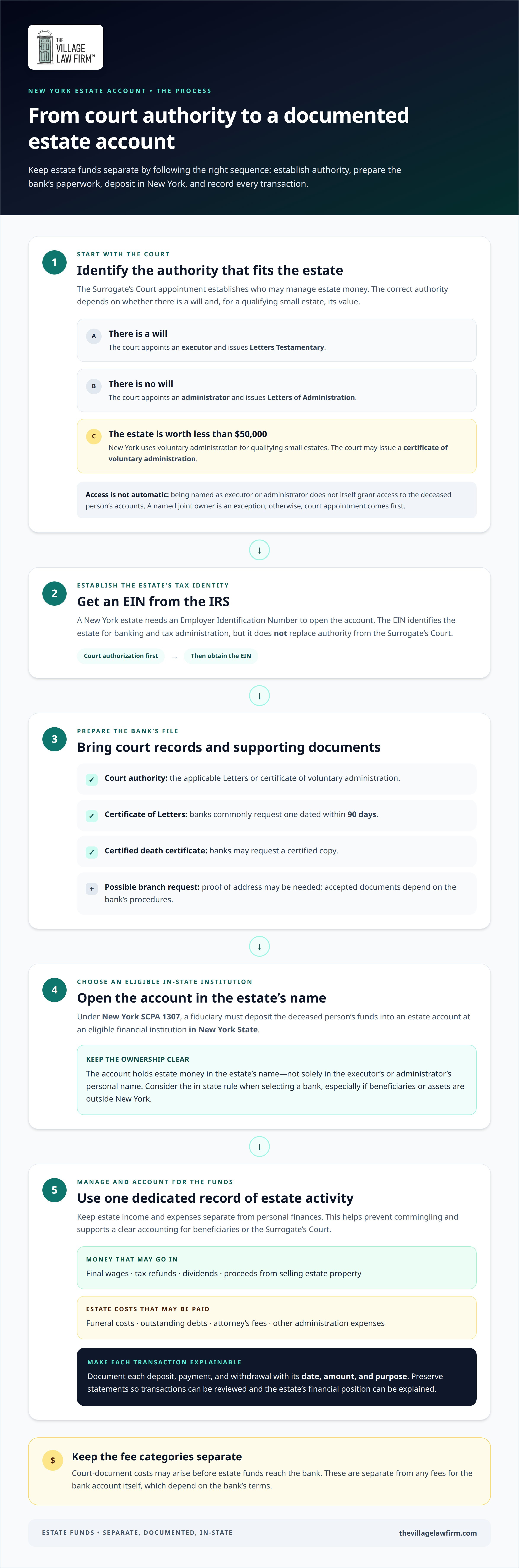
A fee may arise before estate funds reach the bank. Keep court-document costs separate from any fees for the bank account itself, which depend on the bank’s terms.
It’s understandable to want a clear answer while handling estate responsibilities. An estate account keeps the deceased person’s money separate from the fiduciary’s personal finances, and opening one involves more than choosing a bank: the right court authority and supporting documents matter. This guide explains what the account is for, how New York rules shape the process, what to consider when choosing an account, and where fees may arise. With these essentials in view, you can approach the next step with greater clarity and keep estate finances organized.
Key Takeaways
- Learn which Surrogate’s Court authority applies to an estate with a will and one without, and why personal access to the deceased’s accounts isn’t automatic.
- See how New York’s in-state deposit rule affects where estate funds can be held.
- Understand why keeping estate income and expenses separate supports clear fiduciary accounting.
- Explore how document freshness, account access and deposit coverage can shape bank choices.
What is an estate bank account?
A New York estate bank account holds money belonging to a deceased person’s estate. It is opened in the estate’s name, not solely in the executor’s or administrator’s personal name. The account separates estate funds from personal finances and supports an orderly transfer to beneficiaries. An individual account is generally frozen after the bank learns its owner has died.
Do you need Letters Testamentary or Letters of Administration? Usually, yes. An executor presents Letters Testamentary, while an administrator presents Letters of Administration. The New York Surrogate’s Court issues Letters Testamentary when there is a will and Letters of Administration when there is no will. These letters establish the fiduciary’s authority to act for the estate. Banks may also request a certified copy of the death certificate.
The fiduciary’s title depends on whether the deceased left a will. With a will, the court appoints an executor; without one, it appoints an administrator. Neither role automatically gives someone access to the deceased’s accounts. A named joint owner is an exception; otherwise, appointment by the Surrogate’s Court comes first. The fiduciary gathers estate assets, manages funds, and prepares for distribution.
New York treats qualifying small estates differently. When an estate is worth less than $50,000, its fiduciary is called a voluntary administrator. The Surrogate’s Court can issue a certificate of voluntary administration to collect assets. This route differs from Letters Testamentary or Letters of Administration, so the estate’s value and circumstances affect which authority applies.
What are the tax and reporting requirements for a New York estate bank account? An estate can request an Employer Identification Number online from the IRS; the application takes 10-15 minutes. The account itself doesn’t replace tax filings. The fiduciary should document deposits, payouts, and withdrawals for the estate’s accounting, including any review by beneficiaries or a Surrogate’s Court. Keeping clear records supports security and accountability.
An estate account generally remains open from the fiduciary’s receipt of court letters until final distribution to beneficiaries. For estate account opening in New York, the first step is establishing the correct court authority. The letters identify who may manage estate money, while the account keeps those funds separate throughout administration and distribution.
New York in-state account-opening rule
New York law affects where estate funds are deposited and which documents support a bank’s review. The fiduciary’s authority, the estate’s circumstances, and the chosen branch all shape the process.
Account Definition and In-State Location
A New York estate bank account holds funds belonging to the deceased’s estate, separate from the fiduciary’s personal money. Under New York SCPA 1307, an estate fiduciary must deposit the decedent’s funds into an estate account at an eligible financial institution in New York State. Consider this in-state requirement when selecting a bank, especially if beneficiaries or estate assets are outside New York.
Opening Account Requirements
To open an account, the fiduciary needs authority from the Surrogate’s Court and an EIN from the IRS. Banks commonly request a Certificate of Letters dated within 90 days, plus a certified death certificate. A branch may also request proof of address for its account file; the accepted document depends on the bank’s procedures. Estate account opening in NY therefore involves both legal authority and institution-specific paperwork.
For a small estate worth less than $50,000, New York uses voluntary administration. The Surrogate’s Court may issue a certificate of voluntary administration so the voluntary administrator can collect estate assets. This process differs from a full probate appointment, so the estate’s value and circumstances guide which court authority applies. It provides a defined route for qualifying estates to address asset collection and transfer to beneficiaries.
EIN for Account Opening
Does a New York estate need an EIN to open a bank account? Yes. An EIN from the IRS is needed alongside authority from the Surrogate’s Court. The EIN identifies the estate for banking and tax administration, but it does not replace court-issued authority. The sequence matters: the fiduciary obtains court authorization, secures the EIN, then presents the required records to the bank.
A professional can coordinate estate administration paperwork, court filings, and information for the bank’s review. This support can be useful when a deceased person’s assets, beneficiaries, or records span jurisdictions, while the account must still follow New York’s in-state rule.
Estate account purpose and use
An estate account gives the executor or administrator a dedicated place to receive and pay estate funds. It keeps the deceased person’s assets separate from the fiduciary’s personal finances, helping prevent commingling. For example, final wages, tax refunds, dividends, and proceeds from selling estate property may go into the account. The fiduciary can then track these funds throughout estate administration.
Estate expenses may also be paid from the account, including funeral costs, outstanding debts, and attorney’s fees. Using one account creates a clearer record of estate transactions instead of mixing them with personal checking activity. Administration expenses must be paid from the estate bank account, and the fiduciary documents deposits, payments, and withdrawals for the estate’s accounting.
That record matters when beneficiaries review the fiduciary’s handling of funds or a Surrogate’s Court accounting proceeding examines transactions. A useful record connects each deposit or withdrawal to its date, amount, and purpose. For instance, a payment to an attorney should be distinguishable from a transfer to a beneficiary. Clear entries help explain the estate’s financial position and support an orderly accounting.
Collecting estate income in a personal account can raise commingling concerns and expose an executor to personal liability. An estate account keeps funds separate, but it does not remove the fiduciary’s duty to document activity. The executor or administrator should preserve statements and transaction records with the estate records, so assets received and expenses paid can be accounted for accurately.
The account also provides a practical way to manage money during administration. The fiduciary receives estate funds, pays authorized expenses, and records distributions as the estate moves toward closure. A checking account may suit regular payments, but its purpose remains the same: keeping estate funds separate and traceable. Court authority and the estate’s Employer Identification Number identify the fiduciary and estate in the banking process.
Choosing a bank for a probate estate with professional guidance
For a New York probate estate, compare banks by their document requirements, access, and handling of incoming funds. Banks commonly want Letters issued within the last 60 days, while some accept Letters up to 90 days old. That difference can affect whether an existing court certificate is ready to present or a newer one is needed. A professional can help organize the probate paperwork before the bank review.
Confirm the documents required for the fiduciary’s appointment. An executor may need Letters Testamentary, while an administrator uses Letters of Administration. Banks may also request the estate’s identification number and a certified death certificate. Preparing these records together can help prevent a return visit when the branch reviews the application. The account title should identify the estate, rather than name the fiduciary as the sole owner.
Consider how the estate will receive and use funds. A new estate account may face a 7-10 business day hold on large incoming checks, which can affect the timing of payments. Access to a local branch may matter when the fiduciary must present original or certified records. A professional can assess the estate’s expected deposits and administration needs, then help align the account choice with those practical requirements.
Also consider deposit protection. FDIC coverage for estate accounts is $250,000 per estate at one bank. If estate funds exceed that amount, the fiduciary should account for the coverage limit while planning where funds are held. A professional review can connect the court papers, identification number, anticipated deposits, and distribution plan, helping the fiduciary establish the account correctly and maintain clear records throughout probate.
For guidance coordinating court authority and estate administration, get estate account guidance tailored to the probate process.
The Village Law Firm
The Village Law Firm helps individuals and families bring structure to estate matters, including the decisions and responsibilities that follow a death. Its Estate Administration services address how court authority, estate assets, and fiduciary duties fit together as the estate moves toward distribution.
Consider legal guidance when probate paperwork, multiple beneficiaries, or assets across jurisdictions make administration more involved. The Village Law Firm also provides Estate Planning, Medicaid Planning, Planning For Families with Children, international estate planning, and cross-border estate administration. The right support depends on the work your circumstances require.
If you need help understanding your estate administration responsibilities, contact The Village Law Firm to discuss your situation.
Make the next step part of a larger plan
Opening an estate account is one part of a wider responsibility: keeping financial decisions connected to the estate’s needs and the people they affect. A considered approach can bring order to administration and provide a clearer foundation for the decisions ahead.
For estate account opening in New York, consider how the immediate banking task fits your broader family and legacy priorities. The Village Law Firm offers Estate Administration for those managing an estate, alongside Estate Planning and Medicaid Planning for related planning needs. The right focus depends on where you are in the process and what decisions your family faces next.
You don’t need to resolve every question at once. A conversation can help clarify the legal issues surrounding your next step and how they connect to your wider plans. Speak with The Village Law Firm about your situation, and move forward with greater clarity.
Frequently Asked Questions
Is there a fee?
Court documents and bank services may involve separate costs. Bank account fees and minimum-balance terms depend on the account’s schedule, so distinguish these charges from court-document costs. The fiduciary should consider how the account terms fit the estate’s expected deposits and payments.
How can a professional help open an estate bank account in New York?
A professional can coordinate estate administration records and explain how the fiduciary’s court authority relates to the bank’s requirements. The Village Law Firm’s Estate Administration services include probate assistance, asset identification, addressing debts and taxes, record-keeping, final accounting, and distribution. This broader support can connect account administration with the estate’s financial responsibilities.
What documents are required to open an estate account in New York?
Typically, the fiduciary presents court-issued Letters Testamentary or Letters of Administration, the estate’s Employer Identification Number, and a certified copy of the death certificate. The court document depends on whether the estate has a will and whether the fiduciary is an executor or administrator. A bank may request additional records for opening the account, such as proof of address.
Who is authorized to open and manage an estate account in New York?
The estate fiduciary appointed by the Surrogate’s Court is authorized to act for the estate: an executor when there is a will, or an administrator when there isn’t. For a qualifying small estate, a voluntary administrator acts under a certificate of voluntary administration. A named joint account owner may access that account, but other relatives do not automatically have authority over estate funds.
Can I open a New York estate account before probate is completed?
Yes, an account can be opened during estate administration once the fiduciary has the required court authority and the estate’s Employer Identification Number. Final distribution and account closure come later, when administration is ready to conclude. For example, the fiduciary may need an account to receive estate income and pay expenses while the probate matter is ongoing.
How can a professional help compare New York banks’ estate account fees and minimum balances?
A professional can help assess how a bank account’s terms fit the estate’s expected activity, such as regular expense payments or incoming funds. Compare published fees, minimum-balance conditions, deposit handling, and account access against the estate’s administration needs. Legal guidance can clarify how the banking decision fits the fiduciary’s responsibilities, while the bank sets its own account charges and terms.