A California will does not automatically determine how property abroad will pass. The law where the property is located may govern succession and whether local authorities recognize the will. A cross-border inheritance lawyer in NYC can help coordinate New York estate planning with the rules affecting overseas assets.
It is natural to want one clear set of instructions for everything you own. But real estate, accounts, and other assets abroad can involve separate legal procedures, local documents, and tax reporting, even when your will names who should inherit them.
This article explains what a will may and may not accomplish, why coordinated wills or trusts can matter, and which records commonly support an international transfer. It also describes how certified death certificates, court orders, property records, and financial statements fit into administration, and how currency movements or local restrictions may affect decisions. Understanding the documents and jurisdictions involved can help you identify the next planning steps.
Key Takeaways
- A California will may not control how property abroad is inherited; the law where the property is located can shape succession and recognition.
- U.S. estate tax exposure depends in part on citizenship, domicile, and whether assets are located in the United States.
- Specified foreign financial assets may trigger tax-return reporting above thresholds that start at $50,000, according to the Internal Revenue Service.
- Coordinated wills, trusts, and well-organized property and court records can help clarify the steps involved in transferring assets across borders.
What is cross-border estate planning?
Cross-border estate planning coordinates an estate plan when assets, heirs, or the person who died have ties to more than one country. For example, a New York resident’s home, overseas apartment, and foreign bank account may each be subject to different transfer rules.
International Asset Jurisdiction
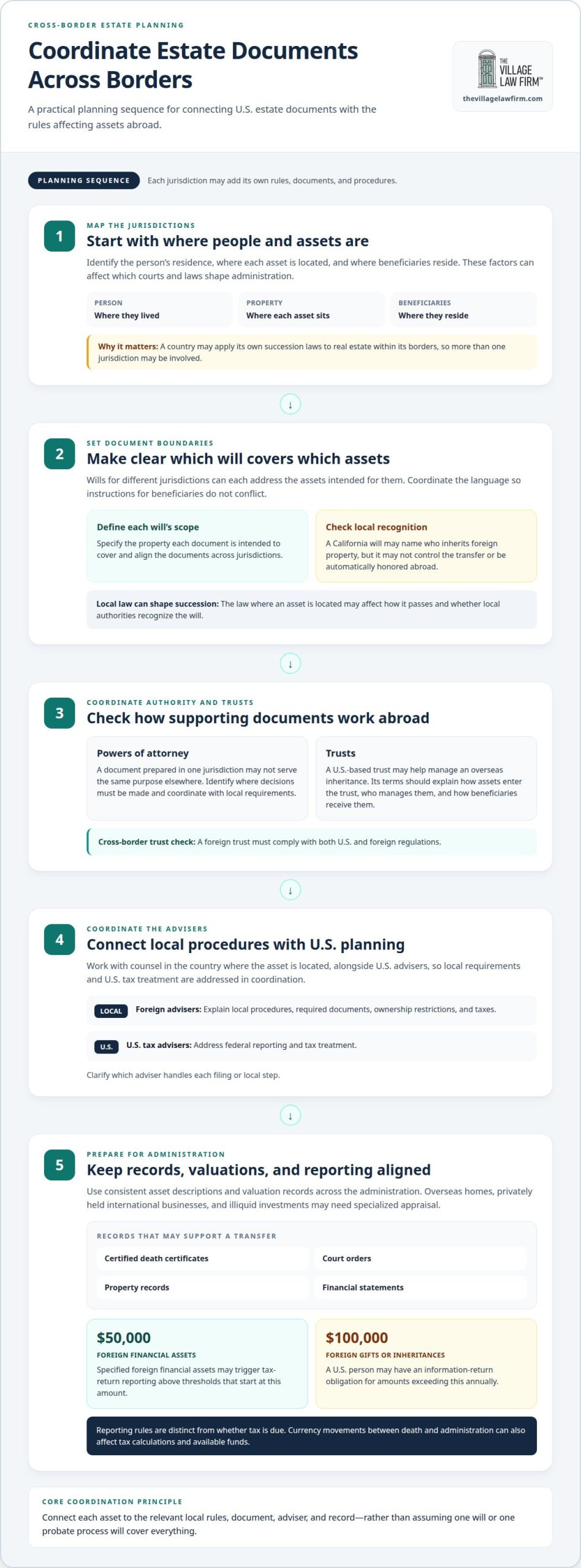
Jurisdiction concerns which courts and laws may affect an estate and the transfer of its assets. Relevant factors in an international estate include where the person lived, where property is located, and where beneficiaries reside. A foreign country may apply its own succession laws to real estate within its borders. As a result, administration may involve proceedings in more than one jurisdiction, rather than a single probate process covering every asset.
For New York residents with overseas property, estate planning should account for the rules where each asset is located. New York courts may have jurisdiction when the deceased was a New York resident or owned significant property there. New York may also issue ancillary probate orders to help transfer New York assets to foreign beneficiaries.
U.S. Estate Tax Exposure
U.S. citizens remain subject to estate tax on worldwide assets, including assets held abroad. U.S. estate tax exposure for noncitizens depends on domicile and asset location; New York’s estate tax regime also applies based on domicile. In 2026, a person who is neither a U.S. citizen nor domiciled in the United States is subject to U.S. estate tax only on U.S.-situated assets, with a $60,000 exemption. Treaties with several countries may help mitigate double taxation.
For estates subject to U.S. or New York estate tax, federal estate taxes may be due within nine months of death, according to the Internal Revenue Service. Delays, foreign succession rules, and separate proceedings across jurisdictions can complicate administration.
To find a cross-border inheritance lawyer NYC, look for professionals at The Village Law Firm who are experienced in international estate matters and coordinating U.S. planning with the laws affecting overseas assets. Relevant-country counsel can help address local succession rules and foreign procedures.
When the deceased or heirs live abroad, New York probate may still involve New York assets or a deceased New York resident. Courts may issue ancillary orders for New York property, while the asset’s location and the parties’ residence can affect proceedings in other jurisdictions.
Does my California will cover my foreign property?
A California will can name who should inherit foreign property, but it may not control how that property is transferred. The law where the asset is located can govern succession and whether local authorities recognize the will.
Cross-Border Inheritance Taxes
An inheritance involving foreign property may be subject to local inheritance taxes, succession duties, or capital gains taxes. The country where the property is located may impose these even if its owner lived elsewhere. The United States also taxes rental income and gains from selling foreign property, and includes that property in the estate. Tax treatment depends on the asset, the owner, and the jurisdictions involved.
Reporting can apply as well. Reporting of specified foreign financial assets with a tax return applies above thresholds that start at $50,000, according to the Internal Revenue Service. A U.S. person may have an information-return obligation for gifts or inheritances from abroad exceeding $100,000 annually, according to the Internal Revenue Service. These reporting rules are distinct from whether tax is due.
Valuation requires care. An overseas home, privately held international business, or illiquid investment may need a specialized appraisal. Currency fluctuations between death and administration can also affect tax calculations and the funds available.
Coordination With Foreign Advisers
A California will may not be automatically honored abroad, and local succession law may affect how foreign heirs receive property. Coordinate the U.S. probate process with counsel in the country where the asset is located. Foreign advisers can explain local procedures, required documents, ownership restrictions, and taxes; U.S. tax advisers can address federal reporting and tax treatment.
Keep the work aligned. Share consistent asset descriptions and valuation records across the administration, and clarify which adviser handles each filing or local step. A coordinated international estate plan can help connect U.S. documents with the requirements affecting assets abroad.
Coordination of wills and trusts across jurisdictions
A coordinated plan connects U.S. documents with the laws affecting assets abroad. For a New York resident with property in another country, separate documents may be needed to address each jurisdiction’s requirements.
Cross-Border Wills and Powers of Attorney
Attorneys can coordinate wills for different jurisdictions so each document addresses the assets intended for it. The plan should make clear which will covers property in each country and avoid conflicting instructions for beneficiaries. Powers of attorney also need attention: a document prepared in one jurisdiction may not serve the same purpose elsewhere. Identify where decisions must be made, then coordinate the documents with relevant local requirements.
U.S. Trusts for Overseas Inheritances
A U.S.-based trust may help manage an overseas inheritance and potentially streamline its distribution. Its terms should explain how assets enter the trust, who manages them, and how beneficiaries receive them. A foreign trust must comply with both U.S. and foreign regulations. Consider the asset’s location and how each jurisdiction treats the trust before relying on it to manage or transfer property.
Foreign Wills in New York Probate
New York recognizes foreign wills and trusts when they meet applicable legal standards. Recognition does not replace coordination with the probate process: court review and the property’s location affect which documents are needed. A will made abroad may direct an estate, while local procedures still govern assets located elsewhere. Coordinate the foreign document with New York probate records and instructions for beneficiaries.
For border estate planning, keep the plan internally consistent. Match the asset descriptions, intended recipients, and roles named across wills, trusts, and powers of attorney. Attorneys in the United States and relevant countries can address local rules together, helping reduce conflicts between documents and avoid leaving beneficiaries uncertain about which instructions apply.
Required documents and international asset transfers
For an international estate with accounts or real estate in multiple countries, organized records help connect succession steps with asset transfers. Begin by identifying the documents that establish the death, the person’s instructions, the court’s authority, and ownership of each asset.
Documents commonly needed for administration include certified death certificates, wills, and court orders from the jurisdiction handling probate. Property deeds, bank statements, and investment portfolios help identify assets and support their transfer. A foreign proceeding may also require translations and documents prepared under local procedures, so make sure the paperwork fits the country handling each asset.
- Real estate: Deeds can identify the property and its registered ownership.
- Accounts: Bank statements and investment records help locate financial assets.
- Estate authority: Wills and court orders document instructions and probate proceedings.
- Death records: Certified death certificates support administration in relevant jurisdictions.
Next, map each asset to the institution or authority involved in its transfer. A foreign bank account, for example, may require estate documents accepted under local procedures. Recording which documents were submitted, where they went, and what response followed helps coordinate steps across jurisdictions and reduces confusion among beneficiaries.
Liquidity deserves separate attention. Foreign assets may not be readily marketable or easy to transfer, while currency exchange rates and financial institution fees can affect the amount ultimately received. Property may also carry ongoing expenses during administration. Consider which cash or liquid assets can meet estate obligations while real estate or private investments remain difficult to sell.
For help coordinating records and transfers across jurisdictions, discuss cross-border estate administration with a legal team experienced in international estates.
The Village Law Firm: Cross-border estate administration
The Village Law Firm™ provides cross-border estate administration for estates involving foreign property, accounts, or beneficiaries across jurisdictions. The firm helps coordinate U.S. administration with the documents and transfer steps involved abroad, bringing structure to a process that may span separate legal systems.
Turn to The Village Law Firm™ when planning for assets in more than one country or administering an international estate. The firm’s Estate Planning and Estate Administration services address connected questions about managing assets and carrying out instructions for their transfer. The next step is to discuss the estate’s jurisdictions, assets, and existing documents.
Book an initial call with The Village Law Firm™ to discuss cross-border estate administration and your circumstances.
Take the Next Step Toward a Coordinated Plan
International property can make decisions about your legacy feel divided between countries. Bring the people, priorities, and legal questions together before a future transfer requires urgent decisions. A cross-border inheritance lawyer in NYC can help connect your planning to the jurisdictions and family circumstances involved.
The Village Law Firm™ offers Estate Planning, Estate Administration, and Medicaid Planning. These services address different needs, from preparing for future transitions to managing an estate after a loss. A conversation can help clarify which planning or administration questions deserve attention first and how the firm’s work fits your circumstances.
You don’t need to resolve every international detail at once. Start with a clear discussion of your goals and the property or family considerations involved. Contact The Village Law Firm to discuss a thoughtful next step and move forward with greater clarity.
Frequently Asked Questions
These answers provide general information from The Village Law Firm™’s attorneys, not legal advice for a specific estate.
How often should I update my cross-border plan?
Review your plan after a change that could affect ownership, decision-making, or who inherits. Examples include buying property abroad, selling a foreign business interest, marriage, divorce, having a child, or moving to another country. Also revisit the plan if a beneficiary or named decision-maker can no longer serve. Keeping an asset inventory with your documents helps identify which instructions need attention.
What if I own property jointly with a foreign national?
Joint ownership with a foreign national can create succession and estate tax issues in both countries. The outcome depends on the ownership form, the property’s location, and the laws each jurisdiction applies. For example, jointly titled real estate may be treated differently from a shared bank account. Review the title and estate instructions together before assuming the surviving owner will receive the asset automatically.
What is the difference between income tax residency and estate tax domicile?
Income tax residency concerns which country treats you as a resident for income tax purposes; estate tax domicile concerns where you are considered domiciled for estate tax. These concepts are distinct, so your income tax residence alone does not settle your estate tax exposure. For people who move between countries, domicile is fact-intensive and can involve where they live and their broader ties.
What does a cross-border inheritance lawyer in NYC handle?
A cross-border inheritance lawyer in NYC helps coordinate estate administration when assets or beneficiaries involve more than one jurisdiction. This can include organizing the U.S. probate process, coordinating estate administration across borders, and aligning records needed for asset transfers. For an estate with a New York account and overseas real estate, assigning clear responsibility for each jurisdiction helps beneficiaries understand which steps remain and where.
Which country’s inheritance law applies to assets owned in multiple countries?
One country’s law may not govern every asset. The country where real estate is located may apply its own succession rules, while other assets can raise different jurisdictional questions. Relevant factors include where the deceased lived, where each asset is located, and whether the country recognizes the will. An account and a home abroad may therefore follow different procedures.
What documents are needed to claim an inheritance across borders in NYC?
Common records include a certified death certificate, the will, and court orders from the jurisdiction handling probate. Deeds establish property ownership, while bank statements and investment records help identify financial assets. A foreign authority may require translated documents or additional records under local procedures. The documents needed depend on the asset, the country involved, and the stage of administration.