
The most protective beneficiary of a life insurance policy may be a trust, not your child. A policy can help fund a special-needs trust, and naming the trust rather than your child as beneficiary may help preserve eligibility for government benefits. This is one important part of planning for a child with disabilities’ future in NY.
It’s natural to want your child to have financial security and resources to enjoy life. The challenge is arranging that support carefully so an inheritance or insurance payout doesn’t unintentionally affect benefits your child may rely on.
This guide explains how special-needs trusts work, how trust distributions can affect government benefit eligibility, and where life insurance may fit into a broader plan. It also covers choices around trust funding and future care, so you can consider how financial arrangements, legal documents, and your child’s individual needs fit together.
Key Takeaways
- Understand how the source of trust assets can shape the trust’s terms and what happens to remaining funds.
- Learn why the way a trust is written and administered matters when preserving access to public benefits.
- Weigh individual and pooled trust options by considering who can manage the trust and how much administration the family wants to take on.
- Plan ahead for changing needs, including adulthood, education transitions, decision-making support, and future care.
Special needs trusts
A special needs trust can hold assets for your child while a trustee manages distributions under the trust’s terms. The appropriate structure depends on who provides the assets and what should happen to any remaining funds.
Trust Types and Funding
A third-party supplemental needs trust holds assets from someone other than the beneficiary, such as a parent, relative, or friend. Families can establish one during their lifetime or direct its creation through a will or trust. It doesn’t have to repay Medicaid after the beneficiary dies.
A self-settled trust uses the child’s own assets; remaining funds generally repay the state after the beneficiary’s death. Some families instead choose a nonprofit trust, so remaining funds go to charity. Trust terms can allow quality-of-life expenses such as education, recreation, travel, clothing, or furniture.
Wills and Trust Planning
A will can direct estate assets into a third-party trust instead of leaving them directly to a child. In New York, dying without a will or leaving assets outright to a child with special needs may jeopardize government benefits. Naming a nondisabled relative as recipient can also create problems if that relative dies first.
Review the will’s instructions, the trust’s funding source, and the trustee’s role together. A lawyer experienced in special-needs planning can help coordinate these decisions with a letter of intent describing your wishes.
Timing matters beyond finances. In New York, special education services end when a student receives a Regents or local diploma, or ages out on June 30 of the school year in which the student turns 21. Families can include this transition in long-term planning.
For the Social Security disability programs described here, the qualifying medical condition must have lasted or be expected to last at least 12 months, or result in death, according to the Social Security Administration. This criterion is one part of understanding the benefits a trust plan may need to complement.
Preserving eligibility for government benefits
Benefits planning means coordinating income, resources, trust distributions, and beneficiary designations. Even a single direct payment can affect eligibility, so review each funding decision alongside the benefits your child receives.
Trust Support and Benefits Eligibility
A trust that requires payments for a child’s support can make the beneficiary ineligible for SSI or Medicaid. A supplemental needs trust instead gives its trustee discretion to make distributions under the trust’s terms. The trustee should consider how each payment could affect benefits, especially payments for basic necessities such as food, shelter, utilities, or medical care.
Financial Resources and Government Benefits
For SSI disability payments, a child from birth through age 18 may qualify if the child meets the disability definition and the income and resources of both child and parents fall within allowed limits, according to the Social Security Administration. This means a parent’s financial situation matters alongside assets held in the child’s name. Medicare, Medicaid, SSI, and SSD are among the government benefits special needs planning may help preserve.
Map each resource to its owner and intended use. A direct inheritance, insurance proceeds, or cash gift may affect eligibility differently from funds held in a trust. The source of the payment and the trust’s terms matter.
Wills and Beneficiary Designations
Coordinate the will with beneficiary designations on life insurance and other financial accounts. Naming your child directly can send assets outside the will, even if the will creates a trust. Naming the special-needs trust as beneficiary may help preserve benefits while directing proceeds to support your child.
An attorney can review these documents together in light of your family’s situation. Planning ahead also helps prevent an outdated designation from conflicting with newer trust instructions.
ABLE Accounts and Special Needs Trusts
An ABLE account is a savings option, while a special needs trust holds assets under terms administered by a trustee. New York ABLE eligibility depends on qualifying disability criteria, and contributions are subject to an annual limit. The applicable limit and eligibility rules help determine whether an ABLE account suits your savings goals.
To pursue New York OPWDD services and Medicaid waiver programs, begin by requesting an OPWDD eligibility review and discussing service needs with the agency. Medicaid eligibility also matters for waiver programs, so coordinate the application with your family’s benefits planning.
Choosing between an individual and pooled trust
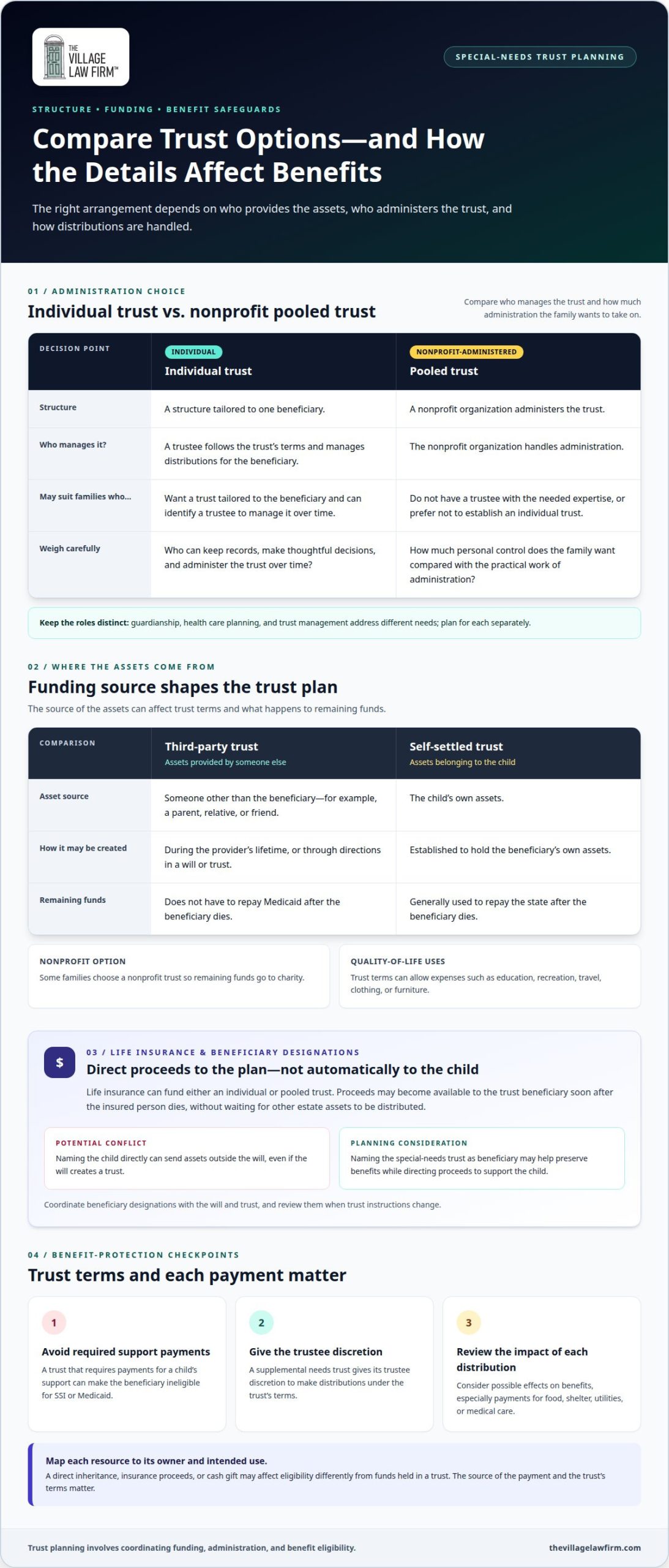
An individual trust provides a structure tailored to one beneficiary. A nonprofit pooled trust may suit families without a trustee who has the necessary expertise, or those who prefer not to establish an individual trust.
Trustees and Administration
With an individual trust, the trustee follows its terms and manages distributions for the beneficiary. Consider who can keep records, make thoughtful decisions, and administer the trust over time. Clear instructions can help a successor understand the child’s needs and your family’s priorities.
A nonprofit organization administers a pooled trust, which may be useful when relatives aren’t prepared to serve as trustee. Weigh the level of personal control you want against the practical responsibilities of administration. Guardianship, health care planning, and trust management address different needs, so plan for each separately.
Life insurance can fund either type of trust. Proceeds may become available to the trust beneficiary soon after the insured person dies, providing support without waiting for other estate assets to be distributed. When preserving benefit eligibility is a concern, consider naming the trust as beneficiary rather than the child directly.
Costs and Tax Implications
Costs depend on the trust structure, how it is drafted, and the administration it requires. A pooled trust may appeal to a family seeking nonprofit administration or wishing to avoid the legal expense of creating its own trust. An individual trust can provide terms tailored to the beneficiary, with its own setup and ongoing management needs.
Tax effects depend on who owns and contributes the assets and how the plan is funded. Receiving substantial assets may have tax consequences for a nondisabled relative and may affect that relative’s children’s eligibility for education financial aid. Families with significant assets may be able to reduce estate-tax liability by using life insurance to fund a special-needs trust.
Build a funding plan around likely support needs, available assets, and the trust’s purpose. Review the proposed budget alongside other programs and estate arrangements, then update it as circumstances change. Careful planning can help keep trust administration aligned with the beneficiary’s needs and prepare for future transitions.
Future planning for children with disabilities
Planning for a child with disabilities’ future in NY works best when legal authority, education, housing, and financial support are considered together. Start by identifying the decisions your child can make and where support may be needed.
Guardianship and Supported Decision-Making
At 18, a parent may lose access to health records and face barriers to educational records or decisions without appropriate documentation. New York parents may petition for Article 17A guardianship when their child needs a guardian. Supported Decision Making offers another path for a person who can understand and contribute to decisions, with support from a trusted team.
If your child can manage independently, a power of attorney, health care proxy, and living will may support decision-making without guardianship. Identify the decisions where assistance may be needed, then consult an attorney about an arrangement that reflects your child’s abilities and preferences.
Housing, Employment, and Independent Living
New York schools begin transition planning in the year a student turns 15, or earlier for students with severe developmental disabilities. Families can shape measurable post-secondary goals around work, education, and daily living. Before graduation, ask the CSE to include self-advocacy and independent living skills goals in the IEP.
For housing, explore residential placement early because waiting lists are often long. If a nonprofit-operated residence offers a place, consider the timing and care involved while parents are healthy enough to help with the transition. Thoughtful planning for a child with disabilities’ future in NY can connect this housing decision with your child’s broader goals.
Keep the plan connected to estate planning. A will can name guardians for minor children, while a letter of intent can describe a parent’s wishes for future arrangements. Review signed documents when family circumstances change.
An adult child may qualify for Social Security Disability Insurance on a parent’s record if the disability began before age 22 and the parent is insured and receiving retirement or disability benefits, or is deceased, according to the Social Security Administration.
Discuss your family’s estate planning needs to coordinate these decisions and prepare for your child’s transition into adulthood.
The Village Law Firm: Planning For Families with Children
The Village Law Firm™ helps families bring their child’s care, benefits, and financial future into one considered plan. Its Planning For Families with Children and Estate Planning services can address how a trust, will, and decision-making documents work together as your child’s needs change.
Families may also turn to Medicaid Planning to coordinate long-term care planning with benefit considerations. If a parent dies and an estate needs to be administered, Estate Administration can help carry out the plan’s instructions. Consider starting when you’re exploring a trust, updating a will, or preparing for your child’s transition into adulthood.
For a thoughtful next step, contact The Village Law Firm™ to discuss your family’s planning needs.
Give your family’s next steps a clear direction
Planning for your child’s future with disabilities in New York is an ongoing process, not a document to complete and set aside. Your family’s priorities may shift as your child grows, relationships change, and new opportunities emerge. A useful next step is to decide who should help carry the plan forward and how they’ll understand your child’s preferences.
Start a conversation with the people you trust. Share the values behind your decisions, identify questions that remain unresolved, and make space for your child’s voice wherever possible. Clear intentions can help loved ones act with greater understanding during difficult transitions.
The Village Law Firm can help you consider the legal planning involved in your family’s next steps. Contact The Village Law Firm to discuss your situation and identify a thoughtful way forward. Your family can take the next step with greater clarity and purpose.
Frequently Asked Questions
Do I have, or should I purchase, life insurance for the benefit of my disabled loved one?
Life insurance can help provide funds for a loved one’s future needs, but first review any policy already in place. Note who owns it, who is named as beneficiary, and whether proceeds should go to a special needs trust. Consider how the intended funds fit into the broader plan before purchasing additional coverage. The decision depends on your family’s resources and the support your loved one may need.
What should New York parents consider when planning for a child with disabilities’ future?
New York parents can make planning more practical by keeping a current written profile of their child’s preferences, routines, and support needs. Decide who can access and update the information, and share it with people expected to help with future care. Revisit the plan when family circumstances or your child’s needs change. Including your child’s views, where possible, can help ensure future decisions reflect their priorities.
How can a New York special needs trust protect a child’s benefits and assets?
A special needs trust places assets under a trustee’s management for the child’s benefit, rather than giving the child direct control of those funds. Carefully written terms can guide distributions and help guard against misuse by others. The trust should also specify the trustee’s responsibilities and successor arrangements. Its protections depend on its structure, funding source, and administration, so review those elements together.
What are New York Medicaid and SSI eligibility rules for children and adults with disabilities?
For SSI, a child from birth through age 18 may qualify if disability criteria are met and the child’s and parents’ income and resources fall within allowed limits, according to the Social Security Administration. For the disability programs described by the agency, the condition must last or be expected to last at least 12 months, or result in death. Adult Medicaid and SSI eligibility depends on the applicable program criteria and financial circumstances.
How can parents choose a successor caregiver and document future care plans for a child with disabilities?
Choose someone who understands your child’s communication, daily routines, and support needs, and discuss the responsibilities before naming them in planning documents. Identify a backup person as well. A written care profile can record preferences, important contacts, and the people involved in your child’s support. Keep it consistent with the will and other planning documents, and revisit it as relationships or care needs change.