
A simple estate may need only a will; a more complex one often calls for a coordinated plan. Understanding why you need an estate planning lawyer starts with what you want to protect, who may need support, and how your assets should be handled if you can’t make decisions or after you die.
It’s natural to want clear, dependable arrangements without unnecessary complexity. An estate planning lawyer can tailor documents to your circumstances, including wills, trusts, and powers of attorney, and explain how beneficiary designations affect your plan.
This article explains when professional guidance may be especially useful, what an estate planning lawyer does, and how planning can address probate and trusts. It also covers situations that can make matters more intricate, such as having assets in another state or country, so you can better understand the decisions involved and the support that may help.
Key Takeaways
- Professional guidance may be especially useful when your family, assets, or plans involve more than a straightforward will.
- Property in another state or country can add legal complexity, so coordinated planning matters.
- Trusts may help direct how certain assets pass and reduce the need for probate for assets properly placed in a trust.
- An estate planning lawyer can help align your documents with your wishes and plan for the people who may need care or support.
Do You Need an Estate Planning Attorney?
A straightforward estate may need only a will, but family needs, trusts, and beneficiary designations can make planning more complex. An attorney can coordinate your documents so they reflect your wishes and work together.
Wills, Trusts, Executors, and Beneficiaries
A will directs how eligible assets pass and can name an executor; a trust holds assets for beneficiaries under its terms. This distinction matters because the executor handles the will-based estate, while a trustee manages trust property. The One Big Beautiful Bill Act sets the U.S. federal estate tax exemption at $15 million per individual starting January 1, 2026, according to the Internal Revenue Service. The U.S. Congress says the Act was signed into law on July 4, 2025.
Advance Directives and Living Wills
A living will records your preferences for care if illness leaves you unable to communicate, while advance directives can document other instructions for that situation. These documents matter because relatives may otherwise lack clear guidance about your wishes. For example, you can discuss with an attorney what instructions should apply if you cannot express a decision yourself.
Powers of Attorney
A durable power of attorney appoints someone you trust to make decisions if you become incapacitated, helping avoid a court guardianship or conservatorship. For an estate planning consultation, bring existing wills, trust documents, powers of attorney, and a list of your assets and named beneficiaries. These materials help the attorney understand your current arrangements.
Beneficiary Designations and Wills
A beneficiary designation names who receives an account, while a will directs assets that have no beneficiary designation and are titled solely in your name. In the United States, transfer-on-death brokerage accounts and payable-on-death bank or credit-union accounts can usually pass directly to named beneficiaries, bypassing a will. Online forms may not coordinate these documents or address your circumstances, creating conflicting instructions or gaps. An attorney can review how your designations and will fit together.
Planning for foreign or out-of-state assets
A home in another state, an overseas account, or a family business can make estate planning more involved. Assets crossing state boundaries may involve the legal requirements of two states, so a plan should account for where property is held and how it is titled.
How do estate planning laws vary by state? State rules differ, including how estates are administered and whether estate or inheritance taxes apply. A lawyer familiar with the relevant state’s laws can help coordinate your plan across those boundaries.
Twelve states and the District of Columbia have estate taxes, with exemptions ranging from $1 million to $13.99 million. Five states have inheritance taxes: Kentucky, Maryland, Nebraska, New Jersey, and Pennsylvania. These differences can matter when an estate includes property in more than one state. Location is one factor to consider alongside ownership and the intended recipients.
Foreign property adds another layer: the laws of the country where an asset is located may affect how it passes to heirs. Coordinating international estate planning can help align your U.S. plan with assets abroad and reduce the risk of conflicting instructions. A foreign bank account and a New York residence, for example, may need to be considered together.
Distribution planning means deciding how assets should be divided among family members, friends, or charitable beneficiaries. A will, trust, and life insurance designation may each direct different property, so the overall plan should reflect your intentions. For a family business, succession planning can clarify who is expected to take over and how other heirs may be provided for.
Medicaid planning may also be relevant when considering long-term care and asset protection. An estate planning lawyer can help assess how assets and planning choices relate to potential care needs. If your estate includes property across borders, cross-border planning guidance can help bring those moving parts into a coordinated plan.
Probate and avoiding probate with trusts
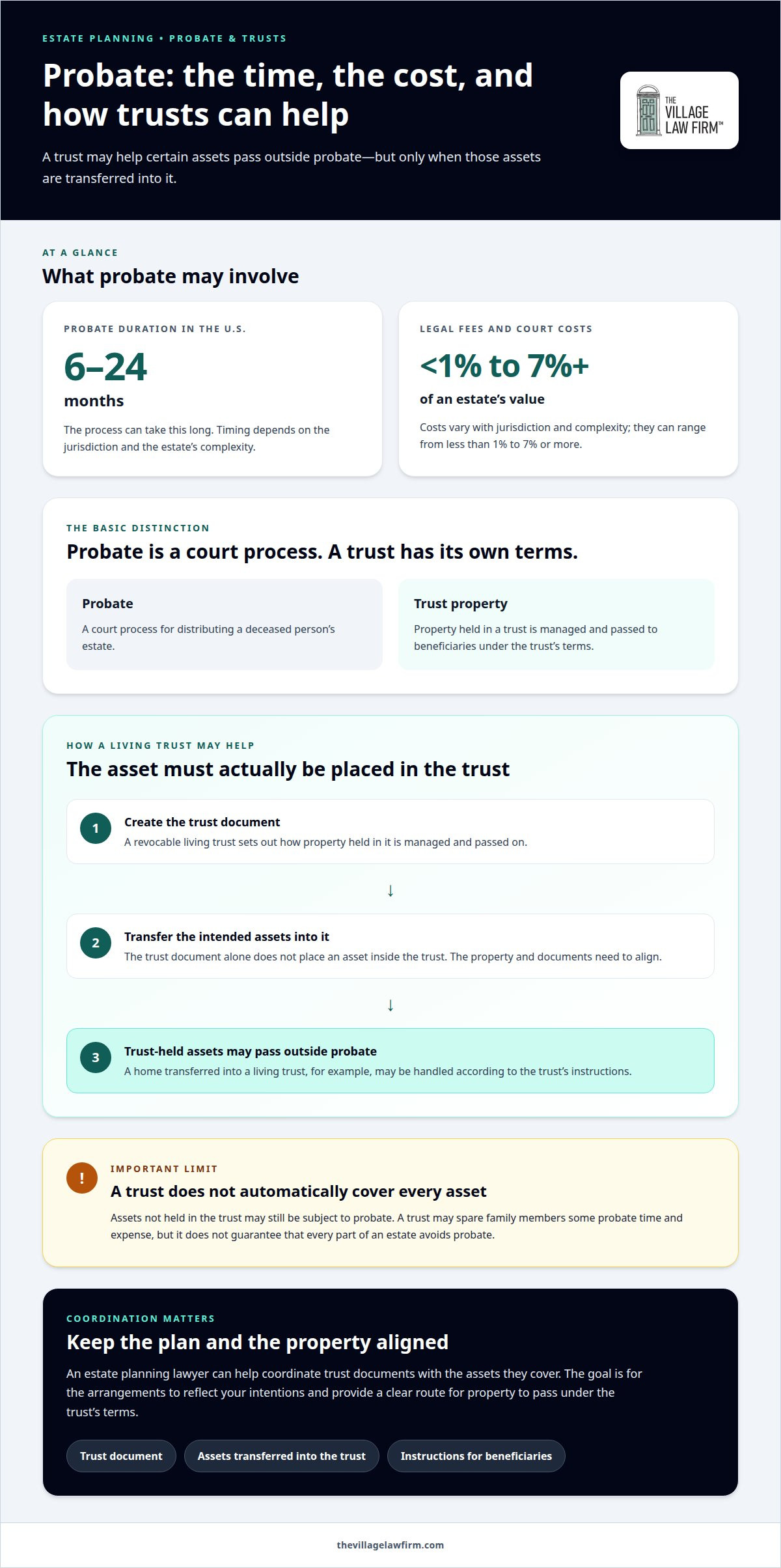
Probate is a court process for distributing a deceased person’s estate. A trust can affect how property held in it passes to beneficiaries.
Living Trusts and Probate
A revocable living trust can hold assets transferred into it and allow those assets to pass outside probate. Property held in the trust is managed under its terms. For example, a home transferred into a living trust may be handled according to the trust’s instructions. The trust document and the assets it holds need to align.
Using Trusts to Avoid Probate
A revocable living trust can help avoid probate for assets transferred into it. This may give family members a clearer route to inherit property under the trust’s terms. The transfer matters: the trust document alone does not place an asset inside the trust. An estate planning lawyer can help coordinate the documents and the property they cover.
Probate can take 6-24 months in the United States. Depending on jurisdiction and complexity, probate legal fees and court costs can range from less than 1% to 7% or more of an estate’s value. A trust may help spare family members some probate time and expense, but assets not held in the trust may still be subject to probate.
Trusts can also express charitable wishes. For example, a charitable trust can direct assets to a 501(c)(3) organization. The trust’s terms can specify which assets support the organization and how distributions occur. These documents matter when you want family members and charitable beneficiaries to receive different assets. An attorney can help shape trust provisions around those intentions and the property involved.
What estate planning lawyers do
An estate planning attorney turns your wishes into coordinated legal documents and a practical plan. The work can include preparing a will, establishing a trust, and aligning beneficiary designations. The goal is to address who receives assets, who manages them, and who can make decisions if you cannot. Each document should serve a clear purpose within your wider estate plan.
Planning also reaches beyond preparing documents. An attorney can help name an executor, consider how personal property should be inventoried and distributed, and coordinate instructions for beneficiaries. For example, a plan can specify which family member receives a particular item instead of leaving its distribution unclear. An attorney can also help update your plan as your wishes or circumstances change.
Family and business circumstances can call for more tailored planning. A parent may want to name a guardian for a minor child and plan how the child’s inherited assets will be managed. A family with a special-needs member may need to consider continued care after the client’s death. Business owners can address succession, while blended families can plan for stepchildren or half-siblings.
How much does an estate planning lawyer cost in the United States? The cost depends on the work involved, location, and attorney; some charge project fees, while others bill hourly. A simple will and a comprehensive plan involving trusts and tax planning require different scopes of work.
To choose a qualified estate planning lawyer, look for an attorney focused on estate planning in the state whose laws apply to your situation. Attorneys must pass the bar exam to practice law in their area. Discuss your family structure, assets, business interests, and goals so the attorney can explain how the proposed documents address them.
For tailored help preparing or updating an estate plan, discuss your planning needs with The Village Law Firm.
The Village Law Firm
The Village Law Firm helps individuals bring structure to estate and legacy decisions through tailored legal planning. If your wishes involve a trust, care for a family member, or assets that need thoughtful administration, professional guidance can help you understand how the pieces fit together.
The firm’s services include Estate Planning, Estate Administration, Medicaid Planning, and Planning for Families with Children. These services can help at different stages, from preparing documents that reflect your intentions to administering an estate after a death. The right next step depends on the decisions you need to make and the people or property your plan must account for.
If you’re ready to discuss your estate planning needs, contact The Village Law Firm.
Give Your Future Plan a Clear Next Step
The next step is to turn your priorities into a plan that reflects your life now and can be revisited as circumstances change. Understanding why you need an estate planning lawyer can help you decide whether your arrangements are ready for professional review, especially if your family or assets bring added complexity.
The Village Law Firm offers Estate Planning, Estate Administration, and Medicaid Planning in New York City. These services can support you as you prepare for the future or administer an estate after a death. A conversation can help clarify which decisions need attention and what planning fits your situation.
You don’t need every answer before taking that step. Bring the questions that matter most to you, whether they concern your family, assets, or how your wishes should be carried out. A thoughtful discussion can make a complex process more manageable.
Contact The Village Law Firm to discuss your estate planning needs and move forward with greater clarity.
Frequently Asked Questions
How Are Beneficiary Designations Different from My Will?
A beneficiary designation is an instruction attached to a particular account or policy, while a will addresses assets covered by its terms. For example, a life insurance policy may name one person even if your will names someone else. Review both after a major family or financial change so outdated account instructions don’t undermine the intentions in your will.
What Happens If I Die Without a Will or Trust?
If you die without a will, state intestacy law determines how assets without other transfer instructions are distributed. The result may not reflect your choices about who should inherit. For example, a friend you hoped to provide for may not be included under the rules that apply to your family. Assets with beneficiary designations or other ownership arrangements may pass differently.
What’s the Difference Between a Will and a Trust?
A will directs the distribution of covered assets after death, while a trust holds assets under terms created for its beneficiaries. A will can name an executor, and a trust names a trustee to manage property placed in it. For example, someone might use a will for personal belongings and a trust for assets to be managed under specific instructions.
What does an estate planning lawyer do?
An estate planning lawyer shapes legal documents around your wishes and circumstances. This can include preparing wills, trusts, and healthcare directives, and coordinating how they work together. For example, if you own a business and have children, a lawyer can help address succession and family-planning considerations within your broader estate plan, rather than treating each document as a separate task.
When should you hire an estate planning attorney?
You can begin considering estate planning as an adult at age 18, and professional advice is especially useful when your situation goes beyond a simple estate. A new child, a family member with special needs, a business, or property in another state can raise questions a basic form may not address. Understanding why you need an estate planning lawyer can help you decide whether your circumstances merit tailored legal guidance.
How can an estate planning lawyer help you make a will and estate plan?
An attorney can clarify your priorities, prepare documents that reflect them, and identify gaps between your instructions and asset arrangements. For example, you can discuss who should manage your estate, which people or organizations you want to benefit, and what should happen if you cannot make decisions. The resulting plan can bring those choices into a more coordinated framework for your family.