
Writing your own will is permitted in New York, but a document can still fail to carry out your wishes. A person must be at least 18 years old, according to the New York State Senate, and the testator must sign the will with at least two witnesses present. The risks of a DIY will in New York can come from a signing error or a missing provision, not simply from who drafted it.
A DIY will may seem like a straightforward way to put your plans in writing. The harder part is making sure it follows New York’s execution rules and clearly addresses the people and property that matter to you.
This article explains New York’s signing requirements, how omissions can lead to disputes or unintended results, and when a professionally prepared estate plan may be worth considering. You’ll learn where a DIY will can fall short and what to consider before relying on one.
Key Takeaways
- New York witnesses must sign within 30 days of one another and include their addresses, so execution details matter.
- If a will is invalid, an earlier valid will may control; otherwise, intestacy laws may determine who inherits.
- Look beyond who receives specific assets: omitted backup beneficiaries, executor powers, or family-specific provisions can leave important decisions unresolved.
- Consider professional estate planning when family relationships, property, or other needs make a basic will difficult to tailor.
New York will execution requirements
You can write a New York will without a template, but its validity depends on proper execution. The signature, witness steps, and instructions for your assets must work together.
Signing and Witnessing Requirements
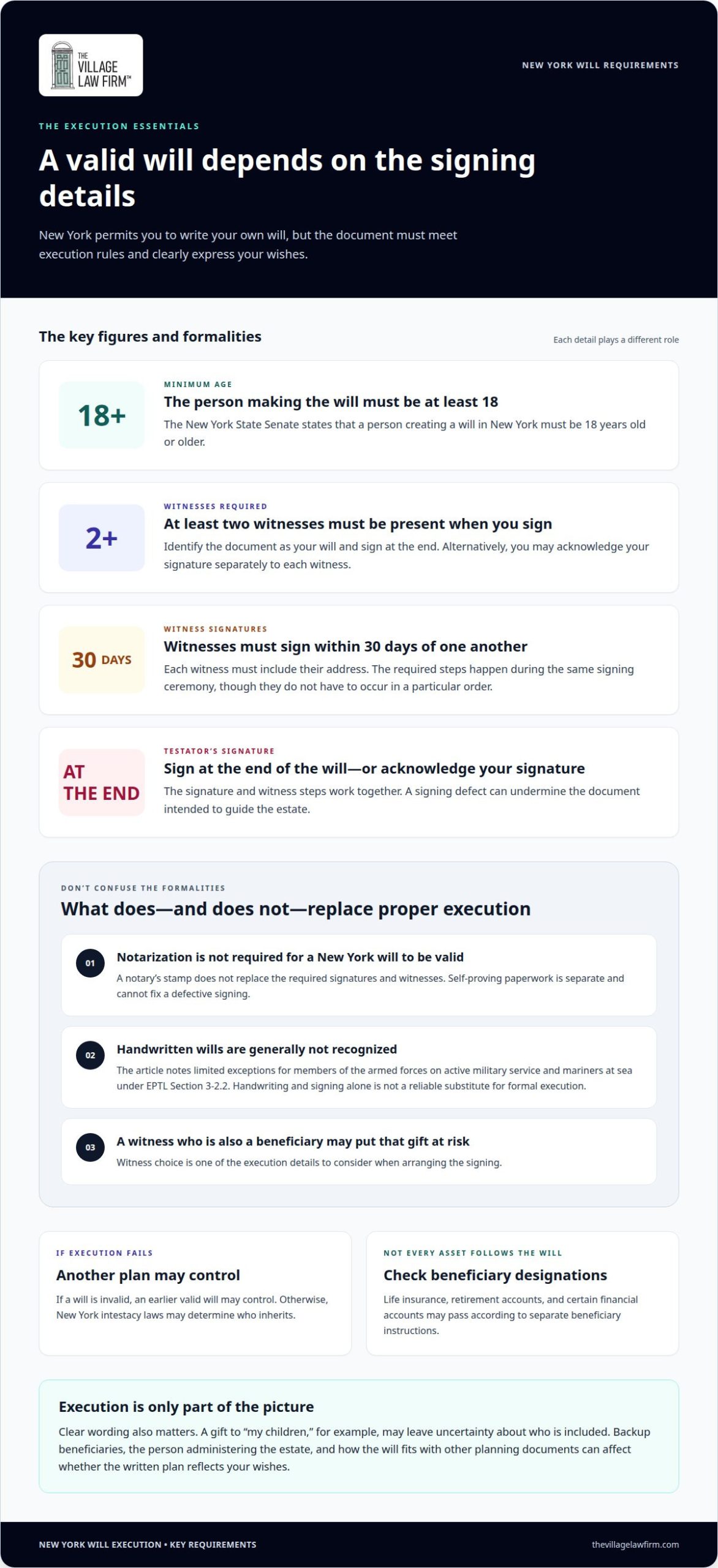
Execution means signing the will and completing the required witness formalities. Under New York law, at least two witnesses must be present when the testator signs. The testator must identify the document as their will and sign at the end. Alternatively, the testator may acknowledge the signature separately to each witness.
New York State Senate requires witnesses to sign within 30 days of each other and include their addresses. The required steps must happen during the same signing ceremony, although they need not occur in a particular order. A witness who is also a beneficiary may put that gift at risk. These details matter because a signing defect can undermine the document meant to guide the estate.
Handwritten Will Validity
A holographic will is handwritten, rather than prepared as a standard typed document. New York generally does not recognize handwritten wills, with limited exceptions for members of the armed forces on active military service and mariners at sea under EPTL Section 3-2.2.
For most people, handwriting wishes on paper and signing them is not a reliable substitute for the formal execution rules. A typed document also needs the required signature and witnesses. This distinction matters in urgent situations: the document’s format alone does not establish that it can direct distribution.
A New York will does not need notarization to be valid. A notary’s stamp does not replace the required signatures and witnesses. Self-proving paperwork is separate from the will’s execution requirements, so it cannot fix a defective signing.
Some assets may pass outside the will under separate ownership or beneficiary instructions. Life insurance policies, retirement accounts, and certain financial accounts may pass according to their beneficiary designations. For example, a named beneficiary may receive an account directly rather than under a gift in the will.
State-specific forms can cause problems if their language does not reflect New York requirements or your circumstances. An ambiguous gift to “my children,” for example, may leave uncertainty about who is included. Clear drafting matters for children, other intended beneficiaries, and the person administering the estate.
How a New York Estate Planning Attorney Can Help Prepare Your Will
New York residents can write their own wills, but a document’s language and fit with the rest of an estate plan matter. According to the New York State Senate, a person creating a will in New York must be at least 18 years old.
Professional Will Preparation in New York
An estate planning attorney connects your wishes with your family relationships, property, and other planning documents when preparing a will. This review matters because a standard form may not address details that affect your intended distribution.
For example, an attorney can clarify whether “my children” includes a stepchild, name substitute beneficiaries if someone dies first, and specify who should administer the estate. The attorney can also consider whether the will aligns with a trust or other parts of your estate plan. Clear drafting helps beneficiaries understand the document.
Costs and Disputes from Will Problems
An unclear or invalid will can shift attention from carrying out your wishes to resolving disagreements. Loved ones may dispute what ambiguous wording means, whether a beneficiary was intentionally excluded, or which document controls.
Those disputes can require court involvement and add time and expense to estate administration. Conflicting instructions about a home, for instance, may prompt beneficiaries to disagree about who should receive it. Professional review can address unclear language before it causes conflict. Reviewing an older plan can also help identify changes after marriage, divorce, births, or shifts in family relationships.
AI-Generated Wills Under New York Law: Why Professional Review Matters
An attorney reviewing an AI-generated will can assess whether its language fits New York requirements and your circumstances. A polished document may still rely on incorrect assumptions, omit a backup beneficiary, or use terms that conflict with your instructions.
Reviewing a will also means considering it alongside existing wills and trusts, not treating it as a standalone file. An older trust, for example, may direct assets differently from a newer will. Comparing the documents can reveal a conflict and help identify revisions needed to express your wishes.
If you have an older will, a DIY draft, or an AI-generated document, a New York estate plan review can help bring its terms and related documents into alignment.
What Makes Estate Planning So Tricky?
Estate planning connects legal documents with your family, property, and future responsibilities. In New York, a mistake can affect who receives an estate and who cares for minor children.
Invalid Execution and Intestate Succession
Intestate succession applies when someone dies without a valid will governing their estate. If a New York will fails the legal execution requirements, it may be treated as though no will existed, leaving distribution to state intestacy laws.
The Surrogate’s Court in the county where the deceased lived reviews the will, confirms proper execution, and oversees distribution. If the will is invalid, an earlier valid will may control. Otherwise, intestacy laws determine who inherits. An execution error can redirect property away from the people named in a DIY will.
Choosing Executors and Backup Guardians
An executor is the person named in a will to handle estate administration. Choosing someone dependable and giving clear instructions about their authority can reduce uncertainty for beneficiaries.
Parents can name a guardian for minor children and address management of the children’s property if both parents cannot care for them. The Surrogate’s Court must approve a guardian named in a will. Naming a backup expresses an alternative preference if the first choice cannot serve. Clear wording also distinguishes caregiving from property management.
Execution is only one source of risk. A will must be signed voluntarily by a testator of sound mind, and imprecise language can complicate its interpretation. If relatives question whether someone understood the document or signed freely, a dispute may follow. Proper estate planning considers both the document’s legal form and the circumstances in which it was created.
New York’s intestacy rules may not reflect a family’s intentions, particularly in blended families or complicated relationships. A surviving spouse has legal rights that can affect distribution regardless of the will’s wording. DIY wills may also omit executor powers or backup beneficiaries, leaving practical decisions unresolved. A will needs to coordinate people, property, and responsibilities, not simply name recipients.
Missing will provisions
A will can name beneficiaries yet leave important decisions unresolved. The risks of a DIY will in New York often lie in omissions: no backup recipient, unclear gifts, or missing authority for the executor. A document may reflect your wishes today, but gaps can make them harder to carry out later.
Consider a specific gift of a family heirloom to one person. If that person dies before the will-maker, the will needs to say what happens next. Naming contingent beneficiaries can clarify the alternative. Without clear language, relatives may disagree about whether the gift should pass to someone else or remain part of the estate.
Executor powers also deserve careful attention. A will may name an executor but leave their authority unclear. Clear provisions can explain how the executor should manage assets and administer the estate, reducing uncertainty for beneficiaries, particularly when a business or several kinds of property are involved.
Family circumstances may call for provisions that basic templates do not cover. Blended families, business ownership, and a beneficiary with special needs can each affect how a plan should be structured. A broad reference to “my children,” for example, may not communicate how you intend to address every family relationship. Naming people and clarifying each gift can reduce ambiguity.
New York allows a person to leave nothing in a will to children who are 18 or older, though a child may challenge the will if the exclusion seems unintended. If exclusion is deliberate, precise wording can help reflect that choice. If it is accidental, an omission may create conflict instead.
A DIY form may seem like a way to save money, but a missing provision can leave loved ones facing uncertainty and disputes. An estate planning attorney can review the document, identify gaps, and shape language around your family and assets. Arrange a review of your will to address omissions before they complicate estate administration.
The Village Law Firm
The Village Law Firm helps New York residents turn their wishes into a coherent estate plan and address gaps in a will. Its Estate Planning service can help when a DIY draft, an older document, or changing family circumstances raise questions about beneficiaries, assets, or responsibilities.
For parents, Planning for Families with Children can address decisions a will needs to make for children. Estate Administration is relevant when a loved one has died and the family needs help understanding how the estate will be handled. The next step depends on whether you are preparing or reviewing a plan, or handling an estate after a death.
If you’d like to discuss your will or estate plan, contact The Village Law Firm.
Make Your Next Estate Plan Decision Deliberately
A will is part of a larger conversation about the future you want for the people and priorities that matter to you. The risks of a DIY will in New York are a reason to treat planning as an ongoing decision, not a document to set aside once signed. As relationships, assets, and care needs change, a thoughtful review can help keep your plan aligned with your intentions.
The Village Law Firm offers Estate Planning, Estate Administration, and Medicaid Planning in New York. Whether you are preparing a will, revisiting an existing plan, or addressing questions after a death, the firm can help you consider the next step in context. Bring the questions that matter most and start a conversation with greater clarity.
Discuss your estate planning with The Village Law Firm. A considered plan can give your loved ones clearer direction for the future.
Frequently Asked Questions
Can an estate planning attorney turn my written wishes into a valid will?
Yes. An estate planning attorney can use your written wishes as a starting point and shape them into a will that addresses your intended beneficiaries and the rest of your estate plan. Instructions about a family business or a child who needs long-term support, for example, may require more context than a brief note provides. The will still needs proper execution.
Can a beneficiary be a witness to my will in New York?
A beneficiary can witness a New York will, but their gift may be voided. Under EPTL Section 3-3.2, that risk does not apply if at least two other witnesses receive nothing under the will. For example, if a person named to receive property also witnesses the signing, the other witness arrangements may affect whether that gift stands.
Can anyone else challenge my Will after I die?
A person with an interest in the estate may challenge a will, including by alleging undue influence, forgery, or incompetence during signing. Disagreeing with a gift alone is different from proving a legal basis to set the will aside. A relative might, for example, question whether the signer understood the document or signed voluntarily. Evidence about the circumstances of signing may become important.
Can my Will name a Guardian for my young children and someone to manage their property?
Yes. A New York will can name a guardian to care for minor children and manage their property if both parents cannot care for them. The Surrogate’s Court must approve the guardian’s appointment. Naming a trusted person expresses your preference, while clear provisions can distinguish caring for a child from managing property.
Do I have to leave something to my spouse and children in my Will?
You may leave nothing in a New York will to children who are 18 or older, though they may challenge the will if the exclusion seems unintended. A surviving spouse has separate rights and can go to court to claim part of the deceased spouse’s estate. These rules mean a will’s gifts may not, by themselves, settle every family member’s potential rights.
Do I need a lawyer to do my Will?
No. New York residents can write their own wills; a lawyer is not required simply because you are making one. Professional guidance can help if you own real property, have children from different relationships, or need provisions for a business or a beneficiary with special needs. In these circumstances, a basic form may not clearly express your intentions.