
A DIY will can work when your finances and wishes are simple, but the problems with online wills often begin when a form leaves room for interpretation. A gift may be unclear if the item is sold before you die or the named beneficiary dies first. In New York, a child may receive an inheritance at age 18 if a will lacks appropriate provisions.
It’s understandable to want a straightforward way to put your wishes in writing. The key is knowing where a template may help and where it may fall short of the legal advice your circumstances call for. This article explains common problems with online wills, including how to describe gifts and property clearly, what to consider when leaving a home to a child, and when personalized estate-planning guidance may be useful.
Key Takeaways
- A DIY will may suit straightforward finances, but family circumstances or assets that need tailored planning can make a template inadequate.
- Make specific gifts easier to interpret by addressing what happens if the item is sold or the beneficiary dies before you.
- Online forms may not provide individualized advice on how your assets, beneficiaries, and family needs fit together.
- Wills must meet the applicable state’s signing and witness requirements; execution errors can create difficulties during probate.
1. What are the issues with online wills?
Online wills may suit straightforward finances, but a template can miss details that affect your estate. It might not name a successor executor, include a residuary clause, or explain the executor’s powers. If the instructions leave property undistributed, some assets may pass to heirs you didn’t intend. A form written for another state may also use wording that doesn’t fit New York.
Online services may cost less upfront than attorney-drafted wills, but the comparison depends on the work involved. An attorney can consider your family, assets, and wishes together, then tailor your plan. A will may be challenged in probate if someone disputes its validity or alleges undue influence. Ambiguous wording or execution errors can also complicate administration, and a flaw may surface only after the person who made the will has died.
A will directs assets that form part of the estate. Property governed by separate ownership or beneficiary arrangements may pass outside it. Complex real estate, business interests, blended families, and digital assets can raise decisions a general questionnaire may not address. Planning for someone who receives government benefits also needs care, since an inheritance may affect those benefits.
Some online services provide wills, trusts, powers of attorney, and other documents. Having those documents available doesn’t mean the service gives individualized advice about which ones fit your circumstances. Advance healthcare directives may be separate. Review what the service prepares and whether its process accounts for your state and assets.
To make, sign, store, and update an online will, choose a New York-specific document, complete it yourself, follow its signing and witness instructions, and store the signed original securely. Update it after major family or asset changes. Before choosing a service, review its state coverage, document scope, and execution guidance. For complex family arrangements or assets, consider whether a standard form can address your needs.
2. Clear instructions for gifts and property
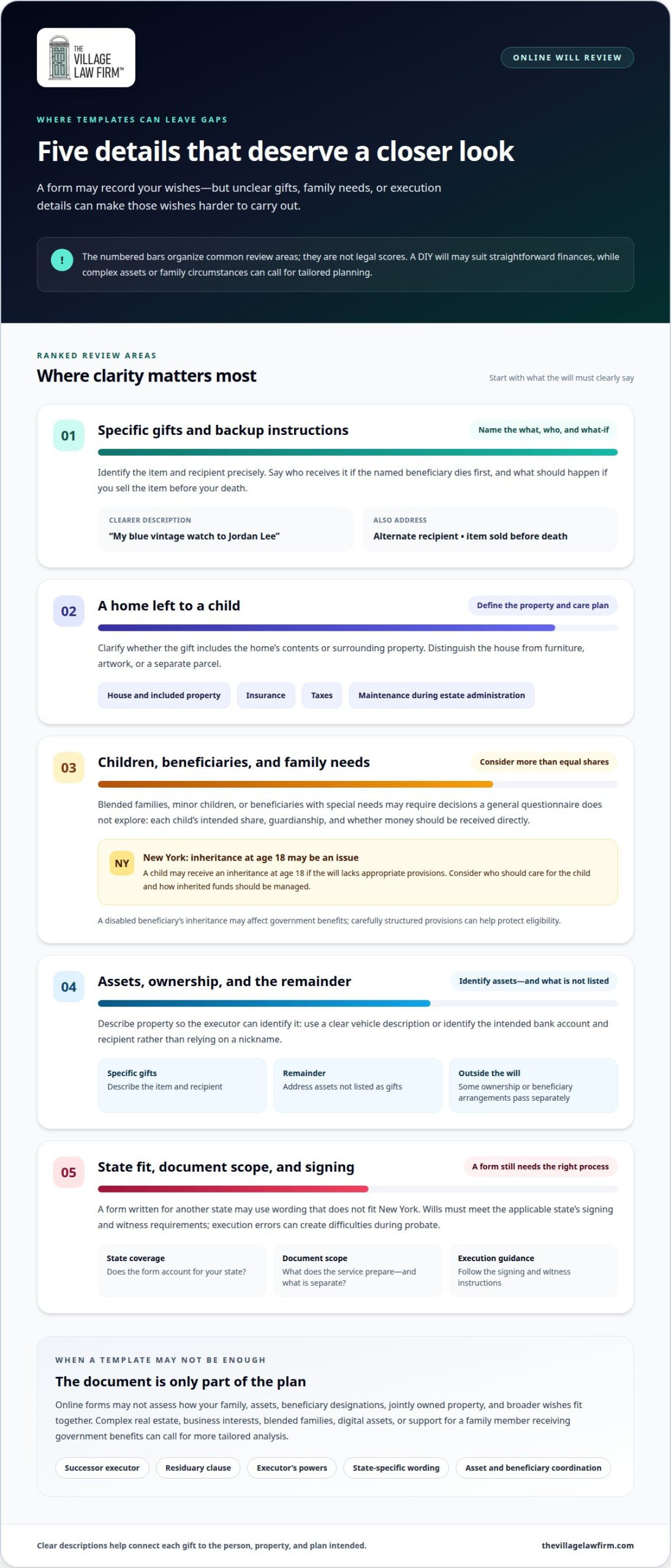
For each specific gift, identify the item and recipient clearly. “My blue vintage watch to Jordan Lee” is more precise than “my watch to one of the children.” Name an alternate recipient in case Jordan dies before you. Also say what should happen if you sell the watch before your death, since a gift of an item you no longer own may not carry out your intention.
A home needs more than a named recipient. If you leave a house to a child, specify whether the gift includes its contents and surrounding property. Consider who should handle insurance, taxes, and maintenance while the estate is administered. For example, distinguish the house itself from furniture, artwork, or a separate parcel so the executor can interpret your wishes.
Describe each asset so your executor can identify it. For a vehicle, use a clear description rather than “my car”; for a bank account, identify the intended recipient and account clearly rather than relying on a nickname. Then explain what should happen to property not listed as a specific gift. A broad remainder instruction can cover assets acquired later or overlooked in the original list.
Blended families, minor children, and beneficiaries with special needs may need more than equal shares in a form. An online questionnaire may not explore siblings’ different financial needs, guardianship choices, or whether a beneficiary should receive money directly. State each child’s intended share and your reasoning clearly, then consider whether tailored estate planning is needed.
In New York, a minor may receive an inheritance at age 18 if the will lacks appropriate provisions. For a child, address who should care for them and how inherited funds should be managed. A disabled beneficiary’s inheritance may also put government benefits at risk; carefully structured provisions can help protect eligibility. Clear instructions connect each gift to the person, property, and plan you intend.
3. Limits of legal advice from online services
An online service can turn questionnaire answers into a will or trust document, but that isn’t the same as individualized legal advice. A standard form can record who receives an asset without analyzing whether it should pass through the will. It may also leave you to decide how beneficiary designations, retirement accounts, and jointly owned property fit together. Those choices can affect whether the document carries out your broader intentions.
Consider a family with a disabled child and a surviving spouse who receives government benefits. A form may produce standard documents without assessing how an inheritance could affect benefit eligibility or whether a trust belongs in the plan. Similarly, choosing a beneficiary for a retirement account involves decisions beyond the wording of a will. These limits matter especially when a family has a business, complex real estate, or assets in more than one country.
Online questionnaires also have limits when a family’s circumstances need careful discussion. A blended family may include children with different financial needs, while a child who helps an older parent may be involved in preparing the answers. A questionnaire cannot establish by itself who completed it or who was present. An attorney can meet privately with the person making the will, discuss their wishes, and assess concerns about decision-making capacity or undue influence.
Online estate-planning services can offer wills, trusts, powers of attorney, and other documents. Having several documents doesn’t mean the service has advised you on which ones fit your circumstances. Before relying on a form, consider whether your plan needs to coordinate asset ownership, beneficiary choices, tax goals, probate concerns, and support for a disabled family member. An estate-planning attorney can connect those decisions and explain how each document serves the plan. For straightforward finances and uncomplicated wishes, an online form may be a practical starting point; complex family or asset questions call for more tailored analysis.
4. What signing and witness requirements apply to online wills by state?
An online will still needs to meet the execution requirements of the state whose law applies. A document that misses those requirements may not be admitted to probate. Completing the form is only one part of the process: signing, witnessing, and any supporting affidavit must also be handled correctly.
For a New York will, follow instructions written for New York rather than assuming a template works identically across state lines. Check the document for clear signature and witness instructions, then follow the steps in the stated order. A witness’s eligibility and role matter; unclear instructions about who can witness a will may create unintended consequences during estate administration.
Pay attention to the signing event itself. The person making the will should sign the final document as directed, and witnesses should complete the required steps. Don’t rely on an unsigned draft or saved online copy, and don’t assume an electronic signature or remote signing method is valid just because a platform permits it. The controlling state’s rules determine whether execution is effective.
A self-proving affidavit can affect what happens later. If the will lacks one when signed, estate administration may involve additional steps or costs. Keep the signed original in a secure, known location, and tell the executor where it is stored. If you update the will, execute the new document correctly and make sure the people handling your estate can identify the intended version.
Before finalizing an online document, confirm that its instructions address your state’s execution process, witness requirements, and any affidavit. State-specific wording matters, but so does carrying out the signing properly. For tailored guidance on New York estate planning and will execution, speak with a qualified estate-planning attorney.
The Village Law Firm: Planning For Families with Children
The Village Law Firm offers Planning for Families with Children and Estate Planning for parents who want their wishes reflected in a coordinated plan. This can be a useful next step when a template leaves questions about who should care for your children, how gifts should be handled, or what happens if a chosen beneficiary dies before you.
Planning for a child involves more than naming a recipient. In New York, a minor may receive an inheritance at age 18 if a will lacks appropriate provisions. Thoughtful planning can address guardianship choices and how property intended for children should be managed. Families with changing circumstances, blended households, or a child with distinct financial needs may benefit from individualized estate-planning guidance.
If you’re ready to discuss a plan for your family, contact The Village Law Firm.
Make your next step a considered one
A will is part of a larger plan that should keep pace with your family and circumstances. Set aside time to consider whether your current arrangements still reflect your intentions, especially after a major change in your household or finances. If an online document leaves unresolved questions, use them to guide a more individualized conversation rather than leaving them buried in a form. The problems with online wills often stem from the gap between a standard document and the decisions a particular family needs to make.
The Village Law Firm offers Estate Planning, Estate Administration, and Medicaid Planning to help address different stages of planning and managing an estate. A useful next step is to review your wishes and the decisions you want your plan to support.
Contact The Village Law Firm to discuss your next step with care and clarity.
Frequently Asked Questions
Are DIY wills workable for people with simple financial affairs?
Online wills can work when your assets, family arrangements, and wishes are straightforward. For example, someone with a small number of assets and clear beneficiaries may find a state-specific online form useful. The document still needs to reflect your circumstances and meet your state’s execution rules. Revisit it after major changes, such as marriage, a new child, or acquiring property.
Can I write my own will in New York without a lawyer?
A DIY will may suit a straightforward New York estate, but preparing it without a lawyer doesn’t remove the need to follow applicable signing and witness requirements. Consider whether your wishes involve simple gifts or more involved family and asset arrangements. If your plan raises questions about guardianship, trusts, or beneficiaries with different needs, individualized estate-planning advice can help you address them.
Is it better to die intestate than use a DIY will?
Neither option ensures your wishes will be followed. If you die intestate, state law determines how your assets are distributed; a valid will lets you name your intended beneficiaries. A DIY document that fails legal requirements or leaves key gifts unclear can also create problems. The practical goal is a valid plan that fits your family and property, rather than relying on default rules.
What are the issues with online wills?
A standard form may not account for your family structure, ownership arrangements, or how an asset passes after death. For example, property held jointly may pass to the surviving owner rather than under a will. Online questionnaires may also leave gaps about successor executors or what happens to gifts if a beneficiary dies first. Review how each instruction works with the others, not just its wording in isolation.
What are the most common problems with online wills?
Common concerns include ambiguous gift descriptions, missing instructions for undistributed property, and documents that don’t follow the relevant state’s execution rules. A form may also fail to name an alternate executor or explain what happens if a named recipient dies first. These problems with online wills can leave family members interpreting unclear wishes during probate, so make each gift and contingency understandable.
Are online wills legally valid in all U.S. states?
There isn’t one execution process that applies uniformly across every state. A will must meet the applicable state’s requirements for signing and witnesses; otherwise, it may not be admitted to probate. An online platform can prepare a document, but that alone doesn’t establish its validity. For a New York will, use state-specific instructions and complete each signing step as directed.