A signed trust doesn’t fund itself. In New York, funding means transferring eligible assets into the trust. So, when considering how to title assets in a trust in NY, match each asset to the appropriate transfer method. A home generally requires a new deed naming the trust as grantee and recording it in the county where the property is located. Bank accounts may need to be retitled or moved into an account in the trust’s name.
It’s easy to assume that creating a trust completes the plan. But property and accounts left in your individual name may still have to pass through probate, even if a pour-over will directs them to the trust.
This article explains what funding involves, how real estate, bank and brokerage accounts, and other assets are commonly handled, and why retirement accounts require a different approach. You’ll also learn what may happen when an asset remains outside the trust, so you can identify potential gaps in your plan.
Key Takeaways
- Funding a trust means transferring ownership of assets into it; signing the trust document alone doesn’t complete that work.
- For New York real estate, the deed must name the trust as grantee and be recorded in the county where the property is located.
- Assets left in your individual name may still pass through probate, even when a pour-over will is part of your plan.
- Bank accounts and retirement assets follow different rules, so their ownership and beneficiary designations need distinct consideration.
Recording deeds in the New York county where property is located
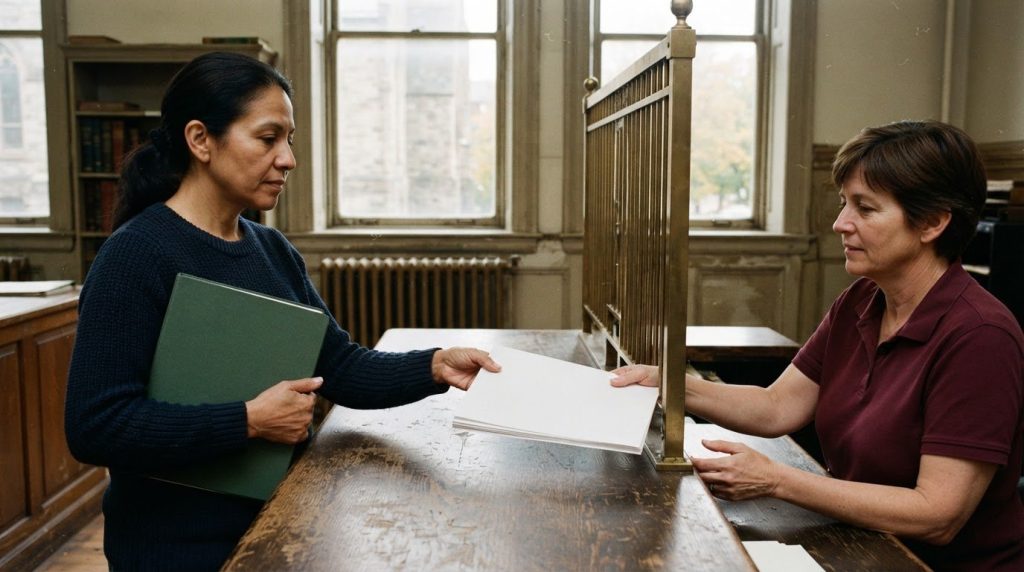
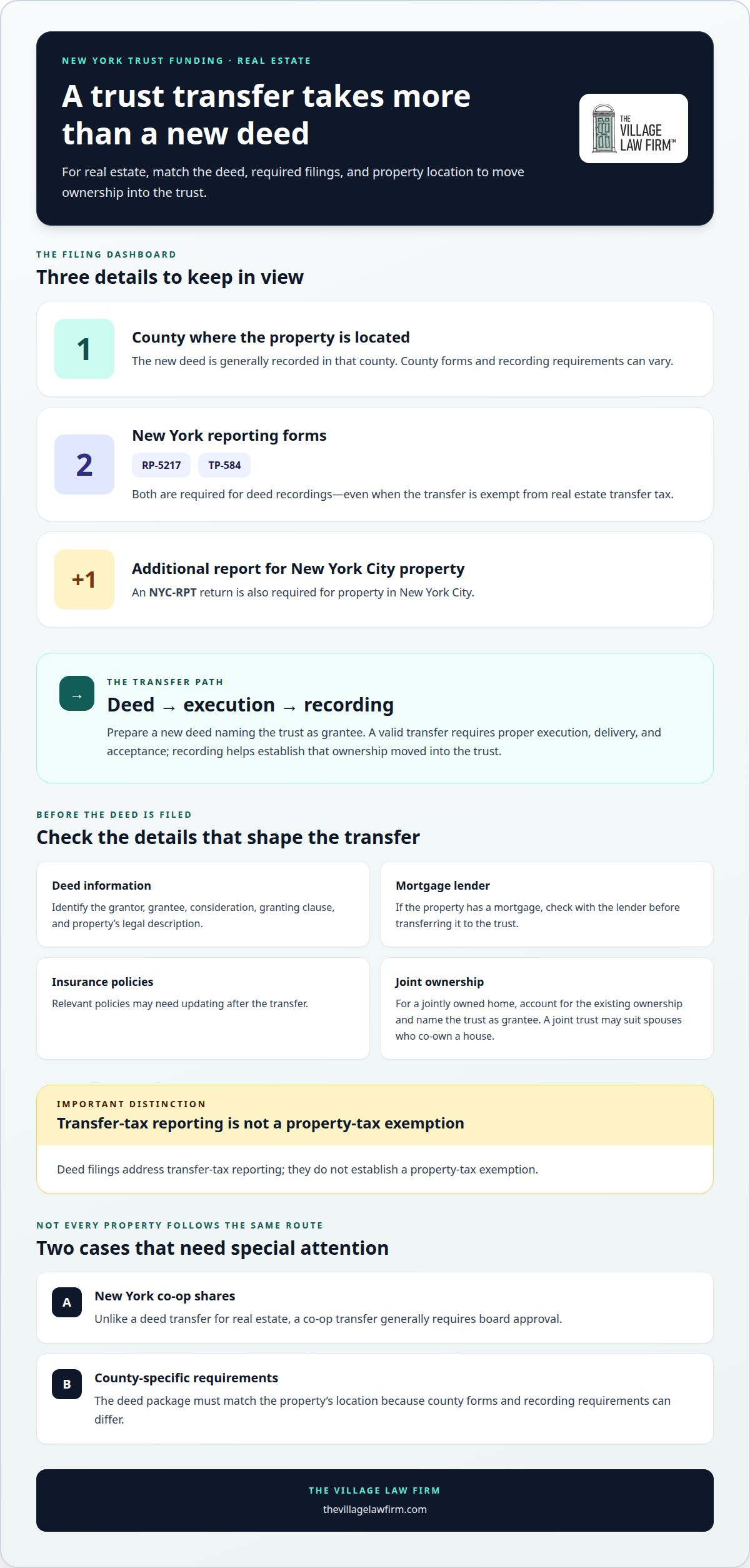
For New York real estate, funding a revocable trust usually requires preparing and recording a new deed. A deed transferring property into a trust is generally recorded in the county where the property is located. Knowing how to title assets in a trust in NY starts with correctly identifying the grantor, grantee, consideration, granting clause, and property’s legal description. A valid transfer requires proper execution, delivery, and acceptance.
These details establish whether ownership has moved into the trust. New York deed recordings require an RP-5217 Real Property Transfer Report and a TP-584 Combined Real Estate Transfer Tax Return, even when the transfer is exempt from real estate transfer tax. New York City property also requires an NYC-RPT return. County forms and recording requirements can vary, so the deed package must match the property’s location.
If the property has a mortgage, check with the lender before transferring it to the trust. Relevant insurance policies may also need updating. Deed filings address transfer-tax reporting, but they don’t establish a property-tax exemption. For a jointly owned home, the deed should account for the existing ownership and name the trust as grantee. A joint trust may suit spouses who co-own a house. New York co-op shares are different because a transfer generally requires board approval.
For valuable personal property, a written assignment or bill of sale can transfer items such as jewelry or artwork. A vehicle requires a title transfer. Retirement accounts generally shouldn’t be retitled into a revocable trust: transferring an IRA or 401(k) is treated as a taxable distribution in the year of transfer. Beneficiary designations require separate consideration.
A pour-over will can direct property left outside the trust into it, but assets passing under the will must go through probate. A qualified terminable interest property trust can provide income to a surviving spouse, with remaining assets passing to beneficiaries selected by the grantor. When deciding how to title assets in a trust in NY, align ownership with the trust’s distribution terms.
Consequences of leaving assets outside a trust
A New York revocable trust can govern only assets transferred into it. If a grantor dies still owning a bank account, home, or other asset individually, that property will likely pass through probate. A pour-over will can direct it to the trust, but the will must go through probate for assets passing under it. Probate may take months, delaying when beneficiaries receive property or funds.
By contrast, a trust continues after its creator’s death. Assets already held in the trust can be distributed under its terms without probate determining who receives them. That makes ownership more than a paperwork detail. If a deed, account record, or beneficiary designation conflicts with the estate plan, competing claims or legal challenges may delay distribution. An asset left outside the trust may also require separate administration before the remaining trust property can be handled as planned.
Tax consequences depend on the trust’s terms and the asset. For income-tax purposes, a New York grantor is treated as the owner of a living trust, so trust income is reported on the grantor’s personal return under grantor-trust rules. A living trust has no inherent estate-tax advantage over a will, and transferring a house into one doesn’t by itself exempt the house from estate taxes.
Privacy also has limits. A New York living trust is a private document, but a pour-over will becomes public when submitted for probate. Records for real estate held in a trust may also be publicly accessible. Keep these distinctions in mind when weighing probate avoidance against public access to property records.
An irrevocable trust is not simply a revocable trust with a different title. Once its document is valid, the creator relinquishes control and ownership of assets held in it. This change can affect who manages the property and how it is distributed. Before choosing between trust structures, consider control, distribution terms, and the assets involved as parts of one estate plan.
How living trusts hold assets during the grantor’s lifetime
A New York living trust takes effect during the grantor’s lifetime, unlike a will, which takes effect after death. The grantor transfers assets into the trust and may usually serve as its trustee, retaining control while alive. The trust document sets out the terms, names beneficiaries, and explains how trust assets should be distributed after the grantor dies.
Signing the document alone doesn’t transfer ownership. The grantor must take affirmative steps for each asset, such as changing the title to real estate or moving funds into an account titled in the trust’s name. An asset still owned individually may not be governed by the trust during the grantor’s life or pass under its terms without probate.
With a revocable living trust, the grantor can change or revoke the arrangement during life. New York’s Estates, Powers and Trusts Law §§ 7-1.17 and 7-1.18 address revocable trusts, according to the New York State Legislature. The trust’s wording and the asset records should work together. For example, if a deed still names the grantor individually, the trust does not hold that real estate merely because the trust document refers to the home.
A living trust can also support continuity if the grantor becomes incapacitated. Real estate transferred into the trust can be managed under its terms, helping avoid guardianship proceedings over that property. The designated successor trustee can follow the trust’s instructions, unlike a will, which takes effect only after death. Not every asset automatically becomes part of the trust.
During the grantor’s life, trust assets remain available for the grantor’s use under a typical revocable arrangement. After death, the trustee follows the distribution terms for beneficiaries. Because the trust’s effect depends on both its language and completed transfers, estate planning should account for assets acquired later. A newly purchased home, for instance, needs ownership arrangements consistent with the trust’s purpose.
Bank and brokerage account retitling
Bank and brokerage records should reflect the trust’s ownership plan. The transfer method depends on the account type and the institution’s paperwork.
Retitling Bank Accounts
Retitling a bank account means moving its funds into a new account in the trust’s name. Signing a trust document alone doesn’t transfer an existing account. The account title should reflect the trust’s ownership, while the grantor may remain trustee under a living trust. This alignment helps the account be managed and distributed under the trust’s terms.
Retitling Brokerage Accounts
Retitling a brokerage account means changing its ownership record so the trust, rather than the grantor individually, holds the investment account. That distinction can affect whether the assets follow the trust’s distribution instructions. Account ownership and the trust document should work together. An attorney can coordinate the trust language with account transfer documents, including when a spouse has an ownership interest.
Retirement accounts require different treatment. Transferring an IRA or 401(k) into a trust is treated as a taxable distribution, making the account balance taxable income in the year of the transfer. A trust beneficiary designation is a separate choice from retitling an account, and its terms should fit the estate plan.
New York State Teachers’ Retirement System (NYSTRS) allows a monthly pension benefit to be deposited into a bank account titled to an inter vivos trust. For this purpose, the trust must be revocable or irrevocable and solely for the member’s benefit. NYSTRS requires a signed Direct Deposit Authorization Agreement, its Certification of Trust for Direct Deposit (LEG-2), and a complete copy of the trust. An attorney-drafted certification alone isn’t accepted for this direct deposit request.
Before account documents are executed, coordinate the ownership records, trust terms, and intended beneficiaries. For guidance that connects account transfers with your wider estate plan, discuss your trust planning.
The Village Law Firm
The Village Law Firm helps New York families align trust documents, asset ownership, and broader estate plans. If a home, account, or other property may remain outside a trust, thoughtful estate planning can clarify how it should be handled and how beneficiaries are intended to receive it.
Seek guidance when creating or updating a trust, acquiring significant property, or reviewing an estate plan after a major life change. The Village Law Firm also provides estate administration when an estate must be managed after a death, as well as Medicaid planning and planning for families with children.
For guidance on your trust and the assets it is intended to hold, contact The Village Law Firm.
Make your next planning decision with clarity
A trust is part of a living estate plan, not a document to set aside once signed. New purchases, family decisions, and changes to existing accounts can affect whether your arrangements still reflect your intentions. Reviewing those choices together can help keep your plan coherent.
When deciding how to title assets in a trust in NY, consider more than the name on a deed or account. Think about how each asset is owned, who should manage it, and how you want it handled for the people who matter to you. A considered review can turn uncertainty into a clear next step.
Begin a conversation with The Village Law Firm about your estate plan and the decisions you’re weighing. Thoughtful planning can help bring greater order to the future you’re shaping.
Frequently Asked Questions
What is “funding” the trust?
Funding means aligning asset ownership with the trust’s plan, rather than relying on the signed document alone. For example, a trust may describe how a savings account should pass to beneficiaries, but the account must be transferred into the trust for the trustee to manage it as a trust asset. Review new purchases and account changes as part of maintaining your estate plan.
When should you put real estate in a trust?
Consider transferring real estate when you establish the trust and the plan calls for the property to be managed or distributed under its terms. Planning before a sale, refinancing, or change in family circumstances can help ensure the ownership arrangement fits its intended purpose. A home acquired later also deserves attention: buying it personally doesn’t automatically place it in an existing trust.
Why should I put my house in a trust in New York?
A New York homeowner may place a house in a living trust so it can pass under the trust’s instructions without probate determining its distribution. Trust ownership can also support continued management if the grantor becomes incapacitated. It doesn’t, by itself, reduce estate taxes or make the home private. Real-estate records may remain publicly accessible, and the trust’s terms guide what happens after death.
How does a professional retitle real estate into a trust in New York?
Before preparing a deed, a professional reviews the trust, current ownership, property description, and any mortgage. The deed names the trust as grantee, identifies the grantor, and includes the required transfer language and legal description. After proper execution and delivery, it is submitted for recording in the county where the property is located. The ownership record then reflects the intended transfer.
What deed does a professional use to transfer New York property into a trust, and how is it recorded?
A bargain-and-sale deed with covenant against grantor’s acts is typically used for a New York revocable trust. The deed is signed before a notary and recorded with the county clerk where the property is located. Filing also involves an RP-5217 report and TP-584 return; New York City property requires an NYC-RPT return as well. County procedures and forms can differ.
How does a professional title a New York bank or brokerage account in the name of a trust?
For a bank account, the funds are transferred into a new account titled in the trust’s name. A professional coordinates the institution’s account paperwork with the trust document and its trustee details. For a brokerage account, the ownership record is changed to reflect the trust. Retirement accounts follow a different approach: transferring an IRA or 401(k) into a trust is treated as a taxable distribution.