The person who knows your family best may not be the right trustee. When choosing a trustee for your trust in New York, prioritize someone responsible, organized, objective, and prepared to manage the trust’s assets and communicate with beneficiaries over time. The right choice depends on what the trust holds, whom it benefits, and how long it may need to be administered.
It’s natural to want to choose someone you trust personally. But a trustee may need to make difficult decisions, follow the trust’s terms even when beneficiaries disagree, and keep administration on track as family circumstances change. A successor trustee should also be ready to step in if the current trustee can no longer serve.
This guide explains how to evaluate an individual, professional, or co-trustee arrangement in light of your estate plan and trust assets. It also covers why careful selection matters when a beneficiary receives public benefits, and how planning for continuity can avoid unnecessary complexity.
Key Takeaways
- Match the trustee’s skills and capacity to the trust’s assets, administration needs, and expected duration.
- Name a willing successor so the trust has a clear path forward if the current trustee can’t serve.
- For a beneficiary receiving Medicaid or Supplemental Security Income, trustee decisions and trust terms should work together to protect benefit eligibility.
- Thoughtful estate planning can help align trustee choices with your family’s needs and your long-term intentions.
How Can an Estate Planning Attorney Help You Choose the Right Executor or Trustee for Your New York Estate Plan?
Choosing a trustee for your trust in New York starts with matching the person’s abilities to the estate, beneficiaries, and trust assets. New York trust law includes provisions under EPTL Article 7, according to the New York State Senate. An attorney can review the trust document and assess whether an individual, corporate trustee, or combination fits its intended administration.
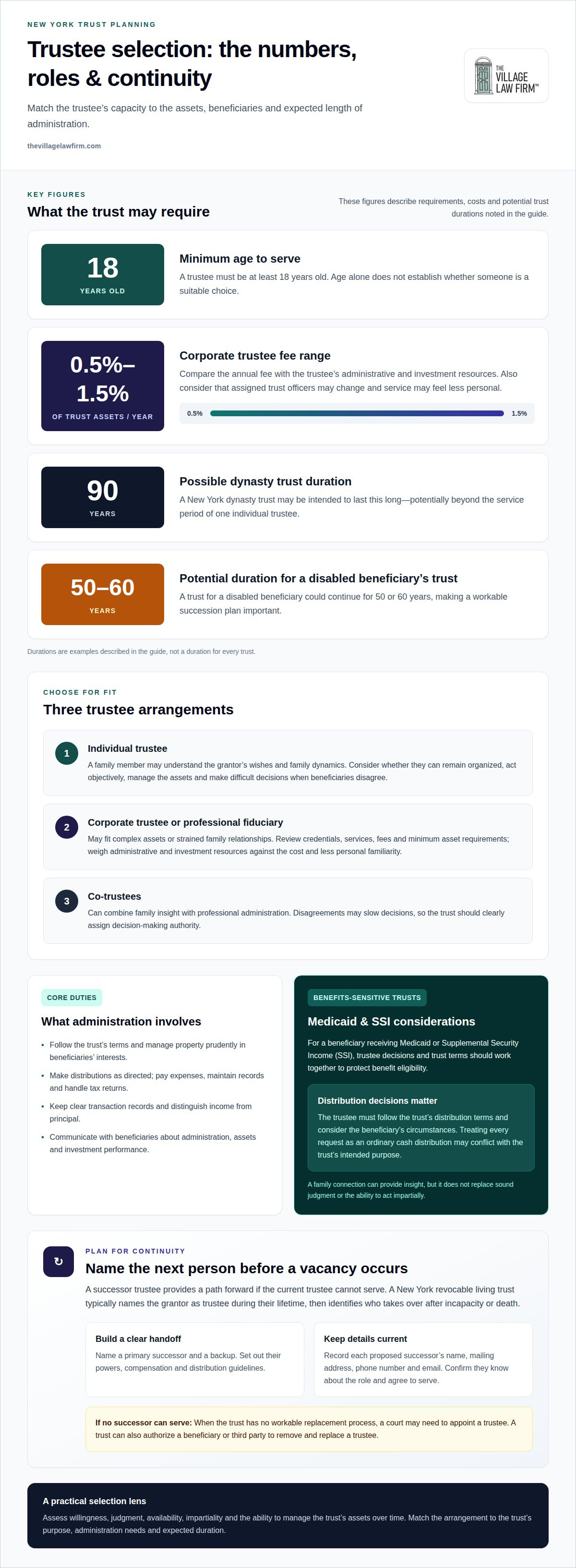
A trustee must follow the trust’s terms, manage property prudently, act in beneficiaries’ interests, and make distributions as directed. Responsibilities can include paying expenses, maintaining records, handling tax returns, and communicating with beneficiaries. The New York State Senate states that a trustee must be at least 18 years old. Selection guidance favors a U.S. citizen or, if not, a New York-based permanent resident with a green card; this is guidance, not a residency rule.
For a corporate trustee, an attorney can review credentials, services, fees, and minimum asset requirements. Corporate trustee fees typically range from 0.5% to 1.5% of trust assets per year. Compare that cost with administrative and investment resources, while considering drawbacks: assigned trust officers may change every few years, and institutional service may offer less personal familiarity with family dynamics.
A family member may understand the grantor’s wishes, but can feel pressure when beneficiaries disagree. A professional fiduciary may be a better fit for complex assets or strained family relationships. Co-trustees can combine family insight with professional administration, although disagreements between them may slow decisions. An attorney can help assess whether the trust clearly assigns decision-making authority.
Trustee investment decisions must follow the trust’s terms and the applicable duty of care. Trustees should keep clear transaction records, distinguish income from principal, and communicate with beneficiaries about administration, assets, and investment performance. Choosing a trustee for your trust in New York also means considering whether the person or institution can handle these responsibilities consistently. An attorney can compare the trust’s reporting needs with each candidate’s capacity and approach.
2. Choosing a successor trustee to avoid court proceedings
A successor trustee provides a path forward if the current trustee can no longer serve. A New York revocable living trust typically names the grantor as trustee during their lifetime, then identifies who takes over after incapacity or death. The document can name a primary successor and a backup, describe their powers, and set compensation and distribution guidelines. Before naming someone, consider their willingness, judgment, availability, and ability to manage the trust assets with an estate planning attorney.
Current contact details help make a trustee transition practical. When preparing or updating the trust, an attorney can record each proposed successor’s name, mailing address, phone number, and email, and explain how to update that information later. A named successor should know about the role and agree to serve. If the first choice moves, becomes unavailable, or declines, naming a backup can prevent uncertainty over who takes over.
Can a trustee in New York be removed or replaced, and how does the process work? A trust can authorize a beneficiary or third party to remove and replace a trustee, and it can name a successor. If no successor can serve and the trust has no workable replacement process, a court may need to appoint one. An attorney can review the document’s terms and clarify the intended transition before a vacancy occurs.
Succession matters because a trust may continue long after its creator’s death. A New York dynasty trust may be intended to last 90 years, while a trust for a disabled beneficiary could continue for 50 or 60 years. One individual may not be able to serve throughout that period. Naming successive fiduciaries lets administration continue as circumstances change. During estate planning, an attorney can align the order of successors with the trust’s purpose, expected duration, and responsibilities, then update the document when a named person’s circumstances change.
3. Trustee selection and preserving Medicaid and SSI eligibility
For a beneficiary receiving Medicaid or Supplemental Security Income (SSI), trustee decisions can affect access to public benefits. Careful administration of a New York special needs trust helps preserve eligibility. The trustee must follow the trust’s distribution terms and consider the beneficiary’s circumstances when making decisions. Treating every request as an ordinary cash distribution may conflict with the trust’s intended purpose.
New York State Senate states that a trustee must be at least 18 years old to serve. Age alone doesn’t establish suitability. The person also needs to be willing, financially responsible, organized, and able to act impartially. A family member may understand the beneficiary’s needs and the grantor’s wishes, but family closeness isn’t a substitute for sound judgment. Assess whether the proposed trustee can refuse a request that conflicts with the trust creator’s intent.
The trust structure also affects whom to choose. With a revocable trust, the creator may serve as trustee and need a successor if incapacity prevents them from managing it. For an irrevocable trust in New York, the grantor generally cannot serve as trustee, so a separate person usually takes the role. A trustee may also be a beneficiary. If that creates a conflict, a co-trustee can provide independent oversight, although both trustees have fiduciary responsibilities.
Don’t choose someone solely because they are a close relative, have an impressive title, or seem convenient. Confirm they are willing to serve, understand the beneficiary’s needs, can manage the administration, and can make decisions over time. A poor choice can lead to delays, disputes, or mismanagement. In a trust designed to support a beneficiary receiving public benefits, mistakes in administration can also undermine the plan’s purpose. Revisit the choice as family circumstances and beneficiary needs change.
4. Choosing trustees based on trust assets
When choosing a trustee for your trust in New York, start by identifying the assets they will oversee. Marketable investments require different attention from rental property, a closely held business, or assets in multiple countries. Each can bring distinct administrative demands, such as coordinating property management or cross-border reporting. Match the trustee’s experience and capacity to the work the trust requires, not simply its overall wealth.
A bank trust department or independent trust company may suit a large trust or one without an appropriate individual trustee. Corporate trustees can offer administrative, legal, tax, estate planning, and investment resources. They may also provide a more objective perspective when family interests conflict. For a family-owned business, an individual who knows its history may bring useful context. Consider whether the assets call for specialized oversight and sustained attention.
Serving as trustee may involve hiring and overseeing professional support. A family member responsible for real estate, investments, and tax matters may need to work with a custodian, investment manager, accountant, or attorney. The trust bears the associated costs. A corporate trustee may bring relevant resources, but its fees and service structure still matter. Consider how its approach fits the trust document, assets, and beneficiaries’ needs. Assigned trust officers may change every few years, so continuity is also worth considering.
Co-trustees can divide responsibilities when assets demand different strengths. A family member might understand a business’s history, while a corporate trustee handles investment management. Clear decision-making provisions matter because disagreements can delay trust administration. A practical approach to choosing a trustee for your trust in New York connects trustee authority to the assets and duties involved. An estate planning attorney can help shape that structure. For guidance, explore estate planning support.
The Village Law Firm
The Village Law Firm helps New Yorkers incorporate trustee selection into a coordinated estate plan. When you’re weighing an individual, successor, or professional trustee, thoughtful planning can connect that choice to your trust’s purpose, assets, beneficiaries, and family circumstances.
The firm’s Estate Planning, Medicaid Planning, and Planning for Families with Children services can address related needs, including planning for a beneficiary receiving public benefits or providing for children over time. If a trustee must step in after death, Estate Administration may also be relevant. The goal is a clear plan that reflects your priorities and gives those responsible a framework to follow.
Contact The Village Law Firm to discuss how trustee selection fits your estate plan.
Make Your Trustee Plan Part of a Larger Legacy
A trustee choice should remain aligned with your intentions as family circumstances and trust needs evolve. The next step is a focused conversation about how your plan should work in practice, who can carry out your wishes, and how the arrangement fits your broader estate plan. Choosing a trustee for your trust in New York is more than naming someone: it is a decision about continuity, judgment, and the future administration of assets.
The Village Law Firm offers Estate Planning, Estate Administration, and Medicaid Planning to address connected needs at different stages. If you’d like to review your trustee arrangement alongside these concerns, start with a discussion of your priorities and the people you hope to protect. The firm can help you create a clear plan that gives those who step in a framework for honoring your intentions.
Contact The Village Law Firm to discuss your estate plan and move forward with greater clarity.
Frequently Asked Questions
Who is the “right” trustee?
The right trustee has the judgment and availability to meet the trust’s actual demands. Consider how they might respond if a beneficiary requested an early distribution that conflicted with the trust’s purpose. A capable trustee can explain decisions calmly, remain consistent under family pressure, and continue serving as circumstances change. Personal closeness matters less than dependable judgment and a willingness to carry out the role.
What is the difference between a trust beneficiary and a trustee?
A trust beneficiary is the person or organization designated to benefit from the trust; the trustee administers it under the trust agreement. For example, a trust might provide support for a child and direct that the remaining assets pass to another beneficiary later. The trustee carries out those terms, while the beneficiary receives the benefit. One person may hold both roles, which can raise questions about impartial decision-making.
What skills are needed to serve as a trustee?
A trustee needs sound judgment, reliability, clear communication, and the discipline to manage ongoing administrative tasks. Financial expertise can help, but a trustee should also recognize when to seek professional assistance. For example, the trustee may need to organize statements, explain why a request does not fit the trust terms, and communicate respectfully when beneficiaries disagree about distributions.
Should You Name a Professional Executor or Trustee?
Consider a professional trustee if the estate or trust involves complex administration, substantial assets, or strained family relationships. A professional may bring experience and a more neutral perspective, while a family member may know the people involved personally. Weigh those capabilities against professional fees and the value of that familiarity. A professional may also serve alongside someone the family trusts.
How Can an Attorney Help You Choose Between an Individual Trustee, a Bank, and a Professional Fiduciary in New York?
An attorney can compare trustee options with the trust’s assets, terms, and distribution needs. A bank or trust company may offer administrative and investment resources; an individual may have closer knowledge of family circumstances. The attorney can also review how fees, minimum asset requirements, and co-trustee decision rules affect the arrangement, then help align the appointment language with the trust’s intended administration.