
A family meeting about an estate plan can be calm and constructive when everyone understands why they’re gathering. In New York, explain the plan’s purpose, set a focused agenda, and agree on simple ground rules. If the plan is complex or family dynamics could make discussion difficult, an attorney or trained third-party facilitator can help keep the conversation on track. The right family meeting about an estate plan facilitator in NY makes room for clear questions and thoughtful discussion.
It’s understandable to worry that discussing inheritance, health care wishes, or family responsibilities could create tension. A meeting doesn’t need to resolve every issue at once or disclose specific dollar amounts. Its value lies in sharing the thinking behind decisions and helping the people involved understand their roles.
This article explains how to set the meeting’s purpose, prepare an agenda, decide who should attend, and approach sensitive topics with care. You’ll also learn how to make room for questions and agree on practical next steps, so the conversation can begin with clarity rather than pressure.
Key Takeaways
- Build an agenda around the plan’s goals, key roles, and questions, then give the conversation a clear structure.
- Discuss health care and funeral preferences in a way that makes your wishes understandable to the people who may need to act on them.
- Clarify what essential estate documents do and where family members can find them when needed.
- Explain the values behind personal gifts or unequal distributions to reduce the risk of later misunderstandings.
What should a family estate planning meeting agenda include?
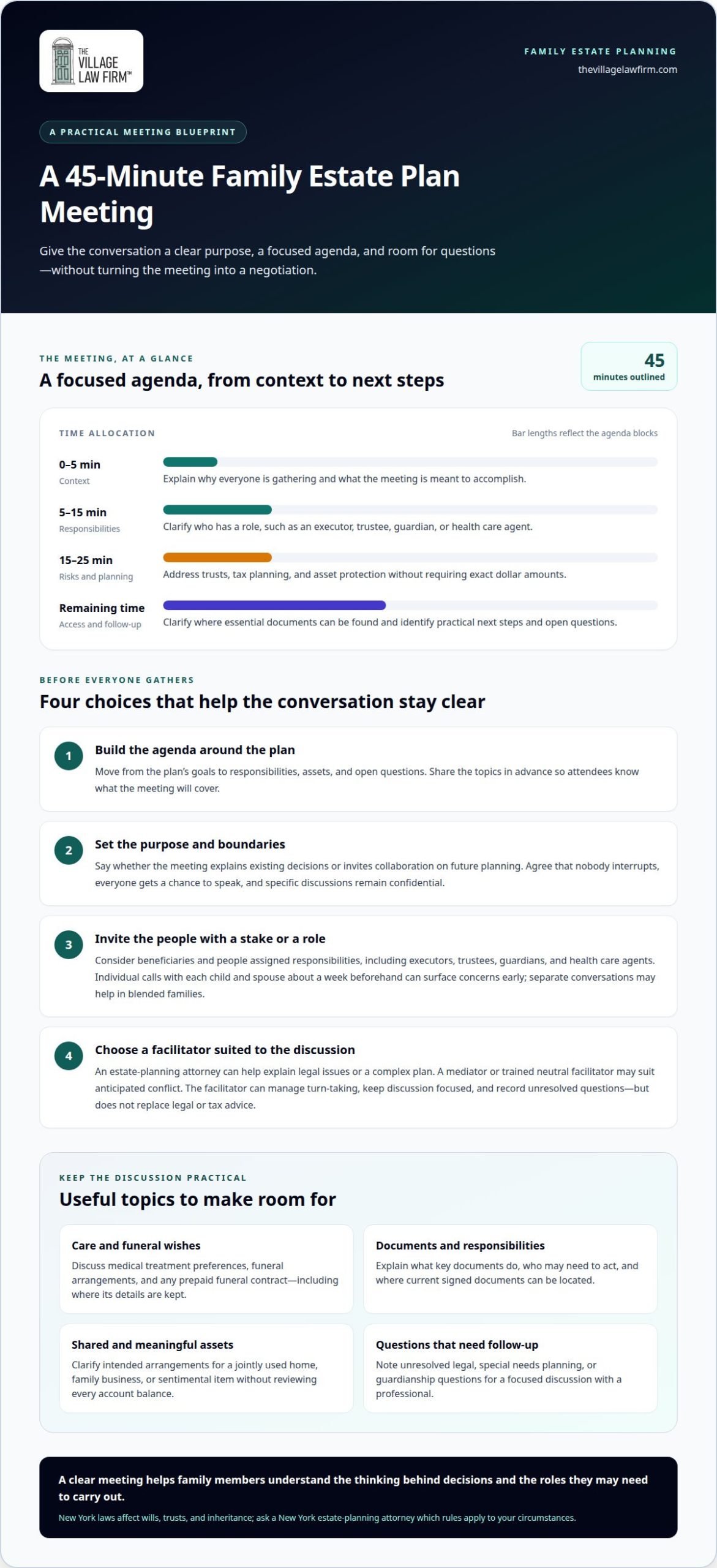
Use four steps to define the meeting’s purpose, organize its topics, and prepare everyone to participate. A family meeting about an estate plan with a facilitator in NY can also make room for questions without turning the gathering into a negotiation.
-
Prepare the Meeting Agenda
Arrange the agenda so discussion moves from the plan’s goals to responsibilities, assets, and open questions. A 45-minute outline can reserve 0 to 5 minutes for context, 5 to 15 minutes for responsibilities, and 15 to 25 minutes for risks. Use remaining time to clarify document access and next steps. Include trusts, tax planning, and asset protection, without requiring anyone to disclose exact dollar amounts.
-
Set the Meeting Purpose and Boundaries
Tell attendees whether the meeting is meant to explain existing decisions or invite collaboration on future planning. Make that distinction clear before discussing distributions, fiduciaries, or why assets may be held in trust. Agree that nobody interrupts and everyone gets a chance to speak. Set a privacy boundary too: attendees can mention the meeting, but should keep its specific discussions confidential.
-
Invite and Prepare Family Members
Invite beneficiaries and people with assigned responsibilities, such as executors, trustees, guardians, or health care agents. Share the agenda beforehand and explain which topics you’ll cover. Individual calls with each child and spouse about a week before the meeting can surface concerns early. In blended families, separate conversations may help clarify distinct assets and family concerns.
-
Choose a Qualified Meeting Facilitator
A facilitator manages turn-taking, keeps discussion focused, and records unresolved questions. For a family meeting about an estate plan, a facilitator in NY can structure the conversation. An estate-planning attorney is useful when legal explanations are needed or the plan is complex, while a mediator or trained neutral facilitator may suit anticipated conflict. New York laws affect how wills, trusts, and inheritance are handled, so ask a New York estate-planning attorney which rules apply to your circumstances. Choose someone experienced in estate-plan meetings, and clarify their role before inviting relatives. A facilitator guides discussion but does not replace legal or tax advice.
Discussing end-of-life care and funeral preferences
- Ask the person whose plan is being discussed to describe medical treatment preferences in plain language. Include wishes about care, funeral arrangements, and any prepaid funeral contracts. For example, clarify whether the family should look for an existing contract and where its details are kept. These conversations help relatives understand the person’s wishes rather than interpret silence during a stressful moment.
- Discuss how shared property and personal assets should be handled. Identify a jointly used home, family business, or sentimental item, then explain the intended arrangement without reviewing every account balance. If someone is expected to manage an asset, clarify the executor’s role and where relatives can find relevant information.
- Raise special needs planning with care, focusing on the support a family member may need and how the plan addresses it. Discuss whether a trust is part of the plan, who may have a role, and which questions need professional explanation. Avoid promising future eligibility or benefits during a family discussion. Record unresolved questions for focused follow-up.
- Discuss guardianship wishes with the people who may be affected, especially when children are involved. Explain the reasoning behind a choice and invite practical questions about the children’s routines, schooling, and care. A family conversation can clarify expectations, but it doesn’t replace the legal documents expressing those choices. For a thoughtful review of estate planning decisions, consider professional guidance before finalizing the plan.
The family discussed asset preferences at 1:00pm. These meetings can also address medical treatment preferences, funeral arrangements, and any prepaid funeral contracts. In the example, the parents had named guardians a decade earlier.
Reviewing health care documents, powers of attorney, wills, and revocable trusts
- Set aside 35 to 45 minutes to review what each document does and where it is kept. Include the health care proxy, living will, power of attorney, will, and revocable trust. Explain that a power of attorney appoints agents to make financial decisions on someone’s behalf. Ask attendees to describe their responsibilities in their own words, so expectations are clear before anyone needs to act.
- Ask an attorney to explain technical terms and answer questions during the discussion. This can help family members understand how the documents relate to one another without treating a family conversation as a substitute for legal advice. Focus on practical examples: who makes health care decisions, who handles financial matters, and who is named in the will. Note any questions that need a fuller explanation.
- Share document storage and access information carefully. Identify where the current signed documents are kept, who knows how to locate them, and which professional holds relevant copies. Make clear which version is current, especially if earlier documents remain in a home filing cabinet. The goal is to help the right people find essential papers when needed, not to circulate private details to everyone.
- Review the will and revocable trust together, focusing on how each fits the family’s plan. Explain who is named to carry out responsibilities and where the documents describe those roles. Invite questions about personal belongings or assets held in trust. This conversation can strengthen relationships between family members and those appointed, while preparing everyone to follow the plan’s stated intentions.
Why family meetings can clarify estate plans
A facilitator can give each heir a fair chance to speak, keep discussion focused, and separate practical questions from personal grievances. For legal questions about a disputed plan, an estate-planning attorney can explain the documents and relevant choices.
- Explain the reasoning behind decisions, not just the final distribution. For example, describe how family values, caregiving, or individual needs shaped a choice. Children and other relatives gain context that a will alone may not provide. Sharing the thinking behind the plan gives family members a chance to understand its purpose, even when they would have chosen differently.
- Discuss unequal distributions through the values behind them, rather than comparing family members’ personalities or worth. If one child receives a family business and another receives different assets, explain the practical reasoning respectfully. A productive conversation separates the decision from assumptions about favoritism. Invite questions, but don’t ask relatives to endorse a choice before they understand its context.
- Use personal belongings to make abstract plans concrete. Explain why a particular piece of jewelry, artwork, or collection is intended for someone. Family history can help younger relatives understand why an item matters. This gives children, spouses, and trusted advisers a chance to hear the story directly, rather than interpret a personal gift after the estate owner can no longer explain it.
- When disagreement arises, ask each person to describe the concern specifically, then identify what needs clarification. A facilitator can manage turn-taking, summarize points of agreement, and record unresolved questions for follow-up. For instance, heirs may disagree about who should manage assets together. A focused discussion can clarify the concern and identify whether the family needs legal guidance, without promising to resolve every conflict.
If you’re ready to clarify your plan’s intent and discuss next steps, discuss estate planning guidance.
The Village Law Firm
The Village Law Firm™ helps families develop estate plans that reflect their wishes, responsibilities, and circumstances. If you’re preparing for a family meeting, legal guidance can clarify the plan’s documents, explain how decisions fit together, and identify questions to address before relatives gather. This can be especially useful when planning for children or coordinating estate planning with Medicaid considerations.
Bring questions about your goals, family roles, and the topics you hope to discuss. The conversation can focus on creating or reviewing an estate plan, rather than expecting a facilitator to resolve every family disagreement. Clear legal context can help you lead the meeting with greater understanding and prepare for thoughtful follow-up.
To discuss your estate planning needs, contact The Village Law Firm™.
Give your family conversation a clear next step
A family meeting can open the door to clearer conversations, but it doesn’t have to settle every question at once. Your next step may be to identify what remains unresolved, such as how a decision fits your wishes or what support a family member may need. Bring those questions to a focused legal discussion before they become assumptions among relatives.
A facilitator for a family meeting about your estate plan in NY can help keep the conversation constructive, while an attorney can address legal questions about your plan. The Village Law Firm™ provides Estate Planning, Estate Administration, and Medicaid Planning to help individuals and families address connected planning needs. The right next step depends on what you’re trying to clarify and where your plan needs attention.
Start with the question you most want answered. Contact The Village Law Firm to discuss your estate planning needs and take a considered step toward a more prepared family conversation.
Frequently Asked Questions
How can your family get started?
Start with a simple invitation explaining why you’d like to talk and what you hope everyone will understand. For example, tell relatives you want to explain how decisions will be handled, not negotiate anyone’s inheritance. In a New York family, identifying the purpose before choosing attendees can help people arrive with realistic expectations and make the conversation easier to begin.
What topics should a family cover at an estate planning meeting?
Choose topics based on decisions relatives may need to understand or carry out. For example, discuss how beneficiary designations or jointly owned property relate to the broader plan, and identify who can answer questions about each item. Separate information-sharing from decisions that need further legal review. This helps the family focus on what to discuss now and what to address privately afterward.
How should I prepare for a family meeting about an estate plan?
Write down your main goal, questions you expect relatives to raise, and subjects you’d prefer to handle privately. Decide who will open the conversation and who can explain technical points. For example, if relatives disagree about a responsibility, prepare to ask what concern lies beneath the disagreement. A short written plan can help you stay composed and keep the discussion respectful.