

The best way to talk to parents about estate planning is to start privately and gently, centering their care and wishes rather than inheritance. Choose a calm moment, explain that you want to understand how they would like things handled, and let them decide what to share. Then ask whether they have key documents and someone they trust to make health care and financial decisions if they cannot.
It is understandable to worry that the conversation may feel intrusive or upsetting. A thoughtful, low-pressure approach can help your parents share what matters to them while keeping control of their decisions. You can open the discussion, ask about existing plans and wishes, and raise health care proxies and powers of attorney in clear, practical terms.
Key Takeaways
- Choose a calm, private moment and make clear that your parents remain in control of their decisions.
- Ask what they want for their care and how they’d like important responsibilities handled, then listen without judgment.
- Discuss where key records are kept and whether major life changes mean their plans need a fresh review.
- Revisit the conversation over time; a first discussion can simply open the door to thoughtful planning.
1. Health care proxies and power of attorney
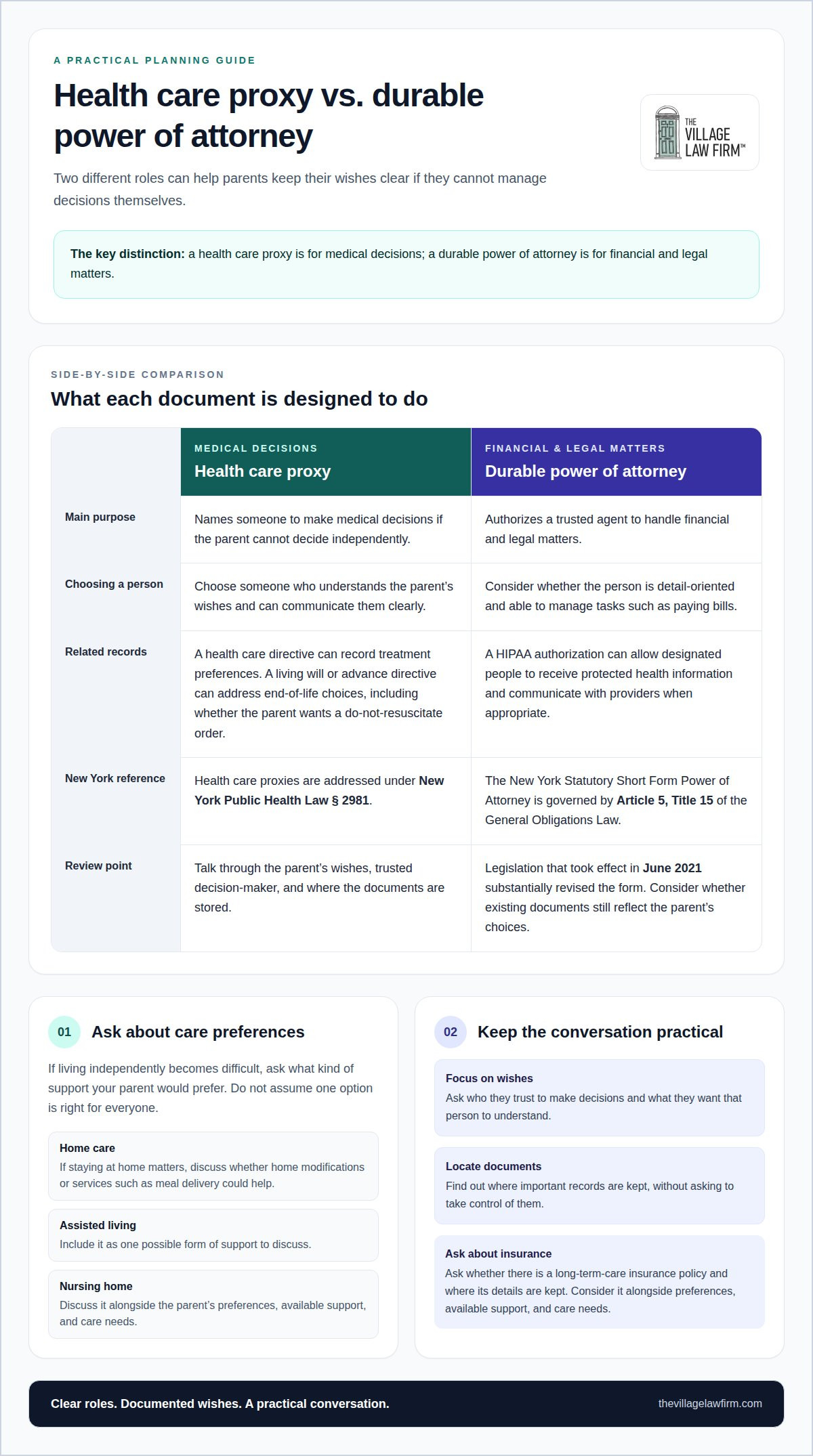
Under New York Public Health Law § 2981, a parent may use a health care proxy. It names someone to make medical decisions if the parent cannot decide independently. Ask who they trust to understand their wishes and communicate them clearly. A health care directive can record preferences for treatment if they become incapacitated. A living will or advance directive can also address end-of-life choices, including whether they want a do-not-resuscitate order. These documents help relatives understand the parent’s direction during a difficult medical situation.
A durable power of attorney serves a different purpose: it authorizes a trusted agent to handle financial and legal matters. Discuss whether the person chosen is detail-oriented and able to manage tasks such as paying bills. New York’s Statutory Short Form Power of Attorney is governed by Article 5, Title 15 of the General Obligations Law. Legislation that took effect in June 2021 substantially revised the form. Parents should consider whether existing documents still reflect their choices. A HIPAA authorization can also allow designated people to receive protected health information and communicate with providers when appropriate.
For long-term care, ask what kind of support your parent would prefer if living independently becomes difficult. Discuss home care, assisted living, and nursing homes without assuming one option is right. If they want to remain at home, ask whether home modifications or services such as meal delivery could help. Bring up long-term-care insurance by asking whether they have a policy and where its details are kept. Consider the policy alongside their preferences, available support, and care needs.
To discuss health care directives and incapacity planning, focus on your parent’s wishes, trusted decision-makers, and where documents are stored. Keep the conversation practical and make room for questions or disagreement. What are the costs of creating a will or trust in the United States? The cost depends on the work and complexity involved; fees for these legal services are provided after a quote request.
2. Opening the conversation gently
Choose a quiet, private moment rather than a holiday meal or family celebration. A one-on-one conversation between an adult child and a parent can feel less formal than a family meeting. Begin with care, not paperwork: “I want to understand what matters to you and help make things easier if you ever need support.” This shows that your focus is your parent’s wishes, not an inheritance.
Some aging parents may hear estate planning as a sign that others want control. Others may feel uneasy discussing illness, death, money, or family conflict. Acknowledge the discomfort without arguing: “I know this can feel personal. We can talk only about what you’re comfortable sharing today.” Don’t open by demanding to know whether they have a will or telling them to appoint someone. That can make a sensitive conversation feel like an ultimatum.
Offer a practical role that leaves decisions with your parent. You might help organize a folder, note questions for a future appointment, or list topics they want to consider. Ask permission first: “Would it help if I sat with you while you gather the information you want to keep in one place?” If they decline, respect their answer and let them decide whether to revisit the topic.
Connect the discussion to what your parent values. If they care about supporting grandchildren, preserving a family home, or making a charitable gift, ask how they would like those priorities reflected in their plans. Avoid treating equal shares as the only fair outcome; caregiving, individual needs, and personal relationships may shape a parent’s wishes.
A transition can make the subject feel relevant without turning it into a warning. Retirement, the birth of a grandchild, or the death of a loved one may prompt a natural opening. Keep any personal story brief and relatable, not frightening. For a measured next step, explore estate-planning guidance together when your parent is ready.
3. Asking parents about their wishes and existing documents
Start by asking what your parents want their plans to accomplish. “Which people or causes would you like your assets to support?” invites a discussion about their wishes without judging their choices. Listen first. A parent may want to provide for a relative with particular needs, recognize a family member’s caregiving, or make a charitable gift. Their reasons matter as much as the distribution they choose.
Ask which documents they already have, such as a will, trust, power of attorney, beneficiary forms, or funeral plans. You don’t need to review private details to help identify what exists. Instead, ask whether they know when each document was last reviewed and whether a major change, such as divorce or a spouse’s death, affected their accounts or choices.
Beneficiary designations deserve separate attention. In the United States, they take precedence over instructions in a will or trust. Ask whether retirement accounts, life insurance, bank accounts, and investment accounts name the people your parent intends. Pay-on-death and transfer-on-death forms can also direct assets outside a will or trust, so include those accounts in the discussion.
Offer to help create a simple checklist of what exists and where it can be found. It might identify the estate plan, deeds, insurance policies, account information, and digital records. Note where important documents are kept, not private passwords in a broadly shared list. Your parent should choose who they trust to access sensitive information and know where the checklist is stored.
Clarify who has each role. Ask who your parent has named as executor, who can make financial decisions, and which family members know whom to contact. An executor needs to gather estate assets methodically and pay bills. Discussing these responsibilities can reveal unanswered questions before a difficult moment arises. Keep the conversation focused on organization and your parent’s decisions, rather than asking to control the documents yourself.
4. Explaining why estate planning matters
A useful point to share is that planning gives parents a chance to decide, rather than leaving key outcomes to default rules. A will can gather estate assets, address expenses and debts, and direct how remaining property is distributed. An estate plan can also express health care wishes, address personal property, and outline care for family pets, such as designating a caregiver and organizing medical records from trusted providers like Animal Hospital of Sullivan County. These choices can matter even when a family expects relatives to agree.
What happens if a parent dies without a will in each state? The state’s intestacy laws determine who inherits probate assets, and the rules differ by state. In New York, EPTL § 4-1.1 generally determines who inherits probate assets when someone dies without a valid will.
Explain that starting early gives family members time to understand a parent’s wishes and any responsibilities they may have. For example, a parent might want one child to coordinate practical matters while another receives different support. Equal distributions are not always equitable, particularly when a child has provided caregiving. A thoughtful discussion can clarify the reasons behind a plan and reduce the chance that relatives misunderstand those choices.
Estate planning connects decisions made during life with arrangements after death. A health care directive can record preferences for a time when a parent cannot communicate them. Naming trusted decision-makers gives relatives clearer roles to follow. Avoiding the subject can leave adult children unsure of a parent’s wishes during a medical crisis or after a death. A private consultation lets the parent consider options and document decisions without making the family responsible for choosing them.
Keep the takeaway simple: planning is about preserving a parent’s voice, not predicting every future event. If your parent is ready to review their wishes and choices, explore estate-planning support as a next step.
The Village Law Firm: Estate Planning
The Village Law Firm™ helps families turn conversations about wishes and responsibilities into an estate plan. When parents want to create a plan, review existing arrangements, or consider how their choices affect family members, estate planning offers a structured next step. The firm also provides Medicaid Planning and Planning for Families with Children, which may be relevant when long-term care or children’s needs are part of the discussion.
Consider involving an attorney when your parent is ready to document decisions, has questions about existing documents, or wants to bring several planning concerns together. The conversation remains your parent’s; they choose what to share and what decisions to make. For guidance on putting those wishes into an estate plan, contact The Village Law Firm™.
Let the Next Step Be Yours
The first conversation doesn’t need to settle every question. Let your parent choose one manageable next step, such as setting aside time to review their plans or identifying questions for an attorney. That small decision can keep the process moving while preserving their control. If they’re not ready, respect their pace and leave room to return to the subject later.
Finding a way to talk to parents about estate planning is ultimately about making space for their voice, not taking over. When your parent wants legal guidance, The Village Law Firm™ can help with estate planning, Medicaid planning, or estate administration as circumstances require.
Contact The Village Law Firm to discuss a thoughtful next step. A calm conversation today can make it easier for your family to move forward with care and clarity.
Frequently Asked Questions
How do I start a conversation with parents about estate planning?
A useful first step in how to talk to parents about estate planning is to ask permission before raising the subject. You could say, “Would you be open to talking about how you’d like important decisions handled?” Then let your parent set the pace. If they seem uncomfortable, don’t press for details. Ask whether they’d prefer to revisit the topic another day, or leave the conversation open for them to raise later.
What estate planning documents should parents have in the United States?
The documents depend on a parent’s circumstances and the decisions they want recorded. A will or revocable trust can address asset distribution; beneficiary designations direct certain accounts or policies. Health care directives and a health care proxy address medical wishes and decision-making, while a power of attorney covers authorized financial matters. In New York, parents should consider whether their documents reflect their current family circumstances and choices.
How can I discuss wills, trusts, and inheritance without causing family conflict?
Keep the discussion centered on your parent’s intentions, not on what each relative expects to receive. Ask what they want family members to understand about their decisions, then listen without debating shares. If relatives disagree or privacy is a concern, avoid turning the conversation into a family negotiation. Your parent can discuss their plan privately with an attorney before choosing what, if anything, to explain to others.
When should adult children talk with parents about estate planning?
There’s no single ideal moment. A parent may be more receptive after a meaningful life change, such as retirement, a move, or a change in family responsibilities. Start before an urgent decision is needed, and return to the conversation when circumstances change. If a parent’s health is declining, discussing preferences and decision-makers can help clarify what they want while they can express it directly.
What questions should I ask parents about their estate planning wishes?
If you’re unsure how to talk to parents about estate planning, begin with questions about their priorities rather than private details. For example: “What would you most want your plan to accomplish?” or “Are there decisions you’d like family members to understand?” You can also ask whether they have professional advisers they trust and what information they want shared. Let your parent choose which questions to answer.
How can adult children respect parents’ privacy and autonomy during estate planning conversations?
Ask before helping with paperwork, accessing records, or joining an appointment. Your parent decides what to share and who may see their documents. The estate-planning attorney represents your parent, not the family collectively. If your parent prefers to speak with an attorney alone, respect that boundary. You can still offer practical support, such as arranging transportation or writing down questions they want to raise themselves.