

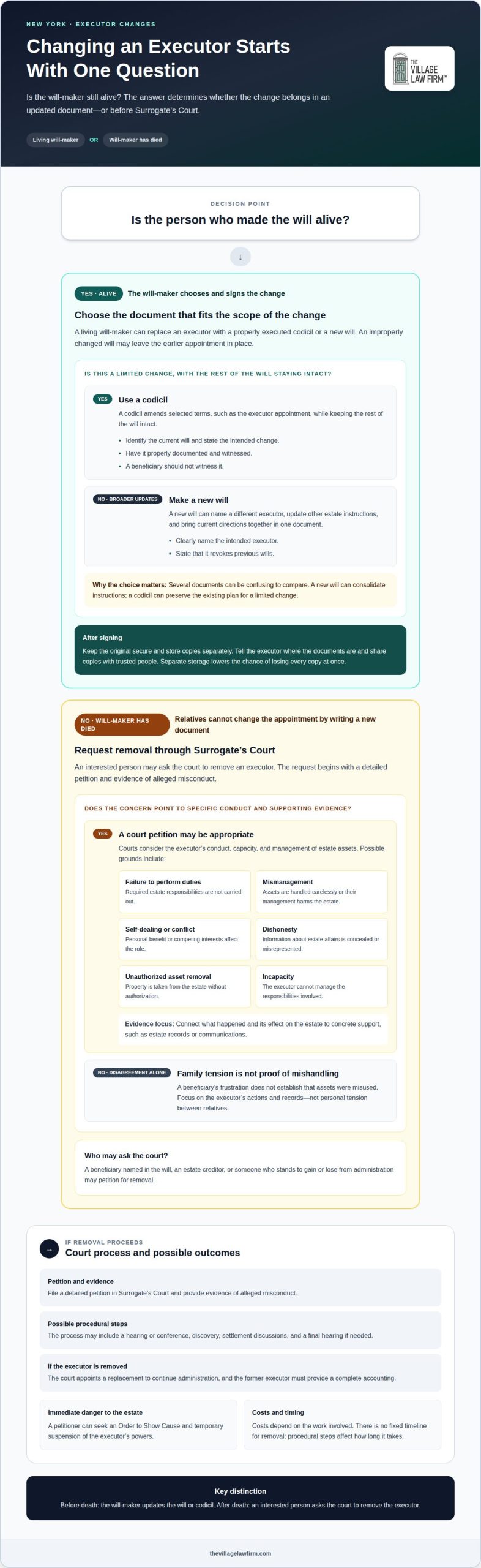
In New York, a living will-maker can change the executor named in a will by making a new will or a properly executed codicil. If the will-maker has died, an interested person may ask Surrogate’s Court to remove the executor. How to change the executor of a will in NY depends first on whether the person who made the will is still alive.
If you’re concerned about your mother’s estate, it’s understandable to want someone reliable handling her affairs. But changing an executor before death is different from seeking removal after probate begins. An improperly changed will may leave the earlier appointment in place.
This guide explains when an executor can be replaced, what circumstances may support removal, and how a will-maker can name a successor through a new will or codicil. It also explains why reviewing the broader estate plan can help make the will-maker’s intentions clearer.
Key Takeaways
- If the will-maker is alive, they can change the executor through a new will or a properly prepared codicil.
- A new will can update the broader estate plan, while a codicil changes selected terms and may create confusion if it conflicts with the existing document.
- After the will-maker’s death, an interested person may ask Surrogate’s Court to remove an executor; alleged misconduct and supporting evidence matter.
- Estate planning can help clarify executor choices and keep a will aligned with changing family circumstances.
Can You Replace the Executor of Your Mother’s Estate?
If your mother is alive, she can change her executor through a new will or codicil. If she has died, an interested person must seek removal through Surrogate’s Court instead.
Changing an Executor Through a Codicil
A codicil amends an existing will by changing specific terms, such as the executor appointment. It may suit your mother if she wants to keep the rest of her will intact while naming someone else. The codicil should identify the current will and state the intended change. It must be properly documented and witnessed. A beneficiary should not witness it.
After signing, keep the original secure and store copies separately. Tell the executor where the documents are, and share copies with trusted people. Separate storage lowers the chance of losing every copy at once.
Choosing Between a Codicil and a New Will
In New York, a will-maker can use either a codicil or a new will to change an executor. A codicil amends the existing document; a new will can revoke earlier wills and replace their terms. The distinction matters because later readers may find it confusing to compare several documents.
If the executor change is part of broader updates, a new will can bring the current instructions together in one document. It should state that it revokes previous wills. For a limited change, a codicil can preserve the existing plan while updating the executor appointment.
Replacement Documents, Fees, and Timing
For a living will-maker, the relevant document is a properly executed codicil or new will. After death, an interested person seeking removal files a detailed petition in Surrogate’s Court and provides evidence of alleged misconduct. The court process may include a hearing or conference, discovery, settlement discussions, and a final hearing if needed.
Costs depend on the work involved, such as preparing a will or pursuing court proceedings. There is no fixed timeline for removal; the procedural steps affect how long the matter takes. If the estate faces immediate danger, a petitioner can seek an Order to Show Cause and temporary suspension of the executor’s powers.
When a Named Executor Cannot Serve
If the named executor cannot or will not serve, the estate still needs someone to administer it. If an executor is removed, the court appoints a replacement to continue administration, and the former executor must provide a complete accounting.
Changing an executor without properly updating the will can leave the earlier will legally valid. A codicil should identify the existing will and state the intended change; a new will should revoke previous wills. If the will-maker has died, an interested person can ask the court to remove an executor, but cannot change the appointment by preparing a new document.
Reasons to change an executor
New York courts consider an executor’s conduct, capacity, and management of estate assets when deciding whether removal is warranted. Possible grounds include failure to perform duties, asset mismanagement, self-dealing, conflicts of interest, and incapacity.
A family disagreement is not the same as evidence that estate administration is being mishandled. A beneficiary’s frustration with an executor, for example, does not establish that assets were misused. Focus on specific conduct: what happened, how it affected the estate, and which records support the concern.
Examples of conduct that can raise serious concerns include:
- Failure to perform duties: The executor does not carry out required estate-administration responsibilities.
- Mismanagement: Estate assets are handled carelessly or their management harms the estate.
- Self-dealing or a conflict: The executor uses their position for personal benefit or faces competing interests.
- Dishonesty: The executor conceals or misrepresents information about estate affairs.
- Unauthorized asset removal: Property is taken from the estate without authorization.
- Incapacity: The executor cannot manage the responsibilities involved.
Dishonesty about estate affairs and unauthorized removal of estate assets are serious grounds for removal in New York. Connect concerns to concrete evidence, such as estate records or communications showing what occurred. Keep the focus on the executor’s actions, not personal tension between relatives.
A beneficiary named in the will, an estate creditor, or someone who stands to gain or lose from administration may ask Surrogate’s Court to remove the executor. The request begins with a detailed petition and evidence of alleged misconduct. Understanding executor removal concerns can help you distinguish documented problems from disagreements that do not show a failure to administer the estate.
Replacing an executor by writing a new will
A New York will-maker can replace an executor by making a new will that names a successor. The new document can also update other estate instructions and clarify which will governs.
Naming a Replacement in a New Will
A new will is a complete estate-planning document that can revoke earlier wills and name a different executor. It can provide one clear set of current instructions instead of an older will alongside later amendments. The document should state that it revokes all previous wills and clearly name the intended executor.
For example, if the original executor has moved away or can no longer manage the responsibilities, the will-maker can name a more suitable replacement. The new will can also address other changed circumstances, keeping the executor choice consistent with the rest of the plan.
Appointing a Successor or Administrator
A will-maker names a successor executor in a will; the court appoints an administrator when someone dies without naming an executor. Relatives cannot change a deceased person’s will by writing a replacement document. Instead, the court appoints an administrator to distribute the estate under New York law.
When preparing a new will, the will-maker can identify who should serve as executor and make the appointment clear in the document. A minor child cannot serve as executor, so a parent choosing a replacement for a family estate should select an eligible adult.
After signing the new will, keep its original in a secure place and tell the named executor where it is. Give copies to trusted people and store them separately from the original. These steps help the right document be found when probate begins, rather than leaving family members to sort through conflicting versions.
Changing an executor while the will-maker is alive
A living will-maker can change the executor named in a New York will by making a new will or a properly documented and witnessed codicil. The choice depends on whether only the executor appointment needs to change or other instructions also need updating. The will-maker, not relatives or beneficiaries, makes this decision.
Start by reviewing the current will and identifying the person named to serve. Then consider whether the appointment still fits the will-maker’s circumstances. A once-trusted relative may have died, become unable to manage the work, or experienced a change in their relationship with the family. A replacement should be someone the will-maker believes can carry out the will’s instructions.
A codicil changes selected terms in the existing will, including the executor appointment. It must be properly documented and witnessed, and should clearly identify the will it amends. A new will is generally preferred in New York when the will-maker wants to revoke earlier wills and bring current instructions together in one document. That can reduce uncertainty about which version controls.
Changed circumstances can prompt a review. A death, divorce, dispute with loved ones, or shift in family needs may affect whether the named executor remains suitable. Reviewing the estate plan every three or four years can help the will-maker decide whether the appointment still reflects current intentions. A review alone does not change the will; the chosen document must be properly executed.
Keep the original will or codicil secure, store copies separately, and tell the executor where the documents are. Give copies to trusted people so the current instructions can be found when needed. In New York, physically destroying the entire old will can revoke it, but an incomplete or informal change may leave the earlier will legally valid.
Get guidance on updating an estate plan when choosing a replacement also requires coordinating changes across the will-maker’s broader instructions.
The Village Law Firm: Estate Planning
The Village Law Firm provides Estate Planning to help you address executor choices as part of your broader estate plan. This can be useful when family circumstances change, a named executor can no longer serve, or you want your will’s instructions reviewed together rather than as separate documents.
For a loved one’s estate already in administration, the firm also provides Estate Administration. The distinction matters: a living will-maker can revise their own plan, while concerns about an executor after death relate to estate administration. Planning for Families with Children and Medicaid Planning may also be relevant when those needs shape the broader plan.
Clear documents can help preserve your intentions and give loved ones a more orderly path forward. Contact The Village Law Firm to discuss your estate-planning needs.
Give Your Family a Clear Path Forward
Choosing an executor is also a way to prepare the people who may one day rely on your directions. Beyond the legal document, consider whether the person understands the role, knows where current papers are kept, and can communicate steadily with those affected. A thoughtful conversation can surface practical concerns before a difficult moment arrives.
A considered approach to how to change the executor of a will in NY starts with asking what support your family may need, not simply who is available today. Revisit the choice as relationships, responsibilities, and circumstances evolve. Clear intentions can help loved ones carry out your wishes instead of trying to interpret uncertainty.
The Village Law Firm can help you consider executor choices as part of your estate plan. If you’re ready to discuss your next steps, connect with The Village Law Firm. Thoughtful planning can give your family a steadier path forward.
Frequently Asked Questions
Can you change the name of the executor on your estate?
Yes. While you’re alive, you can name a different executor in a properly executed new will or codicil. After your death, relatives cannot simply edit the appointment: a person with an eligible interest may ask Surrogate’s Court to remove the serving executor. If an executor is already managing the estate, the issue becomes a court matter, not a change to your personal planning documents.
How do I modify a will in New York?
You can modify a New York will by making a new will or codicil. A new will is generally preferred when you want to revise several instructions because it can replace earlier wills. A codicil changes selected terms. Before making either document, identify the provisions to change and ensure the final document reflects your complete current intentions.
What does the executor do?
A New York executor carries out the will’s instructions and manages estate administration. This may include obtaining death certificates, inventorying assets, starting probate, managing estate accounts, addressing tax matters, and distributing property to beneficiaries. For example, the executor may need to identify estate accounts, track activity, and keep records showing how assets were handled before distribution.
Who can request removal?
A beneficiary named in the will, an estate creditor, or someone who stands to gain or lose from the administration may request an executor’s removal in New York. The person must file a detailed petition in Surrogate’s Court and provide evidence of alleged misconduct. A relative’s disagreement alone is different from a documented concern about how the executor is handling the estate.
How can you change the executor named in a will in New York before the person dies?
Only the living will-maker can change their own executor appointment. They can make a new will or amend the existing one with a properly documented and witnessed codicil. A family member may discuss concerns or help gather current documents, but cannot make the change on the will-maker’s behalf. The will-maker should ensure the replacement understands the responsibilities involved.
How do you amend a New York will to name a new executor?
To amend the executor appointment, prepare a codicil that clearly states it amends the current will and identifies the intended change. It must be properly documented and witnessed, and a beneficiary should not act as a witness. Alternatively, a new will can name the successor and revoke earlier wills. Keep the original secure and tell trusted people where it is stored.