
A self-settled special needs trust holds assets belonging to the person with a disability, such as proceeds from a personal injury award, and is designed to supplement, not replace, public benefits. The beneficiary must be younger than 65 when the trust is established, and funds remaining at death must be used to repay the government for public benefits received. A special needs trust attorney in NYC can help plan around these rules and the effect trust payments may have on benefits.
It’s understandable to worry that setting aside money could put essential support at risk. The key is how the trust is created, who controls its assets, and how the trustee makes payments. This guide explains how self-settled trusts work, which New York requirements apply, how a properly structured trust may help protect benefit eligibility, and which expenses it may cover. You’ll also learn how first-party trusts differ from trusts funded by someone else, giving you a clearer basis for planning long-term care and support.
Key Takeaways
- Trust payments and the way a trustee makes them can affect SSI and Medicaid eligibility. Learn why paying providers directly may help preserve benefits.
- First-party and third-party trusts differ in how they’re funded and what happens to remaining assets, so the source of the funds matters.
- New York trusts must meet specific legal requirements and be structured to supplement, rather than replace, government benefits.
- Trust funds may support needs beyond public benefits, but the type and method of payment can influence benefit eligibility.
- Estate planning and Medicaid planning can help families coordinate trust decisions with broader plans for care and financial support.
How Does a Special Needs Trust Protect SSI and Medicaid Eligibility?
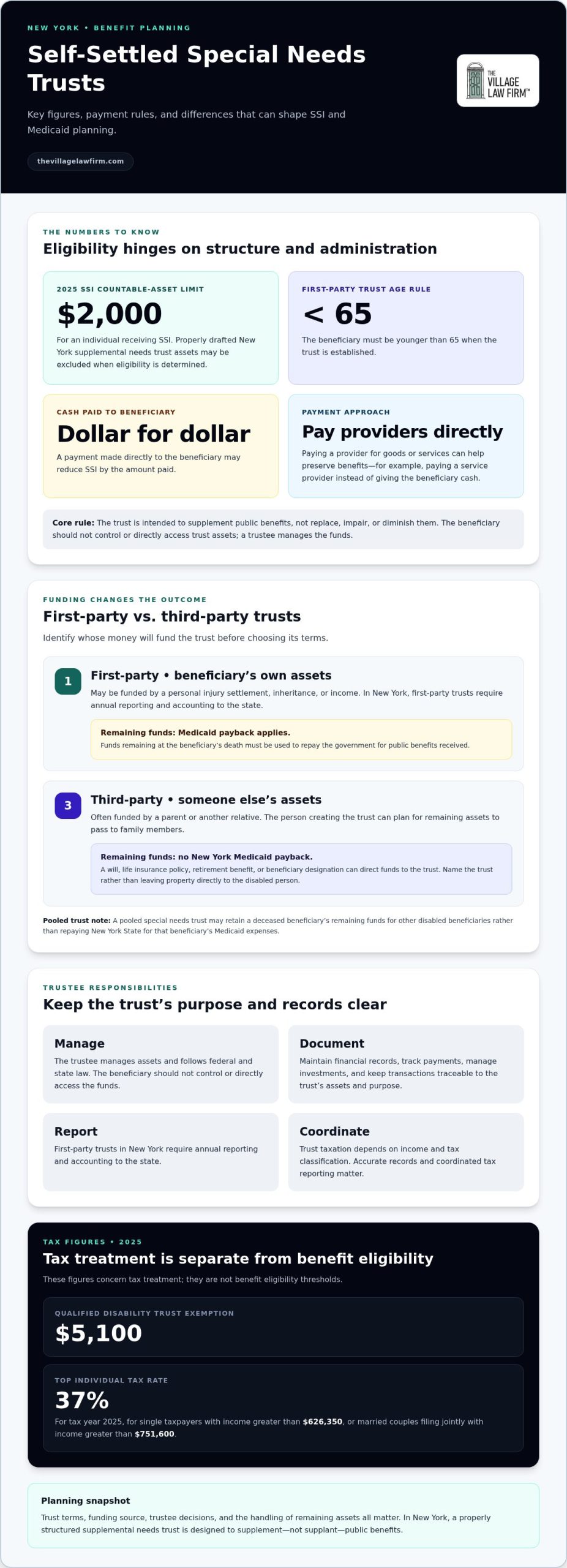
A special needs trust can hold assets for a disabled person without placing those assets directly under the beneficiary’s control. In New York, a properly drafted supplemental needs trust can have its assets excluded when the government determines eligibility for benefits or assistance. The trust must supplement benefits, not supplant, impair, or diminish them. For an individual receiving SSI, the Social Security Administration states that the 2025 countable-asset limit is $2,000. This makes the source of funds, trust terms, and trustee’s payment decisions important to preserving eligibility.
Structure matters. A supplemental needs trust is irrevocable, and the beneficiary should not control or directly access its assets. A trustee manages the funds and must follow federal and state law. In New York, SSI eligibility is linked to Medicaid eligibility for special needs trust planning. A payment made directly to the beneficiary may reduce SSI dollar for dollar, while paying a provider directly for goods or services can help preserve benefits. For example, a trustee might pay a service provider instead of giving the beneficiary cash.
Tax planning can also form part of the picture. The Internal Revenue Service states that the 2025 Qualified Disability Trust exemption is $5,100. For tax year 2025, the top tax rate remains 37% for individual single taxpayers with incomes greater than $626,350 ($751,600 for married couples filing jointly), according to the Internal Revenue Service. Trust taxation depends on the trust’s income and tax classification, so trustees need accurate records and coordinated tax reporting. These figures are not benefit eligibility thresholds; they concern tax treatment.
When a beneficiary dies, what happens to any remaining funds depends on the type and terms of the trust. A pooled special needs trust may instead retain the deceased beneficiary’s remaining funds for other disabled beneficiaries, rather than repaying New York State for that beneficiary’s Medicaid expenses. This difference can affect estate planning and the family’s plans for any remaining assets. A guardian or family member can help document the beneficiary’s needs, while the trustee remains responsible for administering the trust.
How can I compare NYC special needs trust attorneys and check their credentials? Compare experience with first-party trusts, SSI and Medicaid rules, trustee administration, and benefit advocacy. Review the attorney’s New York registration, and assess whether they can explain payback, tax reporting, and payment options in plain language.
What information and documents should I bring to a special needs trust attorney? Bring SSI and Medicaid notices, income and asset records, disability documentation, existing wills or trusts, and any settlement or inheritance paperwork. Include the beneficiary’s care needs and current benefit concerns so the estate plan can address practical support.
How much does it cost to hire a special needs trust attorney in NYC? The price depends on the trust’s complexity, funding source, tax considerations, and related estate planning needs, and is given after a quote request.
What is a self-settled special needs trust?
A self-settled, or first-party, special needs trust holds assets belonging to the disabled beneficiary. The source of its funding affects Medicaid recovery, administration, and what may happen to funds remaining after the beneficiary’s death.
First-Party and Third-Party Trusts
A first-party trust is funded with the beneficiary’s own assets, such as a personal injury settlement, inheritance, or income. A third-party trust holds assets belonging to someone else, often a parent or another relative. Identify whose money will fund the trust before choosing its terms, since first-party trusts carry state payback obligations that third-party trusts do not.
For a third-party trust, the person creating it can plan for remaining assets to pass to family members. A distribution plan might name the beneficiary’s children first, followed by surviving siblings, then nieces and nephews. A will, life insurance policy, retirement benefit, or beneficiary designation can direct funds to the trust. Name the trust itself rather than leaving property directly to the disabled person.
First-Party Trust Reporting and Accounting
In New York, first-party special needs trusts require annual reporting and accounting to the state. Careful recordkeeping is therefore part of ongoing trust administration, not just a setup task. The trustee may need to maintain financial records, file tax returns, submit reports, and manage investments. Review statements and payment records consistently so each transaction can be traced to the trust’s assets and purpose.
Age Limits and Medicaid Payback
A first-party special needs trust beneficiary must be younger than 65 when the trust is established. The age rule matters when a personal injury award or other assets need protection, because establishing the trust after the beneficiary reaches that age does not meet this requirement. The treatment of any remaining first-party trust funds after the beneficiary’s death is an important issue to address in planning.
That payback obligation distinguishes a first-party trust from a third-party trust, which does not require reimbursement to New York State for the beneficiary’s Medicaid expenses. A pooled special needs trust may instead retain remaining funds for other disabled beneficiaries. Compare these outcomes when planning for long-term security and deciding how the estate should handle any balance.
An SNT and an ABLE account are different planning tools: an SNT is managed by a trustee, while an ABLE account is an account for a person with a disability. Compare who controls the funds, how they will be used, and how each option fits the person’s benefits and planning needs.
For personal injury proceeds or an inheritance, map the funding source, age requirement, reporting duties, and payback terms before transferring assets. A lawyer can help align those decisions with special needs trust planning and the family’s broader estate plan.
New York trust requirements
New York law sets requirements for supplemental needs trusts, including their purpose and required provisions. The trust’s terms must support the beneficiary’s access to government benefits while helping meet needs those benefits do not cover.
New York Supplemental Needs Trust Purpose
New York’s supplemental needs trust statute, NY EPTL § 7-1.12, defines a trust intended to supplement, not supplant, impair, or diminish government benefits. A valid trust must also include provisions required by New York law. Review the terms for clear instructions on supplemental distributions, trustee authority, and the beneficiary’s limited access to trust assets. Those provisions connect the legal purpose to practical support.
Special Needs Planning in New York City
Special needs planning in New York City should coordinate the trust with the beneficiary’s estate plan, care needs, and intended funding source. A parent, grandparent, guardian, or court may act as grantor or settlor for a person with a disability. Some families create a supplemental needs trust in a will, making it effective when the donor dies. The family should also choose a trustee to manage it.
For a child with special needs, planning should address who will manage funds and how caregivers will understand the child’s needs. A Letter of Intent can describe daily routines, medical needs, preferences, and dislikes for future caregivers. It does not replace the trust, but gives a guardian or trustee useful context. Revisit the plan as health, family circumstances, or laws change.
Funding instructions matter, too. If a third-party trust is intended to receive an inheritance, name the trust as beneficiary rather than leaving the property directly to the disabled person. This helps ensure the funds enter the intended arrangement. A trustee selected by the family can manage the trust throughout the beneficiary’s lifetime.
How do I find an experienced special needs trust attorney in New York City? During a consultation, ask how the attorney handles New York trust requirements, benefit-preserving terms, funding, and trustee duties. The explanation should demonstrate practical knowledge of special needs planning, not just general estate documents.
Before a consultation, gather existing wills and trusts, benefit notices, funding details, and a summary of the beneficiary’s support needs. Use these materials to discuss the intended grantor, trustee, trust purpose, and how the estate plan should direct assets. A focused review helps identify which decisions remain open and which provisions need careful coordination.
Expenses a special needs trust may cover
A special needs trust can fund goods and services that support the beneficiary beyond government benefits. Both the expense and payment method matter, especially when SSI eligibility is involved.
Permitted Trust Expenditures
Trust funds may be used for some supplemental needs, depending on the trust’s terms and the beneficiary’s circumstances. Examples include rent, mortgage payments, property taxes, and homeowner’s or renter’s insurance. A trustee may consider other expenses that support the beneficiary’s needs. These are planning options, not blanket approval for every trust or benefit program. The trustee should connect each expense to the trust’s terms and the beneficiary’s needs.
Other Expenses and Benefit Impact
Payment method can affect benefits. In New York, money paid directly to a beneficiary may reduce SSI payments dollar for dollar. Trustees can help preserve SSI benefits by paying providers directly for goods and services, such as paying a vendor for an item instead of giving the beneficiary cash. Keep invoices and payment records so the trustee can document each distribution.
Can a New York special needs trust pay for housing, food, and other expenses without reducing benefits? A trust may cover housing and meals, but the effect depends on benefit rules and how the trustee makes the payment. Paying providers directly can help preserve SSI; cash paid to the beneficiary may reduce SSI dollar for dollar.
Parents and trustees can make a practical expense plan by listing recurring needs, such as rent, insurance, and meals, alongside occasional costs, such as recreation. For each item, identify the payment recipient and retain supporting records. This gives the trustee a clear process for reviewing distributions and tracking how funds support the beneficiary.
An allowance paid directly to the beneficiary is one possible special needs trust expense, but it should be considered separately from provider payments. The trustee needs to account for how that distribution may affect SSI. A planning attorney can help align the trust’s written terms with the beneficiary’s goals and benefit eligibility.
For example, a trustee might pay a landlord directly for rent, then pay a service provider for a recreational activity. The trustee should record each transaction, its purpose, and its recipient. Reviewing these details together helps families understand how support is provided and where payment choices may affect benefits.
Trust spending should respond to the beneficiary’s needs, rather than follow a rigid list alone. As circumstances change, revisit recurring expenses and the trust’s available resources. Records of rent, insurance, meals, and provider payments give the trustee a concrete basis for making consistent decisions.
Self-settled special needs trusts
A self-settled trust can organize assets that belong to a disabled person, including personal injury proceeds. The central planning question is how to establish the trust based on the funds’ source, the beneficiary’s needs, and Medicaid eligibility.
Start by identifying the money that will fund the trust. A first-party trust may receive an inheritance, income earned by the beneficiary, or a personal injury award. Settlement proceeds may arrive as a lump sum or through an annuity. Keep clear transfer records so the trustee can distinguish trust assets from funds held personally by the beneficiary.
Setting up the trust requires attention to who creates it and when. In New York, a first-party trust beneficiary must be younger than 65 when the trust is established. A person with a disability may create an SNT with a parent, grandparent, guardian, or court acting as grantor or settlor. The trust must be irrevocable and drafted to meet applicable requirements.
For a personal injury settlement, coordinate the trust with the settlement documents before distributing the proceeds. Map the expected payment, any annuity terms, and the trust’s intended role in supporting the beneficiary. The trustee can then manage funds for supplemental goods and services rather than transferring assets directly to the beneficiary. This structure may help the beneficiary retain Medicaid benefits, while the trust’s terms and distributions remain important.
Plan for administration as well as formation. In New York, first-party trusts require annual reporting and accounting to the state. The trustee should maintain transaction records, tax documents, investment information, and reports. A family member serving as trustee needs a consistent process for documenting deposits and payments, especially when settlement proceeds arrive in stages.
Payback is another core decision. When the beneficiary dies, remaining first-party trust funds must repay the government for public benefits received. A pooled special needs trust may retain remaining funds for other disabled beneficiaries instead of repaying New York State for that beneficiary’s Medicaid expenses. Compare these outcomes when establishing the trust, rather than treating the remainder as an afterthought.
A practical preparation sequence is straightforward: identify the asset source, assemble settlement or inheritance documents, choose a proposed trustee, and outline the beneficiary’s ongoing needs. Then review how the trust terms, annuity payments, records, and payback fit together. This gives family members and trustees a clear framework for managing the funds.
For careful coordination of settlement proceeds, trust terms, and benefit planning, discuss your special needs trust planning.
The Village Law Firm: Estate Planning
The Village Law Firm helps families coordinate estate planning and Medicaid planning for a loved one with disabilities. If you’re considering a trust, managing an inheritance, or reviewing how a family member’s needs fit into an estate plan, thoughtful planning can clarify responsibilities and future decisions.
For families with children, planning can also address how trusted adults may support a child’s long-term care and financial needs. Estate administration can help when a loved one has died and assets need to be handled according to existing plans. The right next step depends on the questions your family is facing and the documents already in place.
Contact The Village Law Firm to discuss your family’s planning needs.
Take the Next Step Toward a More Coordinated Plan
The next step is to turn what you know about your family’s needs into clear decisions. Gather documents that explain the beneficiary’s care, finances, and existing plans. Then consider who should manage assets, how to organize future support, and which questions need focused legal attention. A special needs trust attorney in NYC can help connect those decisions to your family’s broader goals.
The Village Law Firm’s estate planning, estate administration, and Medicaid planning services can help families address related planning needs. Consider seeking guidance if you’re preparing for an inheritance, reviewing an existing plan, or making arrangements for a loved one’s future. Bring your questions and priorities to a consultation. A thoughtful discussion can help identify practical next steps while keeping the person at the heart of the plan.
Contact The Village Law Firm to discuss your family’s planning needs. A clearer plan can begin with one considered conversation.
Frequently Asked Questions
What is a first-person SNT?
A first-person SNT is a first-party special needs trust funded with assets belonging to the disabled beneficiary. For example, it may hold a personal injury settlement or the beneficiary’s inheritance. In New York, the beneficiary must be younger than 65 when the trust is established, and remaining funds are subject to government payback for public benefits received. The trust’s funding source and terms shape its administration.
What is a supplemental benefits trust?
A supplemental benefits trust is another term for a supplemental needs trust. Its purpose is to provide support beyond government benefits, rather than replace them. In New York, the trust must be drafted with that purpose in mind. For example, its terms can guide a trustee in paying for additional services while supporting the beneficiary’s access to needs-based assistance.
What type of expenditures can the trust be used for?
A special needs trust may pay for supplemental goods and services, such as recreation, housing-related costs, insurance, or restaurant meals. The trustee should consider both the expense and the method of payment. For example, paying a service provider directly differs from giving cash to the beneficiary, which may affect SSI. Keep receipts and records of each payment for administration.
Are there different types of SNTs?
Yes. Common types include first-party trusts funded with the beneficiary’s assets, third-party trusts funded with someone else’s assets, and pooled trusts managed for multiple beneficiaries. Their funding and remainder rules differ. For example, a family creating a trust with its own assets can direct remaining funds to relatives, while a first-party trust carries a government payback obligation. Compare these features before choosing a structure.
Can you place the proceeds from a personal injury action in an SNT?
Yes. Personal injury proceeds, including lump-sum or annuity payments, can fund a first-party special needs trust. Plan around the settlement documents, payment schedule, and trust structure before the beneficiary receives the proceeds. The trustee can then manage funds for the beneficiary’s supplemental needs. The trust must meet applicable requirements, and its distributions and administration remain important to benefit planning.
How Does a Special Needs Trust Provide Long-Term Financial Security?
A trust can provide continuity by assigning a trustee to manage funds for the beneficiary over time. The trustee handles records, investments, payments, and required reporting, while the trust terms guide decisions. Families can also prepare a Letter of Intent describing routines, care needs, and preferences for future caregivers. Together, these tools connect financial management with the beneficiary’s day-to-day support.
How can you create an SNT?
Begin by identifying who owns the funds, who will benefit, and what support the trust should provide. Gather relevant financial, benefit, settlement, or inheritance records, then decide who may act as trustee. The trust document must meet New York requirements and reflect its funding source. After signing, transfer assets according to the plan and establish a process for tracking payments and reporting.
What does a special needs trust attorney in NYC help with?
A special needs trust attorney in NYC can help shape trust terms around New York requirements, the funding source, and benefit eligibility. The work may also include coordinating the trust with an estate plan, explaining trustee responsibilities, and assisting with Medicaid applications or advocacy before government agencies. Bring benefit notices, financial records, existing planning documents, and questions about the beneficiary’s future support.