

A living will attorney in Brooklyn can help you document your healthcare wishes, appoint someone to communicate them, and coordinate those plans with your will and trusts. Clear instructions give loved ones guidance when they need it most.
Planning for illness or incapacity can feel difficult, especially when healthcare choices and estate decisions seem connected. You don’t have to resolve everything at once. A thoughtful plan turns separate concerns into clear steps and puts your wishes in writing.
Learn how wills and trusts fit into an estate plan, what to consider when choosing a healthcare proxy, and how advance directives communicate your preferences. Legal guidance can help bring these documents together so the people close to you can understand and follow your plan.
Key Takeaways
- Understand how wills and living trusts handle assets differently, including why a trust needs to be funded to serve its purpose.
- Consider who you trust to communicate your healthcare wishes and make decisions if you cannot speak for yourself.
- Learn how legal guidance can help coordinate estate documents and address the details that make your plan fit your circumstances.
- Prepare for an attorney meeting by organizing information about your assets, family priorities, and existing planning documents.
Wills and trusts
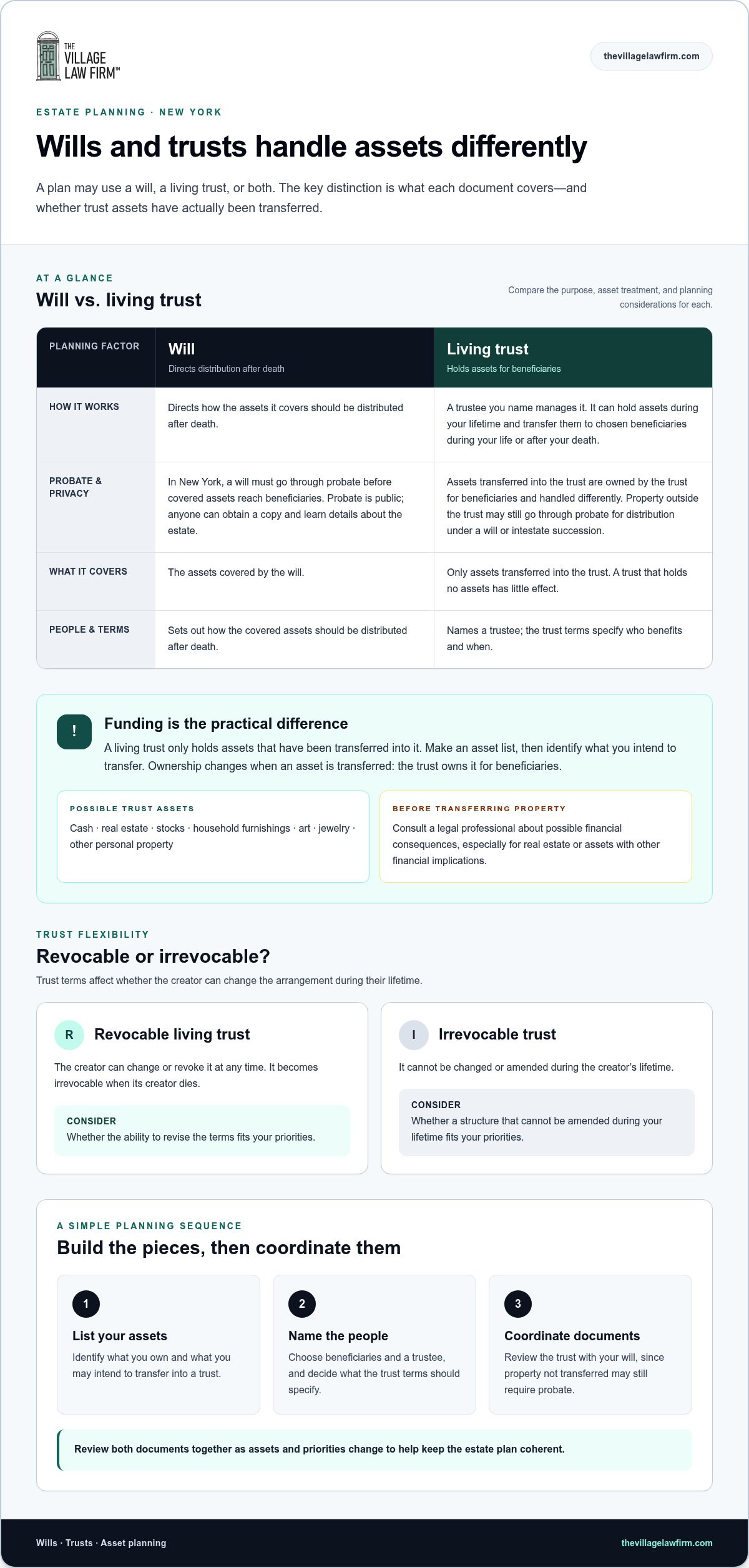
A New York estate plan may use a will, a living trust, or both. Each document handles assets differently, so consider what you own and how you want it transferred. A living trust is managed by a trustee you name. It can hold assets during your lifetime and transfer them to chosen beneficiaries during your life or after your death. For example, you might place real estate in a trust and name a trustee to manage it. The trust’s terms specify who benefits and when.
A will directs how the assets it covers should be distributed after death. In New York, a will must go through probate before those assets can reach beneficiaries. Probate is public, so anyone can obtain a copy of a will that goes through probate and learn details about the estate. A living trust handles assets transferred into it differently: the trust owns them for beneficiaries, rather than the person who transferred them. Property outside the trust may still go through probate for distribution under a will or intestate succession.
Funding is a practical step, not a formality. A living trust that holds no assets has little effect. It can be funded with cash, real estate, stocks, household furnishings, art, jewelry, and other personal property. Make an asset list, then identify what you intend to transfer. Ownership changes when an asset is transferred: the trust owns it for beneficiaries. Before transferring property, consult a legal professional about possible financial consequences, especially for real estate or assets with other financial implications.
Trust terms also affect future flexibility. The creator of a revocable living trust can change or revoke it at any time. An irrevocable trust cannot be changed or amended during the creator’s lifetime. A revocable trust becomes irrevocable when its creator dies. Consider whether you value the ability to revise the terms or prefer a structure that cannot be amended during your lifetime. The choice affects how the trust fits your priorities.
Use a simple planning sequence: list your assets, decide which belong in a trust, and name beneficiaries and a trustee. Then coordinate the trust with your will, since property not transferred may still require probate. Reviewing both documents together helps keep your estate plan coherent as assets and priorities change.
Healthcare proxies and advance directives
A living will records your healthcare preferences. Keep a copy accessible to your doctors and chosen family members. Review the wording if your wishes, health, or trusted decision-maker changes.
Creating a Living Will with Legal Help
A lawyer can help turn broad wishes into clear written instructions and coordinate them with your estate planning documents. During a consultation, describe the care decisions that matter to you, whom you trust to communicate your preferences, and any questions that feel difficult to resolve.
For example, “I want comfort-focused care” may leave room for different interpretations. Explain what that preference means to you, then consider whether your instructions cover the situations you have in mind. A lawyer can review the wording with you and identify gaps before you finalize your plan.
Risks of Unclear or Outdated Instructions
Vague phrases can leave family members unsure how your wishes apply in a particular medical situation. Instructions naming someone you no longer trust can also create confusion about whom you want to speak for you.
During a review, compare the document with your current preferences and relationships. Replace outdated names, clarify wording that could be interpreted in different ways, and make sure the people involved know where to find the latest version. Changes in health or family circumstances are practical reasons to revisit the document.
Keep the current document somewhere you can retrieve it, and share copies with your chosen decision-maker, close family, and doctors involved in your care. Tell each person where the latest copy is kept, and remove outdated versions from circulation. A clear sharing plan helps prevent relatives from relying on conflicting instructions.
Estate planning connects healthcare wishes with decisions about your estate, but each document has a distinct purpose. If you want help refining instructions and coordinating your plans, consider a consultation about estate planning.
Do I need a lawyer to create a living will in Brooklyn?
A lawyer can help when healthcare preferences involve difficult choices, unclear wording, or related estate documents. A living will attorney in Brooklyn can translate general intentions into instructions that reflect what you mean. For example, “I want every possible treatment” may not explain how you weigh comfort, likely outcomes, or different care options. Legal guidance can help you identify those questions and express your decisions clearly.
A lawyer’s review can also help when your living will sits alongside other planning documents. Bring the papers you already have and explain how you expect them to work together. If your instructions name someone to communicate your wishes, consider whether that person understands your priorities and can discuss them with your care team. A review can uncover wording or coordination issues before you rely on the plan.
Consider legal help if any of these apply:
- Your wishes involve treatment scenarios that need clearer language.
- You have estate documents that should align with your healthcare instructions.
- Your chosen decision-maker or family circumstances have changed.
- You want a lawyer to explain particular wording before signing.
If your preferences are straightforward, start by writing down the decisions that matter most. Note questions you cannot answer easily, such as how you would weigh comfort against additional treatment. Then decide whether professional guidance would help. A consultation can focus on those concerns, review your draft, and identify where instructions need greater precision.
Choose a lawyer who listens carefully and explains options in plain English. Describe a real example, such as a treatment choice you want handled according to your wishes. A living will attorney in Brooklyn can discuss how that preference fits your broader estate plan. Notice whether the lawyer asks clarifying questions and explains how the document relates to your other planning priorities.
What should I bring to a Brooklyn estate planning attorney appointment?
A focused appointment starts with a clear picture of your priorities and existing documents. Gather what you have, even if the papers are incomplete or outdated. An old will, for example, can show which decisions need review. You don’t need to resolve every question before meeting; bring your questions with you.
Prepare these materials and notes:
- Existing plans: Bring wills, trust documents, healthcare directives, and any notes about earlier changes.
- Asset overview: List property, financial accounts, investments, valuable personal items, and assets held outside the United States.
- Family information: Note the people you want to provide for, including children or other dependents.
- Decision-makers: Write down potential choices for a trustee or healthcare representative, plus any concerns about those choices.
- Outstanding questions: Record points you want explained, such as how a trust would fit your goals.
An organized asset overview can be simple. Group items by type, such as real estate, accounts, and personal property. Note how each is currently owned, if you know. If you own property with someone else or hold assets in another country, flag that for discussion. These details can affect how your estate plan addresses ownership and transfer.
Bring names and relationships, not just an asset list. If you have children, identify whom you want involved in their care and financial planning. If a relative may receive property, note what you intend and any concerns about timing or management. These examples help the attorney understand the decisions behind the documents.
Before the meeting, choose your top questions and explain what prompted each one. For instance, say whether you’re creating a plan for the first time or revising documents after a family change. Bring copies when convenient, and keep your originals secure. To organize your priorities with legal guidance, schedule an estate planning discussion.
The Village Law Firm: Estate Planning
The Village Law Firm helps individuals and families in New York organize estate plans around their priorities. Turn to the firm to coordinate healthcare wishes with decisions about your will, trusts, or family’s future. Planning for Families with Children can address how your plan supports the people who depend on you. Medicaid Planning may also be relevant when considering future care and protecting assets.
A considered plan connects important decisions rather than treating each document in isolation. Bring your questions and existing paperwork to discuss which planning steps fit your circumstances. The conversation can clarify what needs attention and how to move forward with greater organization.
To discuss estate planning, contact The Village Law Firm or visit the firm’s website.
Take the Next Step Toward a Clear Plan
Your next step doesn’t need to be a complete set of answers. Start with the decisions that matter most, the people you trust, and the questions you still need to resolve. A focused conversation with a living will attorney in Brooklyn can help clarify your priorities and how to move forward with your healthcare and legacy plans.
Before reaching out, write down what you want your plan to accomplish. You might want your healthcare preferences understood, your family guided through important decisions, or your estate documents reviewed together. Bringing those priorities into the conversation gives it a clear starting point.
The Village Law Firm offers estate planning, estate administration, and Medicaid planning. If you’re ready to discuss your next step, contact The Village Law Firm. Thoughtful planning begins with one clear conversation, and you can take that step at your own pace.
Frequently Asked Questions
What does a living will do in New York?
A living will records your healthcare preferences for situations when you can’t communicate them yourself. It can explain what particular choices mean to you rather than relying on broad phrases. For example, describe the care you would want in a situation that matters to you. This document concerns healthcare wishes, while a will addresses the distribution of property after death.
Is a living will legally binding in New York?
A New York living will is a written statement of your healthcare wishes, intended to guide decisions about your care. Its usefulness depends on clear instructions that express your preferences and address the relevant circumstances. Treat it as part of a broader plan: discuss your wishes with the people involved and keep the document consistent with your other healthcare planning papers.
What is the difference between a living will and a health care proxy in New York?
A living will describes your healthcare preferences; a health care proxy names someone to communicate or make decisions for you when you cannot. For example, your living will can explain your priorities, while your proxy can discuss how those wishes apply to a situation the document doesn’t address. Naming someone you trust and explaining your values can help the documents work together.
How do I find and compare Brooklyn attorneys for a living will?
Compare attorneys by how clearly they explain document preparation, healthcare directives, and coordination with your broader estate plan. Ask how they’ll learn your preferences, address questions about wording, and connect the directive with related planning documents. Look for an approach tailored to your circumstances, such as having children, owning property in multiple countries, or holding existing trusts, rather than treating every plan alike.
How do I create, sign, and witness a living will in New York?
Start by writing down the care preferences you want addressed and the situations that raise questions for you. Have the document prepared or reviewed so its language reflects those choices. Before signing, read the final version carefully and resolve unclear wording. Ask the lawyer preparing it to explain the signing and witnessing steps for your document, then share the completed copy with relevant people.
Can I update or revoke a New York living will?
You can revisit your preferences and prepare updated instructions when your wishes or circumstances change. For example, a change in health or in the person you trust to speak for you may prompt a review. Ask a lawyer how to document the change or revoke an earlier directive, then give the current version to the people who may rely on it.