

The cost to administer an estate in NY can include court fees, legal services, executor or administrator commissions, and expenses such as appraisals or a required bond. The total depends on the estate’s assets, the work involved, and whether disputes or other complications arise.
It’s understandable to want a clear figure before taking on an unfamiliar responsibility. Start by separating estate administration expenses from the commission paid to the person managing the estate, then consider which costs may be avoided or reduced in your circumstances.
This article explains New York court filing fees, probate and attorney costs, and how executor or administrator commissions are calculated. It also shows how an estate’s complexity affects the total, helping you anticipate which costs may be paid from estate assets before distributions.
Key Takeaways
- Learn how New York’s tiered commission rules affect an administrator’s pay, including the rate applied to the next $700,000 of sums received and paid out.
- See how Surrogate’s Court filing fees vary with estate value and how beneficiary complications can add procedural costs.
- Understand when a qualifying estate may use voluntary administration, whose threshold New York raised from less than $30,000 to less than $50,000.
- Compare common probate attorney billing models and the factors that can increase legal work.
- Discover how Estate Planning and Estate Administration can help bring structure to planning ahead or managing an estate.
How Much Will I Be Paid for Administering an Estate in New York?
New York does charge estate tax. For dates of death on or after January 1, 2026, through December 31, 2026, the basic exclusion amount is $7,350,000, according to the New York State Department of Taxation and Finance. New York estate tax rates range from 3.06% to 16% on the amount above the exemption.
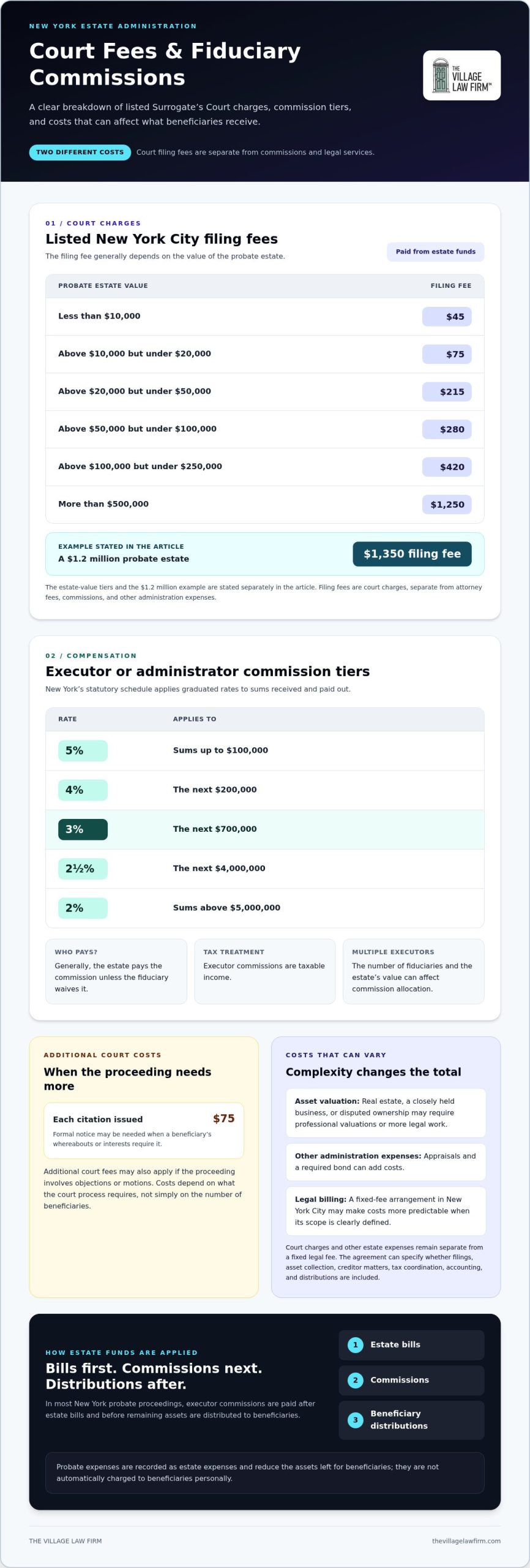
An executor or administrator may be entitled to a commission for handling estate assets. New York’s statutory schedule calculates the commission on sums received and paid out, using graduated rates:
- 5% on sums up to $100,000.
- 4% on the next $200,000.
- 3% on the next $700,000.
- 2 1/2% on the next $4,000,000.
- 2% on sums above $5,000,000.
The estate generally pays the commission unless the fiduciary waives it. Executor commissions are taxable income. If several executors are named, the number of fiduciaries and the estate’s value can affect how commissions are allocated.
In New York City, a fixed-fee estate administration arrangement can make legal costs more predictable when its scope is clearly defined. The written agreement can state whether the fee covers Surrogate’s Court filings, asset collection, creditor matters, tax coordination, accounting, and distributions. It should also explain how disputes or other complications are handled. Court charges and other estate expenses are separate costs.
Bank transfers can involve a separate tax-waiver step. In New York, a tax waiver is required to transfer money or property valued over $30,000 from a bank to the estate. An estate attorney can help obtain the waiver, but legal assistance isn’t required. The executor should account for the bank’s transfer requirements before distributing funds or paying beneficiaries.
Small estates may qualify for voluntary administration, a simplified process available whether the decedent died with or without a will. It generally isn’t available if the estate owns real property or will pursue a personal injury or wrongful death action. A qualifying fiduciary files a simplified affidavit and receives voluntary letters of administration. A filing fee may apply. This route can suit estates with minimal probate assets when most property passes through beneficiary designations or a trust.
Estate planning documents serve a different purpose: they record a person’s wishes and name decision-makers before administration becomes necessary. A plan may include a will, revocable trust, power of attorney, and health care documents. A will can name an executor, while beneficiary designations or trust ownership may direct certain assets outside probate. Reviewing titles and beneficiary forms alongside those documents helps align the plan with the assets it is meant to address.
What are Surrogate’s Court filing fees in New York?
New York Surrogate’s Court filing fees generally depend on the value of the probate estate. In New York City, the listed fee is $45 for an estate valued at less than $10,000, and $75 when valued above $10,000 but under $20,000. For an estate valued above $20,000 but under $50,000, the fee is $215. These are court charges, separate from attorney fees, commissions, and other administration expenses.
Other listed New York City filing-fee tiers include $280 for an estate valued above $50,000 but under $100,000, and $420 above $100,000 but under $250,000. The fee is $1,250 for an estate valued at more than $500,000. A $1.2 million probate estate has a $1,350 Surrogate’s Court filing fee. The applicable tier depends on the estate value used for the proceeding.
Probate expenses are paid from estate funds, reducing the assets left for beneficiaries. They are recorded as estate expenses, not automatically charged to beneficiaries personally. In most New York probate proceedings, executor commissions are paid after estate bills and before the remaining assets are distributed. The accounting should therefore show bills first, commissions next, and beneficiary distributions afterward.
Beneficiary circumstances can add costs beyond the initial court filing. If a beneficiary’s whereabouts or interests require formal court notice, the proceeding may involve citations. New York Surrogate’s Court charges $75 for each citation issued. Additional court fees may apply if an estate proceeding involves objections or motions. These expenses depend on what the court process requires, not simply on the number of beneficiaries.
Estate-planning fees are a separate cost from probate filing fees. The work involved can depend on the number and type of documents, the family’s distribution wishes, asset ownership, and whether a plan must address children or property across borders. Clear instructions and coordinated beneficiary designations can reduce confusion later, though they don’t change a court filing fee already tied to estate value. If you’re shaping a plan around family or asset complexity, estate planning guidance can help organize those decisions.
When budgeting for an estate, separate court charges from legal services, commissions, and expenses related to beneficiary proceedings. This helps show which costs are collected by the court and which depend on the circumstances of the administration.
How Much Does Probate Cost in New York?
Probate costs depend on which assets pass through court, the work required, and whether disputes arise. New York’s voluntary administration threshold and commission rules also affect which process applies.
Estate Size and Disputes
Estate size affects probate costs because larger or harder-to-value assets may require more administration work. Real estate, a closely held business, or disputed ownership can call for professional valuations, additional legal services, or both.
Disputes can add costs through court motions, objections, or the appointment of a Guardian ad Litem to represent an interested person. Keeping asset records and beneficiary information organized supports an accurate accounting, but does not resolve an actual dispute.
Probate Value Threshold for Commissions
The probate estate value can affect how commissions are allocated among fiduciaries. When the probate estate exceeds $300,000 after specified personal-property or cash bequests are excluded, each of up to two executors is entitled to a full commission. For estates valued below $100,000 with multiple fiduciaries, total commissions must be divided according to the services each rendered.
Small-estate procedures offer a separate threshold. New York raised the estate value threshold for voluntary administration from less than $30,000 to less than $50,000, according to the New York State Legislature. Voluntary administration generally isn’t available when the estate owns real property or will pursue a personal injury or wrongful death action.
Examples of Total Probate Costs
These totals can include attorney fees, commissions, court charges, and other estate expenses.
These examples show why estate value alone does not determine the final bill. Disputes, appraisals, and a required bond can materially increase expenses.
A living trust can allow assets held in the trust to pass directly to beneficiaries, bypassing probate. Probate may still be needed for assets outside the trust, so ownership and beneficiary designations matter when comparing administration options.
Administration Timing and Cost Effects
New York estate administration has no single timeline that fits every estate. Tasks can include appointing a fiduciary, collecting assets, addressing creditor claims, resolving tax matters, and preparing an accounting. Disputes, real estate sales, and delays in obtaining asset information can extend the process and add legal or valuation work.
How long does estate administration take in New York, and how does timing affect costs? The duration depends on court requirements, asset complexity, and whether beneficiaries contest decisions. A longer administration can mean ongoing legal, property, or bond expenses, while distributions generally wait until estate obligations and required administration work are addressed.
Probate attorney billing models and hourly rates
New York probate attorneys may bill hourly, charge a flat fee, or use an estate-based percentage. The billing structure affects how legal costs appear in the estate’s accounts.
Flat-Fee and Hourly Billing
A flat fee sets an agreed charge for a defined scope, while hourly billing tracks time spent. The distinction matters because a straightforward filing differs from contested proceedings involving objections or complex assets.
A straightforward, uncontested probate typically requires 20 to 50 attorney hours. Multiplying those hours by the hourly rate gives a rough illustration of legal time, not a complete estate budget.
A flat fee can make the cost of covered work easier to anticipate. The written agreement should identify included tasks, such as preparing and filing court papers, communicating with the executor, and coordinating routine administration. It should also explain how work outside that scope is billed, including beneficiary disputes or additional court appearances.
Probate Attorney Billing Methods
Billing methods explain how a lawyer calculates charges and reports work to the estate. Reviewing the engagement agreement and each invoice helps the executor connect legal costs with specific services.
Some New York estate attorneys charge 2% to 4% of the gross estate as their total fee. Probate attorney fees can reach 6% of an estate’s total value. A percentage method ties the fee to estate value, so the executor should understand which assets form the calculation base and what work the fee covers.
Hourly bills should show the work performed, time recorded, rate applied, and expenses charged. For example, an invoice may separate preparing court documents from calls about beneficiary accounts. This detail helps the executor track administration spending and identify work related to contested issues.
New York probate attorney fees must be reasonable under SCPA §2110. That standard matters across billing methods: a percentage agreement does not remove the need for reasonable fees. The executor should preserve the engagement letter, invoices, and payment records with the estate accounting.
Compare the billing method with the estate’s circumstances. An uncontested matter with organized records may suit a defined flat-fee scope, while unpredictable proceedings can make hourly billing more responsive to the work involved. Before work begins, ask the attorney to explain exclusions and charges for additional services in writing.
Attorney fees are only one part of the administration accounts. Court charges, appraisals, commissions, and other estate expenses are separate, so a legal fee quote is not the full probate cost.
How are executor or administrator commissions calculated in New York
New York calculates executor and administrator commissions using statutory rates applied to estate transactions. The schedule applies to sums received and paid out, so the estate’s value alone does not determine the commission.
Under New York Surrogate’s Court Procedure Act 2307, administrators may receive a 3% commission on the next $700,000 of sums received and paid out, according to the New York State Legislature. The full schedule uses graduated tiers:
- 5% on sums up to $100,000.
- 4% on the next $200,000.
- 3% on the next $700,000.
- 2 1/2% on the next $4,000,000.
- 2% on sums above $5,000,000.
Each rate applies to its tier, rather than to the entire estate. The calculation applies 5% to the first $100,000, 4% to the next $200,000, and 3% to the remaining $200,000.
The calculation considers the combined value of estate assets and income. It is tied to sums received and paid out, so the fiduciary’s records of receipts, payments, and income matter. The commission generally comes from estate funds unless the executor or administrator waives it. Executor commissions are considered taxable income, so the fiduciary should account for the commission separately from beneficiary distributions.
Having more than one fiduciary can change how commissions are divided. For a probate estate valued above $300,000 after specified personal-property or cash bequests are excluded, each of up to two executors is entitled to a full commission. When more than two executors are named, they must split two full commissions unless the will specifically provides otherwise in writing. For estates valued below $100,000 with multiple fiduciaries, total commissions are divided according to the services each performed.
Before distributing assets, the fiduciary can compare the commission calculation with the estate accounting. The review should identify receipts, payments, income, applicable tiers, and any division among fiduciaries. Banks and trust companies may charge more than the stated executor commission rates for executor or trustee services, particularly for money management. The estate’s records and governing will can help explain the final amount and its allocation.
The Village Law Firm: Estate Planning
The Village Law Firm helps New York families plan for future decisions and manage estate administration after a death. Estate Planning can clarify how assets should pass and who should act, while Planning for Families with Children can address guardianship wishes and family priorities. If you’re responsible for an estate, Estate Administration can help organize court filings, asset management, and distributions. Medicaid Planning may also be relevant when long-term care planning affects broader legacy decisions. Seek guidance while preparing a plan, managing an estate, or working out how family needs and asset arrangements fit together. Contact The Village Law Firm to discuss your estate planning or administration needs.
Make Your Next Estate Decision With Clarity
To prepare for your next decision, gather the will, account statements, property records, and beneficiary information in one place. A clear record of the assets and people involved can make conversations about the cost to administer an estate in NY more focused and useful. It can also bring questions about responsibilities, family needs, or planning to light before they become harder to address.
The Village Law Firm provides Estate Planning and Estate Administration for people preparing for the future or managing an estate. Its Medicaid Planning service can address long-term care considerations as part of broader planning. The conversation should start with your priorities and the decisions in front of you, not a one-size-fits-all checklist.
Contact The Village Law Firm to discuss your estate planning or administration needs. A thoughtful next step can help you move forward with greater clarity and confidence.
Frequently Asked Questions
Can You Reduce Probate Costs?
Yes. Thoughtful planning and organized records can reduce avoidable administration work. A living trust can allow assets held in it to pass directly to beneficiaries, bypassing probate. Keeping account details, property titles, and beneficiary designations together can help the executor identify which assets belong in the probate estate. Clear communication among beneficiaries may also help prevent misunderstandings from becoming costly court disputes.
What is executor commission in NY?
New York executor commission is compensation calculated under a graduated statutory schedule on sums received and paid out. The schedule begins at 5% on sums up to $100,000, then applies lower rates to higher tiers. The calculation uses estate transactions, including income, rather than simply applying one rate to the estate’s total value. Multiple fiduciaries may need to divide or share commissions under rules tied to estate value and their number.
Do Executors Get Paid?
Yes. An executor may receive a commission from estate funds for carrying out fiduciary duties, unless they waive it. Those duties can include safeguarding property, keeping transaction records, and coordinating payments before distributions. A family member serving as executor may choose not to accept compensation, but that decision should be clearly documented. Commissions are taxable income, so the executor should account for them separately from inherited distributions.
What Drives the Price Up or Down?
The cost to administer an estate in NY depends on the work required, not just the estate’s gross value. Disputed claims, hard-to-value property, missing account records, and assets held across jurisdictions can require additional legal or valuation work. An estate with organized records and no disputes generally involves fewer complications. The executor’s accounting should separate court charges, professional services, commissions, and other expenses.
What are the New York probate court filing fees for an estate?
Surrogate’s Court filing fees vary by probate estate value, and New York City’s schedule includes several tiers. Examples include $45 for an estate valued below $10,000, $215 for one above $20,000 but under $50,000, and $420 above $100,000 but under $250,000. A $1.2 million probate estate has a $1,350 filing fee. Citations and motions can create separate court charges.
What are typical New York attorney fees for estate administration?
A straightforward, uncontested probate typically takes 20 to 50 attorney hours. Some attorneys use a flat fee for basic, uncontested matters, while others charge a percentage of the gross estate. The engagement agreement should explain covered work and how additional tasks, such as contested proceedings, are billed.
What other costs are involved in administering a New York estate, such as appraisals and accounting?
Other expenses can include appraisals, a surety bond, legal newspaper notices, citations, and accounting work. When real estate must be readied for valuation or sale, estates may also incur property preparation costs from services like DLJ Property Solutions LLC to clear out unwanted items and debris. Accounting costs depend on the records and transactions that need to be assembled, reconciled, and reported. The estate’s assets and court requirements determine which additional expenses arise.
How does estate administration cost differ for small estates using voluntary administration in New York?
Qualifying New York estates valued below $50,000 may use voluntary administration, which has a $1 filing fee and requires a simplified affidavit. The process is available whether the decedent died with or without a will. It generally cannot be used when the estate owns real property or will pursue a personal injury or wrongful death action. The appointed fiduciary receives voluntary letters to administer and distribute estate property.