
What if the person you trust most to care for your child isn’t automatically the person a court appoints? If you’re searching “how to appoint legal guardian for children New York,” you likely want a clear way to record your wishes and protect your family if you can’t provide care. A guardian nomination communicates your preference, but it doesn’t remove the court’s role. The judge reviews the circumstances with the child’s best interests in mind.
It’s understandable to want clarity about who could step in and whether your choice will be honored. New York offers different planning tools for different situations. A plan for a parent’s incapacity may differ from a nomination intended to take effect after death, and temporary decision-making authority is another consideration.
This guide explains how to record a guardian nomination, what the court may consider, and how different care arrangements compare. You’ll also find practical steps for documenting your plan and keeping it aligned with your children’s needs, your family relationships, and your broader estate planning.
Key Takeaways
- See how a guardian nomination communicates your wishes while leaving the court’s review as part of the process.
- Compare long-term nominations, temporary caregiving arrangements, and standby planning to identify what may fit your family’s circumstances.
- Explore practical guidance on “how to appoint legal guardian for children New York” families can use to begin documenting a care plan.
- Use a step-by-step checklist to clarify care priorities, consider possible guardians, and review your planning documents.
- Consider a guardian choice alongside your will and plans for managing a child’s inheritance.
Why appointing a legal guardian for children in New York matters
Planning for your child’s care is an act of love, not a prediction that something will go wrong. It gives you time to think carefully about who could provide stability and make important decisions if you’re no longer able to do so. Parents researching how to appoint legal guardian for children New York law recognizes often want reassurance that their wishes will be understood and considered.
A guardian of a minor is a person authorized by a court to take on specified responsibilities for a child. Depending on the appointment, those responsibilities may involve the child’s care and personal decisions, the child’s property, or both. Guardianship is different from adoption, which changes the legal parent-child relationship, and from a custody dispute between parents. A guardian nomination also doesn’t decide how a child’s inheritance will be managed. For a general overview of the role and types of a legal guardian, see this foundational reference.
What a guardian nomination can, and cannot, do
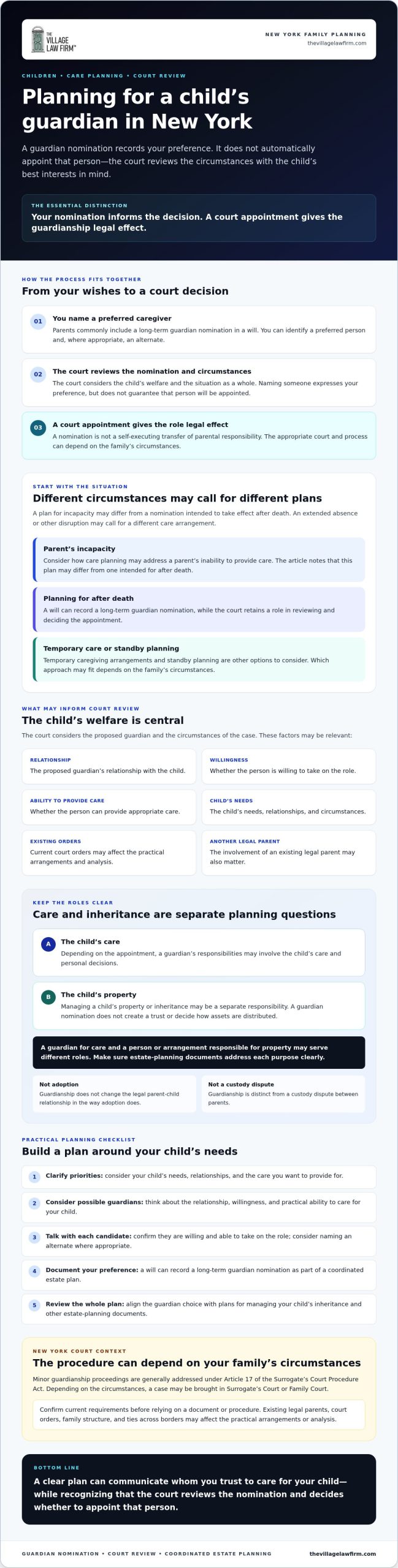
A written nomination tells the court whom you believe could care for your child and why that person may suit your family. Parents commonly include a long-term nomination in a will. It is still considered through a court process, rather than taking effect as an automatic transfer of parental responsibility.
A nomination records your choice; a court appointment gives it legal effect. The court reviews the matter under applicable New York law, with the child’s welfare central to its decision. Your preference is important, but it doesn’t guarantee that the person you name will be appointed. The court may need to consider the proposed guardian and the circumstances before deciding.
When a New York family may need a plan
Parents may plan for their death, serious incapacity, or another disruption that could affect their ability to care for a child. A clear nomination can communicate a considered preference during a difficult period, but the right planning tool depends on the situation. A plan for an extended absence may differ from one intended to address long-term care.
An existing legal parent can affect both the practical arrangements and the legal analysis. Current court orders, the child’s needs and relationships, and the family’s structure may also matter. For example, a child’s established relationship with a proposed caregiver may be relevant context, but it doesn’t determine the outcome on its own. If your family has complex circumstances, including ties across borders, individualized estate-planning guidance can help you document your wishes without assuming a particular court result.
How New York guardian nominations work in a will and through court review
A will can give your family and the court a clear record of whom you would want to care for your child. In New York, a parent may nominate a guardian in a will, but the nomination is not a self-executing appointment. Minor guardianship proceedings are generally addressed under Article 17 of the Surrogate’s Court Procedure Act. Depending on the circumstances, a case may be brought in Surrogate’s Court or Family Court. The appropriate court and process can depend on your family’s situation, so confirm current requirements before relying on a document or procedure.
What a will-based guardian nomination does
Include the nomination as part of a carefully coordinated estate plan. Clear drafting can identify your preferred person and, where appropriate, an alternate in case that person cannot or does not wish to serve. Talk with each candidate in advance. Their willingness and practical ability to care for your child affect whether the plan can work as intended.
A nomination does not create a trust, appoint someone to manage a child’s inheritance, or determine how assets will be distributed. Those issues require separate estate-planning provisions. A guardian responsible for a child’s care and a person or arrangement responsible for the child’s property may serve different roles. Make sure your documents address each purpose clearly.
What the court may consider before appointing a guardian
The court reviews the nomination through a legal process, with the child’s welfare and the circumstances of the case central to its decision. The proposed guardian’s relationship with the child, willingness to take on the role, and ability to provide appropriate care may be relevant. Existing orders, the child’s needs, and the involvement of another legal parent can also affect the analysis.
Your nomination informs the court’s decision; it does not replace court review. The person you name may be appointed, but a will cannot guarantee that result. The court determines the arrangement that meets the applicable legal standard. It does not automatically implement a parent’s preference.
For parents considering how to appoint legal guardian for children New York law will recognize, precise documents matter, as does understanding how a nomination fits with care and financial planning. The Village Law Firm works with New York families on estate planning and planning for families with children, including wills and trusts tailored to family needs. To learn about coordinating these pieces, explore New York estate planning.
Choosing a New York guardian: compare care arrangements before deciding
The right plan depends on what you need it to do. A will-based nomination records your long-term preference, while temporary authority or standby planning may address a different kind of disruption. These options aren’t interchangeable, and their availability and requirements depend on your family’s circumstances and current New York law.
| Arrangement | May fit when | Key point |
|---|---|---|
| Long-term guardian nomination | You want to record whom you would prefer to care for your child if you die. | A nomination in a will informs the court’s review; it doesn’t guarantee appointment. |
| Temporary caregiving authority | You need another adult to handle certain decisions during a temporary absence or disruption. | New York law allows a written designation of a person in parental relation for specified educational and health care decisions for up to 12 months. Additional formalities may apply, including notarization for a designation lasting more than 30 days. |
| Standby guardianship | You want to plan for a potential serious illness, debilitation, incapacity, or death. | New York’s standby guardianship provisions may provide a way to designate a standby guardian, subject to statutory triggers and court approval. |
Trust is an essential starting point, but it doesn’t guarantee a court appointment. Differences in caregiving preferences or family disagreements also shouldn’t be treated as automatic legal disqualifications. The court considers the facts and the child’s welfare under applicable law.
How to assess a potential guardian
Look beyond affection and good intentions. Consider the person’s relationship with your child, values, location, health, and capacity to provide care. Could they keep siblings together, support the child’s schooling, and preserve important routines? What support network could they rely on? Where appropriate, discuss the role and expectations before naming them. A willing candidate who understands the practical commitment can make a more informed choice.
When temporary or standby planning may be relevant
Planning for incapacity isn’t the same as planning for a parent’s death. A temporary designation may address limited decision-making during an absence, while standby planning may be relevant to specified serious events. New York’s standby guardianship law sets rules for eligibility, triggering events, and formal steps. Don’t assume that a private document alone completes the process.
Existing custody orders, another legal parent’s role, and complex family circumstances can affect which option is appropriate. If you’re weighing how to appoint legal guardian for children New York families can plan for, first identify the situation you want to address. Then confirm the current legal requirements for that arrangement.
Steps to nominate a guardian for your children in New York
A thoughtful nomination starts with your child’s needs, not a form. Use these steps to organize your decisions and identify what should be reviewed under current New York law. The right documents and formalities depend on your family’s circumstances, so treat this checklist as a starting point, not a substitute for individualized guidance.
- 1. Identify your child’s care priorities. Note important routines, schooling, health needs, sibling relationships, and the people or community connections you’d want to preserve where possible.
- 2. Consider a primary choice and an alternate. Assess each person’s relationship with your child, willingness, location, and practical capacity to provide care. An alternate can record your preference if your first choice cannot serve.
- 3. Discuss expectations. Where appropriate, speak with the proposed guardian and relevant co-parent. Talk through the responsibilities, possible changes to daily life, and support the person may need. A candid conversation can surface questions to resolve before drafting.
- 4. Gather relevant documents. Collect existing wills, custody orders, and other documents that may affect care arrangements. Depending on your situation, notes about your child’s routines, medical needs, school, and key contacts may also help inform planning. Not every family needs the same materials.
- 5. Have the nomination prepared and reviewed. A will may record a parent’s guardian nomination. Make sure the language reflects your choice and coordinates with the rest of your estate plan. Ask a qualified New York estate-planning attorney to review how the document applies to your circumstances.
- 6. Execute and store documents correctly. New York has legal requirements for signing and witnessing wills. Confirm the current formalities before signing, since an incorrectly executed document may not have the intended effect. Keep current signed documents in a secure, accessible place and let appropriate trusted people know where to find them.
- 7. Revisit the plan as life changes. Review it after changes in family relationships, health, residence, or your child’s needs. Update documents when appropriate, and make sure the people involved know which version is current.
If you’re researching how to appoint legal guardian for children New York parents can nominate, preparation is a practical first step. For additional context on planning for children, read the NYC estate planning guide for parents. For help coordinating a guardian nomination with your broader estate plan, explore estate planning guidance from The Village Law Firm.
Build a complete New York estate plan around your guardian choice
A guardian nomination addresses who you would want to care for your child. It doesn’t answer every financial question that may arise if you die or become unable to manage your affairs. Coordinating the nomination with your will and financial planning for your child can make the plan clearer, so caregiving wishes and instructions about assets work together rather than leave gaps.
Coordinate guardianship with financial planning for children
Care decisions and property management are separate matters. Naming a person to care for your child doesn’t, by itself, determine who manages the child’s inheritance or how those assets are handled. Your estate plan should address both needs and make clear how each is covered.
A trust may be one tool to consider for managing assets for a child, but it isn’t automatically necessary for every family. The right approach depends on your wishes, assets, and family circumstances. For more context on coordinating these choices, see the New York estate planning guide and the NYC estate planning guide for parents.
Understanding how to appoint legal guardian for children New York parents can nominate is one part of a considered family plan. The larger picture includes making sure your documents reflect your care preferences and address the separate question of how your child’s property should be managed.
Know when individualized New York legal guidance can help
Some family situations call for closer review. Blended families, international assets, existing court orders, or disagreement among relatives can affect how documents should be coordinated and which planning options may fit. These circumstances don’t determine a court’s decision on their own, and no plan can guarantee a particular appointment or legal outcome. They do make it useful to review the details in context.
A coordinated review can help identify whether your will, guardian nomination, and financial planning address your family’s needs and comply with current New York requirements. The Village Law Firm serves New York families with estate planning and planning for families with children, including wills and trusts tailored to family needs. If you’re ready to bring your plans into alignment, consider discussing your family’s circumstances with The Village Law Firm.
Put a thoughtful plan in place for your children
Choosing a potential guardian is an important start, but the nomination is only one part of planning for your children’s future. A will can record your preference for who may care for them, while court review remains part of the process. Temporary caregiving and standby arrangements may address different circumstances. The right approach depends on your family and current New York law.
As you consider how to appoint legal guardian for children New York families can plan for, remember to address both care and finances. Naming a caregiver doesn’t decide how a child’s inheritance will be managed. Coordinated estate-planning documents can bring these related but distinct wishes together.
The Village Law Firm provides estate planning for New York families and planning for families with children, including wills and trusts tailored to individual family needs. To review how your guardian choice may fit into your broader plan, discuss a thoughtful estate plan for your family.
Frequently Asked Questions
Can I appoint a legal guardian for my child in my New York will?
You can nominate a person in your will, but the will doesn’t complete a court appointment by itself. In New York, a minor’s guardianship may be considered through a court process, and the court reviews the circumstances and the child’s welfare. If you’re researching how to appoint legal guardian for children New York parents can nominate, make sure your will clearly states your choice and is prepared and signed according to current New York requirements.
Will the court automatically choose the person I name as guardian?
No. A parent’s nomination communicates a considered preference, but it doesn’t guarantee the court will appoint that person. The court reviews the matter under applicable New York law, considering the child’s welfare and relevant circumstances. The proposed guardian’s relationship with the child, willingness, and ability to provide care may be relevant. A nomination can guide the court, but it doesn’t replace court review or predetermine the outcome.
What happens if both parents die without naming a guardian in New York?
If both parents die without a nomination, a court may need to address who will care for the child. A relative or another interested person may seek appointment, but the process and outcome depend on the circumstances, including existing orders, the child’s needs, and potential caregivers. New York minor guardianship matters may proceed in Surrogate’s Court or Family Court, depending on the case. Don’t assume a particular relative automatically becomes the guardian.
Can I name a temporary guardian if I become seriously ill?
New York has standby guardianship provisions that may help a parent plan for certain events, such as serious illness, debilitation, incapacity, or death. The law sets conditions and formal steps, and court approval may be part of the process. Confirm current requirements before relying on a designation. A separate written designation may allow another adult to make specified education and health care decisions temporarily. These arrangements aren’t interchangeable, so the right one depends on your situation.
Can a guardian manage my child’s inheritance in New York?
Not automatically. A person appointed to care for a child and someone responsible for managing the child’s property may have different roles. Naming a caregiver doesn’t, by itself, decide who controls an inheritance or how assets are managed. Your will or other estate-planning documents may address financial arrangements, and a trust may be considered where appropriate. The structure depends on your wishes and circumstances, so coordinate care planning with separate planning for your child’s property.
How do I choose the right guardian for my child?
Consider more than trust and affection. Think about the person’s relationship with your child, willingness to serve, health, location, values, and ability to provide stable care. Practical questions matter too: could they support siblings staying together, maintain school routines, and rely on a dependable support network? Where appropriate, discuss expectations before naming them. A thoughtful choice should reflect your child’s needs, while recognizing that court review remains part of the process.
Do I need a lawyer to nominate a guardian in New York?
A lawyer may not be required simply to express a guardian preference, but preparing a valid will involves New York execution requirements. An informal or incorrectly signed document may not have the intended effect. Legal guidance can help coordinate the nomination with your will, financial planning, and any existing court orders. This may be particularly useful for blended families, international assets, or other complex circumstances. The Village Law Firm provides estate planning and planning for families with children in New York.