
You’ve been named executor, but the bank still won’t release estate funds and you can’t yet manage the property. That gap can be unsettling: being named in a will is not the same as having authority to act. If you’re researching how to get a letter of testamentary in NY, the key first step is generally to have the will admitted to probate by the Surrogate’s Court.
The petition, supporting documents, and notices to interested parties all need careful attention. Missing information or disputes can add court steps, and estates with property or other assets in multiple countries may need additional coordination.
This guide explains the process, from identifying who may apply and filing the probate petition to addressing notices and receiving Letters Testamentary. It also covers what can affect timing and the responsibilities that follow once the court appoints you. Understanding each step can make the process more manageable and help you recognize when legal guidance may be useful.
Key Takeaways
- Learn how to get a letter of testamentary in NY, from locating the will and identifying the proper court to filing and responding to notices.
- Use a preparation checklist to organize commonly relevant details about the decedent, nominated executor, and beneficiaries.
- Understand how missing information, notice issues, or objections may lead to additional court steps.
- After appointment, review the letters, identify estate assets, contact relevant institutions, and keep careful records.
- See how estate administration guidance can help bring order to the court process and the responsibilities that follow.
What Are Letters Testamentary in New York, and Who Can Receive Them?
Being named executor in a will is an important starting point, but it does not by itself let you access accounts, transfer estate property, or otherwise act for the estate. Letters Testamentary are issued by the Surrogate’s Court after it admits the will to probate and appoints the nominated executor. They provide formal evidence of that authority, subject to the terms of the letters and applicable law.
Probate is the court process for reviewing a will and addressing the appointment of an executor. The court determines whether the will can be admitted and who is authorized to administer the estate. For a general overview of the probate process, see this explanation. In New York, the will generally must be submitted for probate before Letters Testamentary can issue. This distinction is central to understanding how to get a letter of testamentary in NY: the will nominates an executor, while the court grants legal authority.
Letters Testamentary differ from Letters of Administration. Letters of Administration generally appoint someone to administer an estate when there is no will admitted to probate, or when the circumstances call for an administrator rather than an executor. The appropriate appointment depends on the estate.
Who may apply to serve as executor?
The will typically nominates an executor, who may petition the court for appointment. Nomination is not automatic appointment. The Surrogate’s Court reviews the petition and the will, and the nominee must meet applicable New York eligibility and appointment requirements. Questions about the nominee’s eligibility or a challenge to the will may require closer legal analysis before the court decides who will serve.
Which New York Surrogate’s Court handles the estate?
New York has a Surrogate’s Court in each of its 62 counties, so there is not one statewide filing desk for every estate. In general, the proper venue is connected to the county where the decedent was domiciled at death. Domicile means the person’s established home, not necessarily where they happened to be staying when they died.
Residency and asset details can complicate that starting point. For example, a decedent who lived outside New York but owned property in the state may require a New York proceeding. Assets in multiple countries can also call for additional coordination. Before filing, clarify where the decedent was domiciled and where estate property is located. Careful venue analysis can help organize the process from the outset.
How to Get Letters Testamentary in New York: The Probate Steps
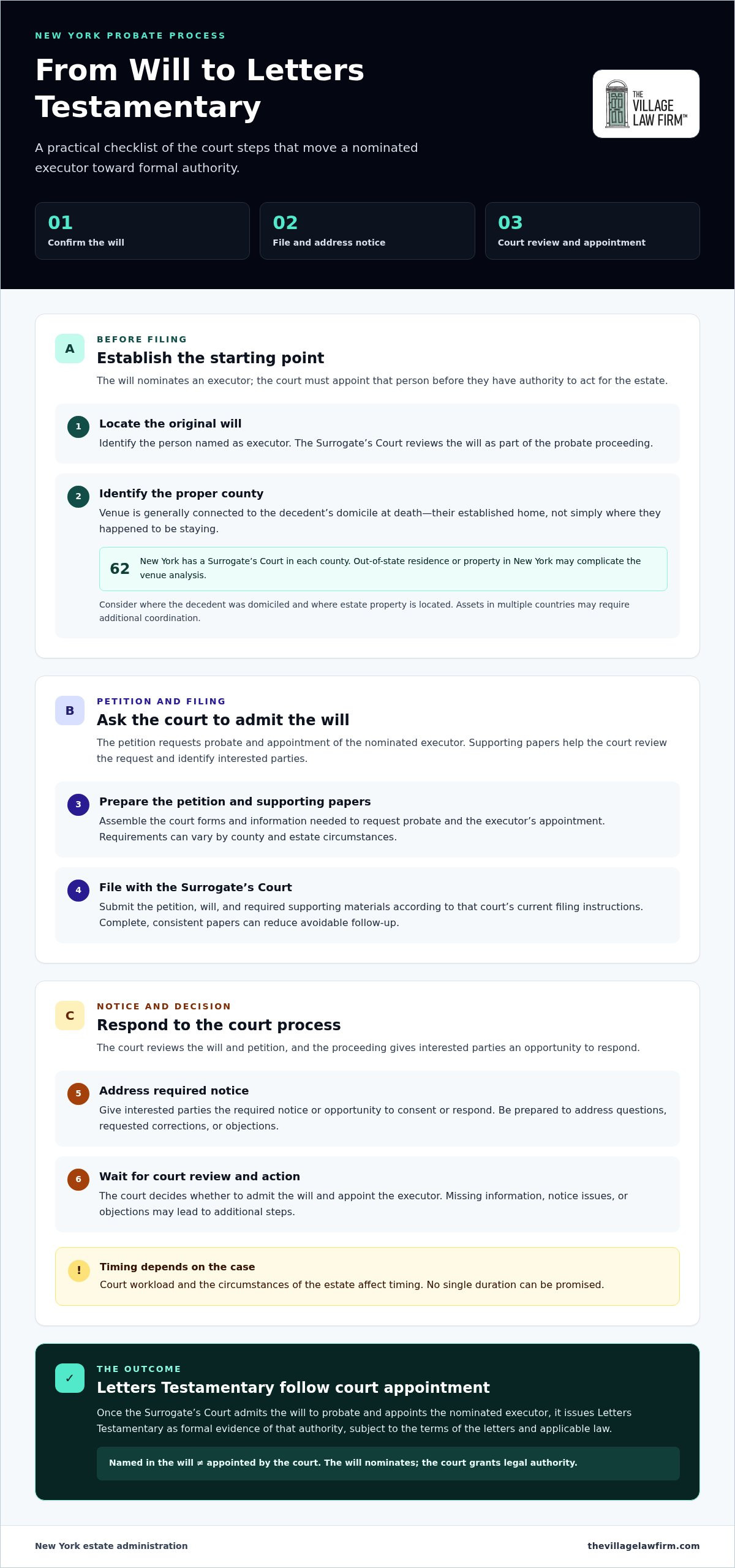
The route from being nominated in a will to receiving authority follows a series of court steps. To understand how to get a letter of testamentary in NY, focus on the sequence: confirm the will and proper court, submit a complete petition, address required notice, and wait for the Surrogate’s Court to review the papers and make its decision. Cornell Law School’s Legal Information Institute provides a helpful legal definition of Letters Testamentary.
- Locate the will. Find the original will and identify the person it nominates as executor. The court reviews the will as part of the probate proceeding.
- Identify the proper venue. Determine which county’s Surrogate’s Court should handle the case, considering the decedent’s domicile and any unusual residency or asset circumstances.
- Prepare the petition and supporting papers. Assemble the court forms and information needed to request probate and the executor’s appointment. Requirements can vary by court and estate.
- File with the Surrogate’s Court. Submit the petition, will, and required supporting materials according to that court’s current filing instructions.
- Address notice and await court action. Give interested parties the required notice or opportunity to respond. Address any questions, requested corrections, or objections before the court decides whether to admit the will and appoint the executor.
In short, the process moves from locating the will and identifying venue to preparing and filing the petition, addressing notice, and receiving Letters Testamentary after the court reviews the papers and appoints the executor.
Prepare and file the probate petition
The petition formally asks the Surrogate’s Court to admit the will to probate and appoint the nominated executor. Supporting papers help the court assess the request and identify people with an interest in the proceeding. Forms and filing requirements may differ by county and estate circumstances, so review the court’s current instructions before submitting anything. A complete, consistent filing can reduce avoidable follow-up.
Address notice and the court’s review
Interested parties may need to receive notice or have an opportunity to consent or respond. The court reviews the will and petition and may request clarification or corrections before acting. Missing information, notice issues, or an objection can mean additional steps, so do not assume every application follows the same schedule. Court workload and the circumstances of the case also affect timing, and no single duration can be promised.
When a filing involves disputed issues or assets in more than one country, experienced New York estate administration guidance can help connect court requirements with the practical work ahead. The Village Law Firm provides estate administration counsel in New York, including cross-border administration for estates with international assets.
What Documents and Information May Be Needed for a New York Application?
Organizing key records and names before filing can make probate preparation easier. The items below are commonly relevant preparation materials, not a universal list of required documents. The Surrogate’s Court’s current instructions and the circumstances of the estate determine what must accompany a particular application.
Information to gather before filing
Start with the original will and any codicils, which are formal changes to the will. Then gather accurate information about the decedent, the person nominated as executor, and people who may have an interest in the estate. These details help identify what the court may need to review and whom it may need to notify.
- Will records: The original will and any codicils or related documents you can locate.
- Decedent information: Full legal name, date of death, and details about residence at the time of death. A death certificate may be relevant, depending on the court’s instructions and the case.
- Nominated executor information: The nominee’s full name and contact details, along with any information requested for the petition.
- Beneficiary and interested-party details: Accurate names and mailing addresses, including information that may help identify people who must receive notice.
- Estate context: A preliminary picture of known assets and circumstances that could affect the filing, such as a dispute, missing records, or assets in another state or country.
This preparation is a starting point, not a substitute for the court’s filing instructions. If you are researching how to get a letter of testamentary in NY, review the appropriate Surrogate’s Court requirements before submitting papers to help prevent avoidable omissions. Do not assume a document needed in one case is required in every case.
When consent, bond, or additional papers may arise
Notice arrangements depend on the people involved and the details of the proceeding. Waivers or consents may be relevant if interested parties agree to proceed without formal notice in a particular way. If consent is unavailable or an issue needs court attention, a citation or other papers may be involved. The court’s instructions govern which approach applies.
A fiduciary bond, which provides a form of protection tied to the executor’s responsibilities, may also be required in some circumstances. It is not automatic: the will’s terms and the court’s requirements matter. Affidavits, death-certificate materials, and other supporting papers can also depend on the case. Confirm each item against current court rules and instructions, and review the will carefully. Organizing the paperwork can make an otherwise uncertain process easier to manage.
Will Delays or Objections Stop You From Getting Letters Testamentary?
A delay does not automatically mean the court will deny an application. The key distinction is between being named as executor and having authority to act: nomination in a will starts the process, but the Surrogate’s Court must review the matter and appoint the executor before Letters Testamentary issue. Until then, do not assume you can complete estate transactions in that role.
For someone asking how to get a letter of testamentary in NY, it helps to know that different circumstances can lead to additional court steps. Some are administrative, such as a request to clarify a name or provide missing information. Others involve questions about the will or a formal objection and may require a more involved proceeding. These situations are not interchangeable, and a routine review or request for corrections does not by itself establish that the application will fail.
What can slow or complicate the application?
Unclear or incomplete papers can prompt the court to seek corrections or further information. Notice may also require additional coordination if an interested party’s address is difficult to locate or confirm. Questions about the will, including whether the submitted document accurately reflects the decedent’s intentions, can call for closer review. Respond carefully to court requests and keep copies of filed papers and related correspondence so you can track what remains outstanding.
Routine follow-up generally means the court needs something clarified or completed; it is not the same as a contested probate matter. If the process becomes complicated, this New York estate administration overview offers broader context on how probate fits into the responsibilities families face after a death.
What if someone objects to the will or executor?
An objection can raise issues the court must consider before deciding whether to admit the will or appoint the nominated executor. The next steps depend on what is disputed and the facts presented; there is no single response for every case. Do not treat an objection as a final decision. Preserve relevant documents, note court deadlines and communications, and get legal analysis tailored to the dispute so you understand what the court may need to resolve.
Property outside New York can add another layer of administration, particularly when separate proceedings or coordination are involved. For more context, see ancillary probate in New York. If you are facing a delay, disputed will, or complex estate, get guidance on New York estate administration to understand the court process and your next steps.
What Can an Executor Do After Receiving Letters Testamentary?
Once the Surrogate’s Court appoints you, Letters Testamentary serve as court evidence of your authority to act for the estate. They are an important starting point, not blanket permission to take any action. Your authority remains subject to the letters’ terms and applicable law, and your role carries responsibilities to administer estate property carefully.
Using letters to begin estate administration
Start by reviewing the letters and confirming the appointment details and any limits stated in them. Then build a clear picture of the estate’s assets and obligations before taking action. Banks and other institutions may ask for certified or otherwise acceptable proof of your authority, but their requirements can differ. Do not assume one copy or format will work everywhere.
A measured sequence can help keep the work organized:
- Review the letters and note any terms or restrictions that affect your authority.
- Identify estate assets using available records, including accounts, property, and other holdings.
- Contact relevant institutions to understand what documentation they require to recognize your appointment.
- Keep complete records of estate transactions, communications, and supporting documents.
Keep estate property separate from your personal funds and maintain a clear record of every transaction. Letters Testamentary do not make estate assets yours to use personally, and appointment does not remove the need to act responsibly as executor. If you are following how to get a letter of testamentary in NY, remember that receiving the letters marks the beginning of estate administration, not the end of your obligations.
When legal guidance can bring clarity
Some estates call for closer attention after appointment. A contested will, complex assets, or beneficiaries who are difficult to locate can raise questions about how to proceed. Assets or beneficiaries connected to another country may also require cross-border coordination. In these situations, legal guidance can connect the court appointment with the practical steps of administering the estate.
Take the next step with a clear understanding of your responsibilities. Discuss New York estate administration with The Village Law Firm.
Take Your Next Probate Step With Confidence
Understanding how to get a letter of testamentary in NY starts with one essential distinction: being named executor in a will does not itself grant authority to act. The Surrogate’s Court must review the probate petition, required papers, and notice process before appointing the executor and issuing Letters Testamentary.
Careful preparation can help you address the court’s requirements, while missing information, notice complications, or objections may call for additional steps. Once appointed, an executor should review the letters, identify estate assets, follow each institution’s requirements, and keep clear records. The appointment also brings fiduciary responsibilities, so estate property must be handled thoughtfully and kept separate from personal funds.
If the estate involves a dispute, complex assets, or property and beneficiaries connected to another country, experienced guidance can help organize the process. The Village Law Firm provides estate administration counsel for New York clients, including support with cross-border estate administration and international assets. Discuss your New York estate administration needs with The Village Law Firm and take your next step with greater clarity.
Frequently Asked Questions
Is being named executor in a New York will enough to access estate assets?
No. Being named in a will nominates you, but it does not itself give you court-issued authority to act as executor. Probate and the court’s appointment generally come before Letters Testamentary can be issued. Institutions may ask for those letters or other acceptable proof before allowing access to probate assets. Some assets may pass outside probate, however, so whether court authority is needed depends on how each asset is owned and transferred.
How long does it take to get Letters Testamentary in New York?
There is no single timeline for every New York probate case. Timing can depend on the Surrogate’s Court’s workload, whether the petition and supporting papers are complete, how required notice is handled, and whether anyone objects. If the court asks for clarification or additional materials, that can add steps. A lawyer can help identify and address procedural issues specific to the estate, but cannot guarantee when the court will issue letters.
What documents do I need to apply for Letters Testamentary in New York?
The original will, any codicils, and accurate information about the decedent, nominated executor, and interested parties are commonly useful. You may also need details such as the decedent’s date of death and residence. Other supporting documents, forms, and notice materials depend on the estate and the county handling the filing. Use the current instructions from the appropriate New York Surrogate’s Court rather than assuming one checklist applies to every case.
Can I act as executor before Letters Testamentary are issued?
Generally, you should not assume that being named in the will authorizes you to administer probate assets before the court appoints you. Taking reasonable steps to safeguard information or report an urgent concern is different from transferring, selling, or using estate property. The boundary depends on the situation and applicable law. Before taking action that affects an asset, seek case-specific legal guidance so you understand what authority you have.
What happens if a beneficiary objects to probate in New York?
A beneficiary’s objection may lead to additional proceedings for the Surrogate’s Court to consider, and it can affect the timing of probate and appointment. The court’s response depends on the facts, the objection’s legal grounds, and the materials presented. An objection does not automatically determine the outcome. Preserve relevant records, pay attention to court communications, and get legal advice tailored to the will and the issues raised.
Do all New York estates need Letters Testamentary?
No. Letters Testamentary relate to an executor appointed through probate, but some assets may pass to another person outside the probate process based on ownership or beneficiary arrangements. Other estates may qualify for or require a different procedure. The answer depends on the assets, how they are titled, and the estate’s circumstances. Review the estate as a whole before assuming every asset requires probate or court-issued letters.
Are Letters Testamentary the same as Letters of Administration?
No. Letters Testamentary generally provide evidence that the Surrogate’s Court appointed an executor under a will admitted to probate. Letters of Administration are generally associated with appointing an administrator when there is not an executor acting under a probated will. The appropriate appointment depends on whether a will exists, whether it can be admitted, and whether an executor can serve. The estate’s specific circumstances determine the process.