
What if the trust document is only one part of what you’re paying for? The cost of setting up a trust in NYC depends on the planning behind it, the complexity of your assets and family circumstances, and the work needed to transfer assets into the trust. A drafting fee alone may not reflect the full scope.
It’s reasonable to want a clear picture before you commit, especially if you’re unsure whether a trust fits your goals or concerned about unexpected work. The right approach depends on more than the document itself. Your broader estate plan, family needs, and any cross-border assets may all shape the planning involved.
This guide explains the factors that influence trust-planning fees in New York City, what may fall outside document preparation, and how DIY, online, and attorney-led options compare. You’ll also learn what to clarify about funding and follow-up work so you can assess the level of legal support that makes sense for your circumstances.
Key Takeaways
- The cost of setting up a trust in NYC depends on the trust’s purpose, your assets, and your family circumstances, not simply the length of the document.
- Compare DIY, online, and attorney-led approaches by their level of customization, legal analysis, and the effort required from you.
- Budget for putting assets into a trust as well as preparing the documents. These are separate steps.
- Before discussing a plan, organize details about your assets, family goals, and any cross-border considerations that could affect the planning scope.
- Clarifying which documents, asset-transfer tasks, and follow-up work are included can help you understand the full scope before choosing how to proceed.
What Does It Cost to Set Up a Trust in NYC, and What Are You Paying For?
You need a useful budget framework, not a single figure that implies every trust plan takes the same amount of work. The cost of setting up a trust in NYC depends on the planning involved, not just on producing a document. A living trust is a legal arrangement for holding or managing property under written terms. Whether it suits your goals depends on your assets, family circumstances, and what you want the plan to accomplish.
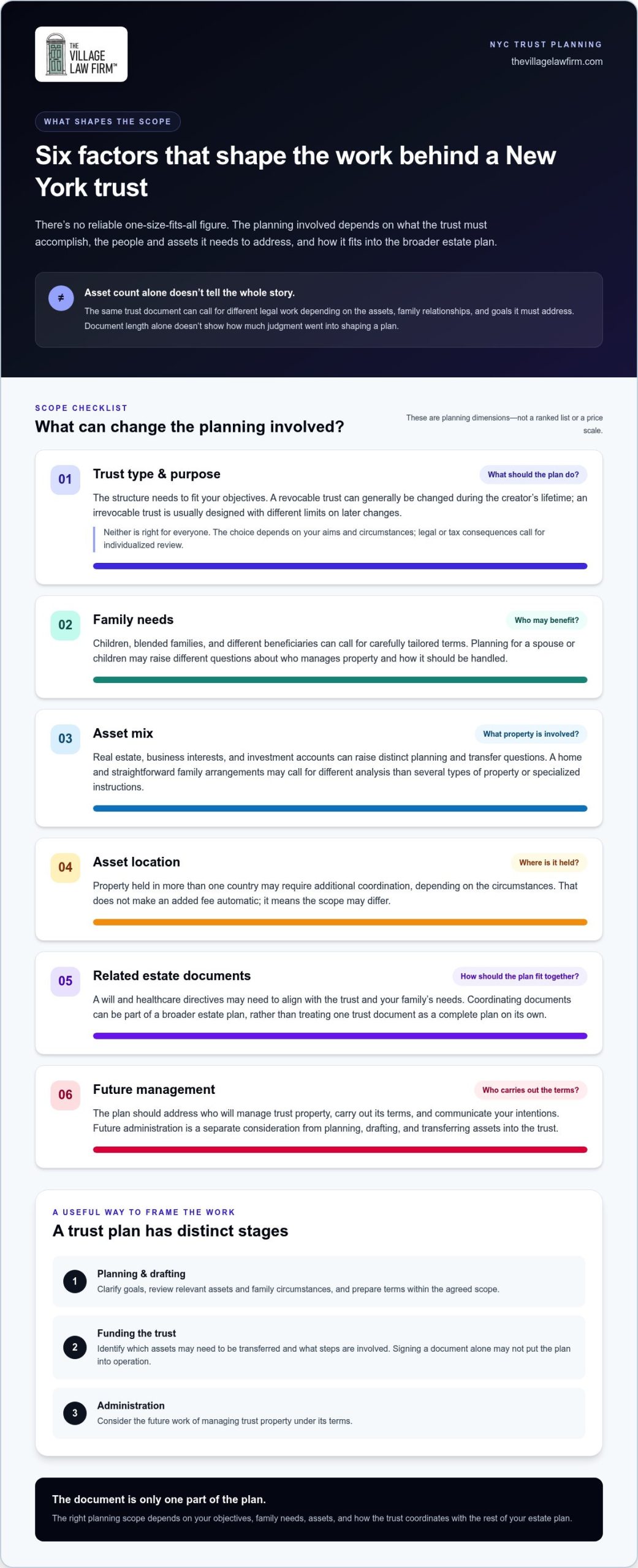
Separate the work into three stages: planning and drafting, funding the trust through appropriate asset transfers, and administration after it has been created. Each stage involves different tasks. Signing a document alone may not complete the practical work of putting a plan into operation, and future administration is a separate consideration.
What does a trust-planning engagement cover?
Planning typically begins with understanding your objectives and reviewing relevant details about your assets and family. The legal work may then include choosing an appropriate trust structure, drafting terms that reflect your intentions, and explaining the next steps. Before work begins, clarify what the engagement covers so you can distinguish document preparation from implementation and later support.
A trust document also sits within a broader estate plan. Depending on your circumstances, that plan may include a will and healthcare directives coordinated with the trust and your family’s needs. The aim is to make the documents work together, rather than treat one document as a complete plan on its own.
- Planning: Clarifying your goals, family circumstances, and relevant assets.
- Drafting: Preparing trust terms and any other estate-planning documents within the agreed scope.
- Implementation: Identifying which assets may need to be transferred and what steps are involved.
- Administration: Considering the future work of managing trust property under its terms.
Why can two NYC trust plans involve different work?
The same trust document can require very different legal work depending on the assets, family relationships, and goals it must address. A plan involving a home and straightforward family arrangements may require different analysis from one involving several types of property, blended-family considerations, or more specialized instructions. The document’s length alone doesn’t show how much judgment went into shaping it.
Objectives matter, too. Planning for a spouse, providing for children, or coordinating a trust with other estate documents can raise different questions about who manages property and how it should be handled. Assets in more than one country may also call for additional coordination, depending on the circumstances. That doesn’t make an added fee automatic. It means the scope of work may differ.
For a wider view of how trusts fit into a complete plan, explore this New York estate planning guide. A careful discussion of your goals and assets can help clarify what the plan needs to address before you decide how to proceed.
Which Factors Shape the Cost of a New York Trust?
There’s no reliable one-size-fits-all figure for trust planning. To understand the cost of setting up a trust in NYC, focus on the work your circumstances call for: the trust’s purpose, the decisions it must address, and how it fits with your other estate-planning documents. The number of assets alone won’t tell the whole story.
Trust-planning scope is shaped by the trust type, your objectives, your family arrangements, the nature and location of your assets, and the coordination needed with your broader estate plan. Use this checklist to identify details that may call for more analysis or tailored drafting:
- Trust type and purpose: The structure must fit what you want the plan to accomplish.
- Family needs: Children, blended families, and different beneficiaries can require carefully tailored terms.
- Asset mix: Real estate, business interests, and investment accounts can raise distinct planning and transfer questions.
- Asset location: Property held in more than one country may require additional coordination.
- Related documents: Wills and healthcare directives may need to align with the trust and your family’s needs.
- Future management: The plan should address who will carry out its terms and how your intentions will be communicated.
How do trust type and planning goals affect the work?
A revocable trust can generally be changed during the creator’s lifetime, while an irrevocable trust is usually designed with different limits on later changes. Neither is right for everyone. The choice depends on your aims and circumstances, and legal or tax consequences call for individualized review rather than assumptions based on a trust’s label. For a closer look at irrevocable planning, see this irrevocable trust planning guide.
Before settling on a structure, consider which decisions the trust must support, who may benefit, and how it should relate to your will and other planning documents. The New York State Bar Association Trusts & Estates section provides a professional resource for learning about trusts and estates in New York, but it can’t replace advice tailored to your situation.
Which personal and asset details can change the scope?
Two households with similar assets may need different planning. A business owner may need the trust considered alongside business interests. A parent of minor children may need careful attention to how beneficiaries are provided for. Blended families can bring different relationships and intentions into the planning. These factors affect the questions to resolve, not just the number of pages drafted.
Location matters, too. Real estate, investment accounts, and assets held abroad can involve different ownership or coordination questions. International assets don’t automatically mean a particular added expense, but they may broaden the planning analysis. The Village Law Firm provides estate-planning counsel to help you consider how your goals and circumstances shape the work. Discuss your estate-planning goals.
DIY, Online Service, or NYC Trust Attorney: Which Route Fits?
The right route depends on how much customization your situation calls for and how comfortable you are handling the details. DIY kits and online services can be convenient and may involve less initial expense, while attorney-led planning gives you a way to discuss your circumstances and coordinate legal documents. A lower upfront fee may not cover tailored advice or the practical steps needed to put a trust into effect.
| Approach | Customization | Your effort | May fit when |
|---|---|---|---|
| DIY kit | Generally limited to the options and forms provided. | You select the form, supply information, prepare the document, and handle the next steps. | Your needs are straightforward and you understand the documents and implementation process. |
| Online service | May guide you through choices and generate documents from your answers. | You must provide accurate information, choose suitable options, and complete the required follow-through. | You’re comfortable using a guided process and your circumstances fit its available choices. |
| NYC trust attorney | Planning and drafting can be tailored to your goals, family, and assets. | You provide information and participate in decisions, with legal counsel guiding the planning. | Your situation raises questions that call for individualized analysis or coordination with other estate documents. |
When might a DIY or online route be considered?
Self-service options can appeal if you value convenience and are prepared to take responsibility for each step. They may suit genuinely straightforward circumstances, provided you can give complete, accurate information, select documents that fit your needs, and follow the applicable execution rules. Forms can’t determine whether a trust is appropriate for your goals or resolve every question your answers may raise.
Remember, generating or signing a document doesn’t itself transfer assets into a trust. You’ll still need to understand which assets are intended to be held by it and what steps are needed to complete those transfers. For broader context on how estate-planning expenses can vary, the National Council on Aging Estate Planning Costs resource discusses common considerations. A document’s initial price alone doesn’t show whether advice or implementation work is included.
When can attorney-led planning add meaningful value?
Legal guidance can be especially useful when family relationships or assets raise questions a standard form may not address. A blended family may have several intended beneficiaries, while parents may need trust terms considered alongside plans for minor children. Business interests, multiple asset types, or international connections can also call for careful review and coordination.
An attorney can help align trust documents with a will and broader estate objectives, while explaining the decisions and next steps involved. That support doesn’t guarantee a particular financial result or prevent every future disagreement. It can help you understand the planning choices before settling on a route. The Village Law Firm provides estate-planning counsel tailored to your family and assets. To discuss how your circumstances affect the work involved, discuss your estate planning needs.
What NYC Trust Funding and Ongoing Administration Can Add
Signing a trust document and funding it are separate steps. Funding means reviewing which assets should be held by the trust and completing the appropriate transfer work. Depending on the asset, that work may involve additional paperwork, professional coordination, or expenses beyond document drafting. The details matter: not every asset should necessarily be transferred, and one method won’t suit every situation.
An unfunded trust may not carry out the intended plan for assets left outside it. That’s why implementation belongs in the budget conversation from the start. For New York City property, the work may raise ownership and transfer questions that require asset-specific legal review. Co-op interests can involve different considerations from real estate, so don’t assume the same approach applies to both.
Which asset-transfer questions should NYC residents consider?
Start with an inventory, then review each category rather than assuming every asset belongs in the trust. A home, financial account, and co-op interest may each have distinct ownership records and transfer considerations. The appropriate approach depends on the asset, your objectives, and applicable procedures. For property, including co-op interests, legal review can help clarify relevant transfer steps before paperwork is prepared.
A practical sequence can keep the work organized:
- Identify the assets you own and note how each is currently held.
- Determine which assets are appropriate to transfer under your plan.
- Complete the paperwork and related steps for the selected transfers.
- Retain records showing what was transferred and what remains outside the trust.
This is a planning framework, not a direction to retitle everything. New York procedures and property-specific requirements can affect the steps involved, so establish the applicable process for each asset before acting.
What could create work after the trust is signed?
Initial funding is one phase. Later, a home sale, new account, business change, marriage, or change in family needs may prompt a review of how the trust and the rest of the estate plan fit together. Whether an amendment or another update is appropriate depends on the trust terms and the circumstances. Clear records can also make it easier to see what the trust holds and what may need attention.
Administration is another consideration. The person responsible for managing trust property may need to follow the document’s terms and keep appropriate records. Tax, Medicaid, and probate consequences can depend on the trust structure, asset ownership, timing, and individual facts. They shouldn’t be assumed from the word “trust” alone. For that reason, the cost of setting up a trust in NYC is best considered as part of a broader view of planning, transfer work, and possible future administration.
Before proceeding, make sure you understand which assets the plan is intended to address and what implementation steps may be involved. The Village Law Firm can help you review trust planning alongside your wider estate goals. Discuss your trust funding and estate planning needs.
How to Budget for a Trust with a New York Estate Planning Attorney
A useful budget starts with a clear picture of the plan you’re considering. Before discussing the cost of setting up a trust in NYC, gather information that helps an attorney understand your goals, family, and assets. You don’t need to resolve every legal question in advance. A thoughtful overview can make the conversation more focused and help identify where individualized advice is needed.
What information helps clarify the scope of a trust plan?
Prepare a high-level inventory rather than trying to create a perfect accounting. Note the kinds of assets you own, how they’re held, who you hope to benefit, and which estate-planning documents you already have. Include family priorities, such as support for children or guardianship concerns, and identify property, accounts, or beneficiaries connected to other countries. These details help reveal which questions the plan may need to address.
- Assets and ownership: List real estate, financial accounts, business interests, and other significant property, with a general note about how each is titled.
- Family and beneficiaries: Record the people you want the plan to support and any circumstances that may affect how you want that support handled.
- Existing documents: Gather available wills, trusts, and healthcare directives so the attorney can consider how the documents fit together.
- Cross-border connections: Note assets or beneficiaries in other countries, which may call for coordinated planning based on the circumstances.
- Objectives and questions: Write down what you want the plan to accomplish and any concerns you’d like to understand before choosing a trust structure.
Keep it practical. An initial inventory is a starting point for discussion, not a substitute for legal review or a final decision about which assets belong in a trust.
How can you compare the work included in a proposal?
Look beyond a headline figure and compare the scope of the work described. A proposal should make clear what planning and drafting are contemplated, which documents are included, and what guidance is provided for implementing the plan. It should also distinguish initial work from possible follow-up, such as reviewing changes in assets or family circumstances. Clear scope makes it easier to see whether you’re comparing similar work.
Useful points to clarify include:
- Which trust and related estate-planning documents are being prepared?
- What asset-transfer guidance or assistance is part of the work?
- What steps will remain for you to complete after documents are signed?
- How might future changes or administration be addressed?
The Village Law Firm provides estate-planning counsel tailored to family needs, including situations involving children or international connections. A legal discussion can help you understand the work involved and consider how a trust fits within your broader plan, without assuming a trust is right for everyone. For a considered next step, discuss a trust plan tailored to your family.
Take the Next Step Toward a Plan That Fits
Planning doesn’t have to begin with a decision about which trust to create. Start by identifying what you want your estate plan to address, the people you want it to support, and the questions you’d like answered. That gives you a clearer foundation for discussing the cost of setting up a trust in NYC in the context of the work your circumstances may require.
The Village Law Firm provides tailored estate-planning counsel for individuals and families, including those with international assets or cross-border considerations. A conversation can help you explore how trust planning may fit with your broader goals, without assuming one approach suits everyone. Bring the questions you have now and develop a more informed view of what to consider next.
Discuss a trust plan tailored to your circumstances, and take the next step with greater clarity and confidence.
Frequently Asked Questions
How much does it cost to set up a trust in NYC?
The total varies with the type of trust, the legal analysis and drafting required, your assets, and whether related documents or implementation work are included. For a useful estimate, request an itemized description of the proposed work, including what is covered before signing and what may be separate afterward. That gives you a clearer basis for comparing the cost of setting up a trust in NYC than a general figure alone.
Is a living trust worth the cost in New York?
It depends on your goals, the assets involved, and other options within your estate plan. For example, someone seeking a particular way to manage property for family members may value the trust’s structure, while someone with simpler wishes may have other planning approaches to consider. Weigh the intended benefit against the work of funding and maintaining the trust, and discuss whether it fits your circumstances with The Village Law Firm.
Does a trust avoid probate in New York?
A properly planned and funded trust may keep certain assets held by it out of probate, but it doesn’t automatically cover everything you own. The outcome can depend on how an asset is titled, its beneficiary arrangements, and the terms of the plan. For example, property never transferred to the trust may be handled differently. Review each major asset with counsel rather than assuming signing the document changes its ownership or probate treatment.
Do I still need a will if I create a trust?
You may still need a will because a will and a trust can serve different purposes, and some New York estate plans use both. A will may address matters not covered by the trust, depending on your circumstances and objectives. If you have minor children, consider how your estate documents work together with your family’s plans for their care. Have the documents and their execution requirements reviewed as part of a coordinated plan.
Can I change a trust after it is created?
Whether you can amend or revoke a trust depends on its terms, its type, and applicable law. Don’t assume every trust offers the same flexibility. Before signing, understand what decisions you may retain, what changes could require additional legal work, and how the trust responds if your family or assets change. A review after a major life event can help determine whether the existing plan still reflects your intentions.
Does setting up a trust protect assets from Medicaid costs?
A trust doesn’t automatically protect assets or establish Medicaid eligibility. The effect of a transfer can depend on the trust’s terms, timing, ownership, and program rules in force when you apply. Because Medicaid planning decisions can affect both you and your family, don’t transfer property or rely on a trust for a particular result without individualized guidance. The Village Law Firm provides Medicaid planning to help consider a trust alongside your care-planning and estate-planning goals.
Can a trust hold property or accounts outside the United States?
Possibly, but an overseas asset needs careful review before it’s included in a New York trust plan. Foreign real estate, for instance, may raise local ownership, succession, or reporting questions, while an account may be subject to different procedures. A New York document shouldn’t be assumed to control property in every country. Share the asset’s location, ownership details, and any relevant beneficiaries so cross-border planning can be considered.