
After a loss, it can be hard to know which steps apply: probate, administration, court filings, or something else. A Brooklyn probate lawyer can help clarify the process and organize the work ahead, so you can focus on the estate’s specific needs instead of trying to navigate every question alone.
In New York, an estate with a will generally goes through probate. When there is no will, the process is called administration. For a Brooklyn resident, proceedings are handled in Kings County Surrogate’s Court. The next steps can also depend on how assets are owned, family circumstances, and whether property is located outside New York or abroad.
This guide explains the difference between probate and estate administration, what executors and families may need to prepare, and when legal guidance can help. You’ll find practical steps for gathering information and learn why some jointly owned or beneficiary-designated assets may follow a different path. With a clearer picture of the process, you can approach the responsibilities ahead with greater confidence.
Key Takeaways
- A Brooklyn probate lawyer can clarify court procedures and guide an executor through estate administration.
- The estate’s circumstances shape the steps involved, especially when there are disputes, incomplete records, or assets in multiple jurisdictions.
- Gather the will, available financial records, and a preliminary list of assets, debts, and beneficiaries to prepare for next steps.
- Some jointly owned assets and accounts with named beneficiaries may pass outside the probate estate.
- When an estate involves assets across countries, coordinated administration can help bring greater clarity to the process.
What a Brooklyn Probate Lawyer Does for an Estate
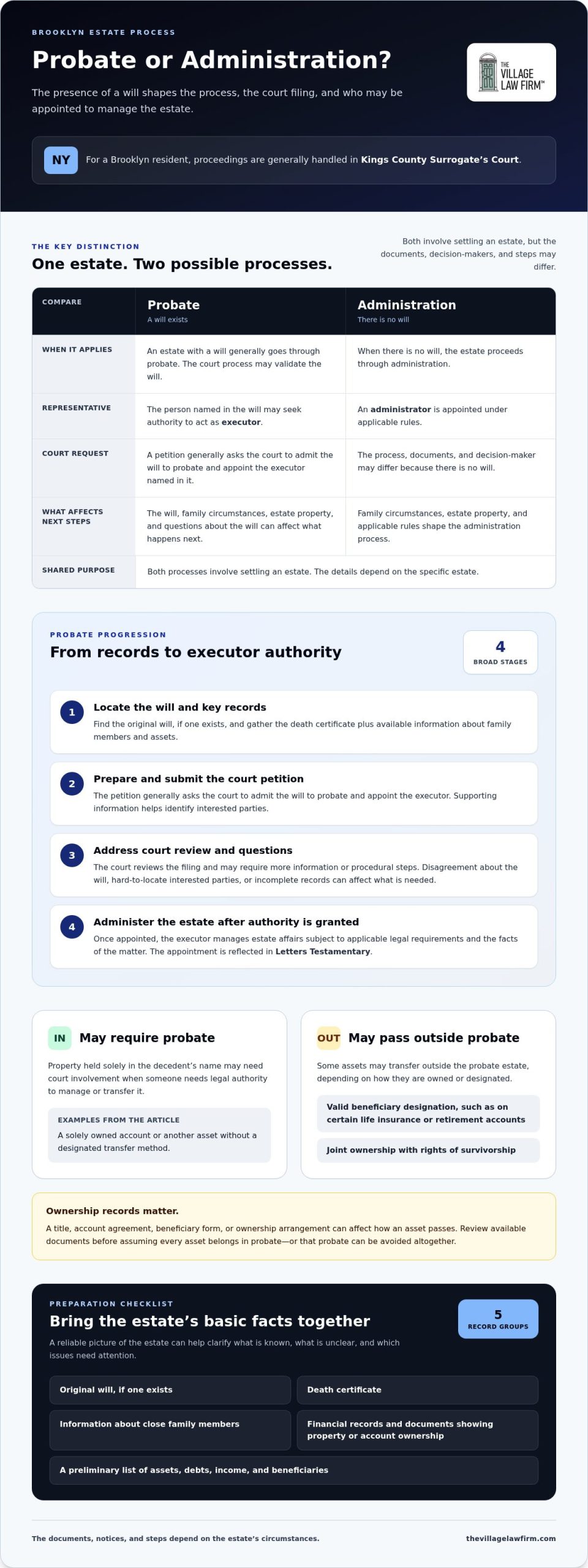
Probate is the court-supervised process through which a will may be validated and an executor authorized to administer an estate. For someone who lived in Brooklyn, proceedings are generally handled in Kings County Surrogate’s Court. Filing papers is only one part of the work. The estate’s assets, family circumstances, and any questions about the will can all affect what happens next.
The process depends in part on whether the person left a will. With a will, the estate may go through probate, and the person named to act may seek authority as executor. Without a will, the estate proceeds through administration, and an administrator is appointed under applicable rules. Both processes involve settling an estate, but the documents, decision-makers, and steps may differ.
What does a probate lawyer handle for an executor?
A Brooklyn probate lawyer can help an executor understand the process and keep its moving parts organized. Depending on the estate, counsel may assist with preparing court filings, identifying required notices, understanding executor responsibilities, and planning how to address assets and obligations. Legal guidance can also help clarify what information the court needs and how to handle procedural questions.
A practical first step is to bring the available records together: the will, information about close family members, and documents showing how property and accounts are held. Counsel can help identify what is known, what is unclear, and which issues need attention. The work depends on the estate, so not every executor faces the same filings or questions.
When might an estate require probate in Brooklyn?
Probate may be necessary when property is held solely in the decedent’s name and someone needs legal authority to manage or transfer it. For example, a solely owned account or other asset without a designated transfer method may require court involvement. Other assets may pass outside probate through a valid beneficiary designation, such as on certain life insurance or retirement accounts, or through joint ownership with rights of survivorship.
The details matter. A title, account agreement, beneficiary form, or ownership arrangement can affect how an asset passes. A family member’s understanding may not match the records, so review the available documents before deciding that every asset belongs in the probate estate, or that probate can be avoided altogether.
A lawyer’s role is not simply to submit forms. Estate administration counsel can connect court requirements to the family’s circumstances, including disputed information or property in another jurisdiction. The Village Law Firm handles estate administration matters, including complex cross-border administration, where assets in different countries may need coordinated attention. That guidance can help families turn an uncertain first step into a clearer plan.
How the New York Probate Process Moves Through Surrogate’s Court
Probate involves a series of court and estate-administration tasks, not just one filing. For a Brooklyn estate, the process generally involves Kings County Surrogate’s Court. The documents and steps depend on the will, family circumstances, and property involved. A Brooklyn probate lawyer can help an executor understand what needs to happen next, rather than assuming every estate follows the same script.
The broad progression often looks like this:
- Locate the will and key records. Find the original will, if one exists, and gather the death certificate and available information about family members and assets. These records help establish the basic facts for the court process.
- Prepare and submit the court petition. The petition generally asks the court to admit the will to probate and appoint the executor named in it. Supporting information helps the court identify interested parties and assess the request. Required documents and notices vary with the estate’s circumstances.
- Address court review and questions. The court reviews the filing and may require additional information or procedural steps. Disagreement about the will, difficulty locating interested parties, or incomplete records can affect what is needed and how the matter progresses.
- Administer the estate after authority is granted. Once appointed, the executor is responsible for managing estate affairs, subject to applicable legal requirements and the facts of the matter.
From locating the will to seeking authority
Begin with the records you have. The original will can help establish the decedent’s wishes and identify the nominated executor. A death certificate and basic family details can support preparation of the filing. The probate petition requests court authority, and the accompanying information helps explain who is involved and what the estate requires. An executor’s appointment is reflected in Letters Testamentary, which provide authority to act for the estate. Filing requirements depend on the case.
After the court appoints an estate representative
Court authorization is a beginning, not the end. The executor then needs a reliable picture of the estate, including records of assets, debts, income, and account ownership. They may need to secure or manage property, address valid obligations, and keep beneficiaries informed as administration proceeds. Distributions should wait until the executor understands the estate’s obligations and follows applicable legal requirements.
Progress can depend on practical details: whether records are complete, questions arise about the will, interested parties respond, or assets need coordination across jurisdictions. Avoid assuming that court appointment permits immediate distribution. A careful plan can help distinguish urgent preservation tasks from decisions that should wait until the estate’s position is clearer.
If court filings or executor responsibilities are difficult to organize, estate administration counsel can help structure the process and clarify the next steps for the family.
Do You Need a Brooklyn Probate Lawyer? Weigh the Estate’s Complexity
Not every executor faces the same challenges. An estate with a clear will, organized records, cooperative beneficiaries, and assets held in one jurisdiction may raise fewer questions than one involving contested wishes, uncertain ownership, or property in several places. The level of support needed depends on the facts, not simply on the fact that a loved one has died.
There is no single checklist that determines whether an executor needs legal guidance. Consider whether you can identify the estate’s obligations, understand the court’s requirements, and communicate decisions to the people affected. A Brooklyn probate lawyer can help interpret those responsibilities and manage filings when the issues call for legal analysis. The executor remains responsible for making decisions within the authority and duties that apply to the estate.
Signs that probate may involve added complexity
Take stock if someone objects to the will, family members disagree about a beneficiary’s share, records conflict about who owns an asset, or important documents are missing. These issues can affect what information the court needs and what questions the executor must resolve before administration moves forward. Review the records rather than relying on family assumptions.
Property in another state can raise a separate question: whether an additional proceeding is needed there. For context, see this New York ancillary probate guide. Assets across countries can require coordination as well, since administration may involve more than one jurisdiction’s procedures.
What legal guidance can clarify for an executor
Support can be useful before a dispute becomes formal. Counsel can help you understand your responsibilities, identify the relevant court procedures, and separate estate-specific questions from routine administrative tasks. If beneficiaries have competing concerns, a lawyer can help organize communications around the records, process, and decisions that need attention. Legal guidance does not guarantee agreement or a particular court outcome.
Consider the difference between these situations:
- Fewer apparent complications: The will and ownership records are available, the asset picture is clear, and beneficiaries are aligned on the process.
- More involved questions: The will is challenged, ownership is uncertain, records are incomplete, beneficiaries disagree, or assets are located in multiple jurisdictions.
This comparison is a starting point, not a legal test. Even an estate that appears straightforward can raise questions once the records are reviewed. A complicated family situation may not affect every asset or filing in the same way. Take stock of what is known, note what remains uncertain, and seek guidance when you cannot confidently determine the next procedural step.
Legal fees vary by matter and engagement. Before deciding how to proceed, understand the scope of the work being discussed and which estate issues it is intended to address.
What to Gather Before Starting Brooklyn Probate
You do not need a complete file before seeking legal guidance. Collect what is readily available, then note what is missing. A Brooklyn probate lawyer can help identify which records matter for the estate and what needs follow-up. If a decision or deadline feels urgent, do not delay seeking guidance while searching for every document.
A simple inventory can make the information easier to use. Separate confirmed details from estimates or unanswered questions, and keep copies together. This preparation helps organize the facts, but it does not replace advice about your specific responsibilities or the right court procedure.
Documents and details that help clarify the estate
Start with records that may show the decedent’s wishes, family relationships, and asset ownership. A preliminary list is enough. Add details as you locate them.
- Estate documents: The will and any available amendments, along with the death certificate.
- Ownership records: Deeds, account statements, and other documents showing how property or accounts were titled.
- Asset and debt list: Known financial institutions, real property, insurance policies, loans, bills, and other obligations.
- People involved: Names and contact information for beneficiaries, the nominated executor, and others who may have a role in administration.
- Potential non-probate assets: Accounts or policies that may have named beneficiaries, or property that may be jointly owned. Record them, but review the relevant documents before drawing conclusions about how they pass.
Mark uncertain items plainly. For example, note that an account may exist if you found a statement but do not know its current balance. Flag a deed for review if the ownership names are unclear. This makes information gaps visible without turning an early estimate into a supposed fact.
Questions to resolve early with probate counsel
Prepare a short list of questions, especially where residence, ownership, or family circumstances are unclear. The answers can help shape a practical plan and identify what information to gather next.
- Which court and procedure may apply based on where the decedent lived and the assets involved?
- Do any known disagreements, potential claims, or missing records affect the next steps?
- Could property or accounts outside New York require additional coordination?
- What responsibilities may fall to the executor, how will communications be handled, and how are legal fees arranged for this engagement?
Write down family concerns, conflicting accounts of what happened, or uncertainty about who has particular records. Clear notes help counsel distinguish confirmed facts from questions that still need investigation. The Village Law Firm provides estate administration counsel to help families organize those questions and understand the work ahead. Discuss your Brooklyn probate matter with the firm when you are ready to clarify next steps.
Brooklyn Probate Support for Clearer Estate Administration
Estate administration can place a family between court procedures, practical decisions, and differing expectations. The Village Law Firm provides estate administration counsel to help executors understand the work ahead and bring structure to a demanding process. Guidance can reflect the estate’s records, family circumstances, and asset locations rather than relying on a one-size-fits-all checklist.
A Brooklyn estate with assets and administration centered in New York may raise different questions from one that also includes property or accounts in another country. Cross-border issues do not automatically make an estate unmanageable, but they can call for careful coordination and attention to the procedures that apply where each asset is held.
When an estate has assets across borders
Start by identifying where property is located and how it is owned. A home, bank account, or other asset abroad may require the executor to consider local procedures as well as the New York estate process. The relevant steps depend on the asset and applicable law; foreign holdings do not all create the same requirements.
Cross-border administration differs from routine Brooklyn probate because more than one jurisdiction may be involved. The Village Law Firm handles complex cross-border estate administration and can help families consider how different parts of an estate may need to be coordinated. If foreign assets are part of a broader family plan, international estate planning in New York may also be relevant for future planning.
A calm first step for Brooklyn executors
You do not need every answer before taking a first step. Bring together the records already available, note what remains uncertain, and identify the questions weighing most heavily on you. It may help to separate immediate concerns, such as who can access a record, from broader questions about estate administration or property in another jurisdiction.
A focused discussion can clarify the executor’s responsibilities, procedural questions that need attention, and possible next steps based on the known facts. It can also help distinguish what the records establish from what needs further review. That clarity gives families a more orderly foundation for decisions without assuming in advance how a court or another jurisdiction will handle a particular issue.
If you are serving as executor or helping a Brooklyn family settle an estate, contact The Village Law Firm to discuss the estate’s circumstances and the questions you need help resolving.
Give Your Next Step a Clearer Direction
Being named executor can make every decision feel consequential. You do not need to resolve every open question before taking the next step. Identify what feels least clear, then focus on understanding your responsibilities and the choices ahead.
A Brooklyn probate lawyer can help turn estate details into a considered path forward. The Village Law Firm provides estate administration counsel, including cross-border administration when an estate involves assets in more than one country. The goal is to bring clarity to a demanding process and help you move forward with care, based on the estate’s circumstances.
Arrange a conversation with The Village Law Firm about your estate’s next steps. A focused discussion can help identify the questions that need attention and bring greater clarity to your role.
Frequently Asked Questions
Does every Brooklyn estate have to go through probate?
No. Probate may be unnecessary for assets that transfer through valid beneficiary designations or joint ownership, while solely owned assets may require court involvement. A Brooklyn probate lawyer can help review the records instead of relying on assumptions about how an account or property passes. Check available account statements, deeds, and beneficiary paperwork, and note where documents are missing or inconsistent. The estate’s circumstances and New York law determine the answer.
How long does probate take in Kings County, New York?
There is no single timeline for every Kings County estate. Progress may depend on court scheduling, whether filings are complete, the estate’s complexity, and whether creditors, beneficiaries, or other interested people raise questions. Keep copies of court correspondence and a record of filing dates, requests, and responses. These details can help you see what remains outstanding, but a general estimate is not a promise about an individual estate.
What happens if someone contests a will in Brooklyn?
A will contest can require the Surrogate’s Court to consider disputed issues, so it is more than a routine paperwork concern. Preserve relevant records and communications, including different versions of estate documents or messages that may relate to the objection. Avoid informal agreements or changes to how records are kept while the dispute is unresolved. The appropriate response depends on the facts and applicable law, so raise the objection promptly with the lawyer handling the estate.
Can an executor distribute money before probate is complete?
Do not assume funds should be distributed simply because they appear available. A transfer may be difficult to reverse if the estate later needs that money to address an obligation or unresolved issue. Before acting, identify which account holds the funds, who has authority over it, and whether court directions or estate concerns affect access. Get advice specific to the estate before making a distribution, especially if beneficiaries expect different amounts or timing.
What if there is no will for a Brooklyn estate?
The estate may proceed through New York’s administration process instead of probate of a will. A relative should not assume that family status alone gives them authority to collect, sell, or distribute estate property. Make a list of the decedent’s close relatives and known assets, and keep estate property and personal belongings secure while the proper representative is determined. New York law and the estate’s circumstances govern who may seek appointment and who may inherit.
How much does a Brooklyn probate lawyer cost?
Legal fees depend on the estate, the work required, and the engagement terms. Before proceeding, understand the proposed billing arrangement, which tasks it covers, and how additional work would be handled if a dispute or an out-of-state asset arises. You can also ask how court costs or other outside expenses are treated. Comparing a specific scope of work is more useful than relying on generic online estimates.
Can Brooklyn probate involve property located outside New York?
Yes. Property in another state or country can raise questions about which local procedures apply and whether a separate proceeding is needed. Make a location-by-location inventory that notes the property type, whose name appears on its ownership records, and whether anyone is already managing it. New York authority may not answer every question about an asset elsewhere. The appropriate approach depends on the asset’s location, ownership documents, and the legal processes that apply there.